

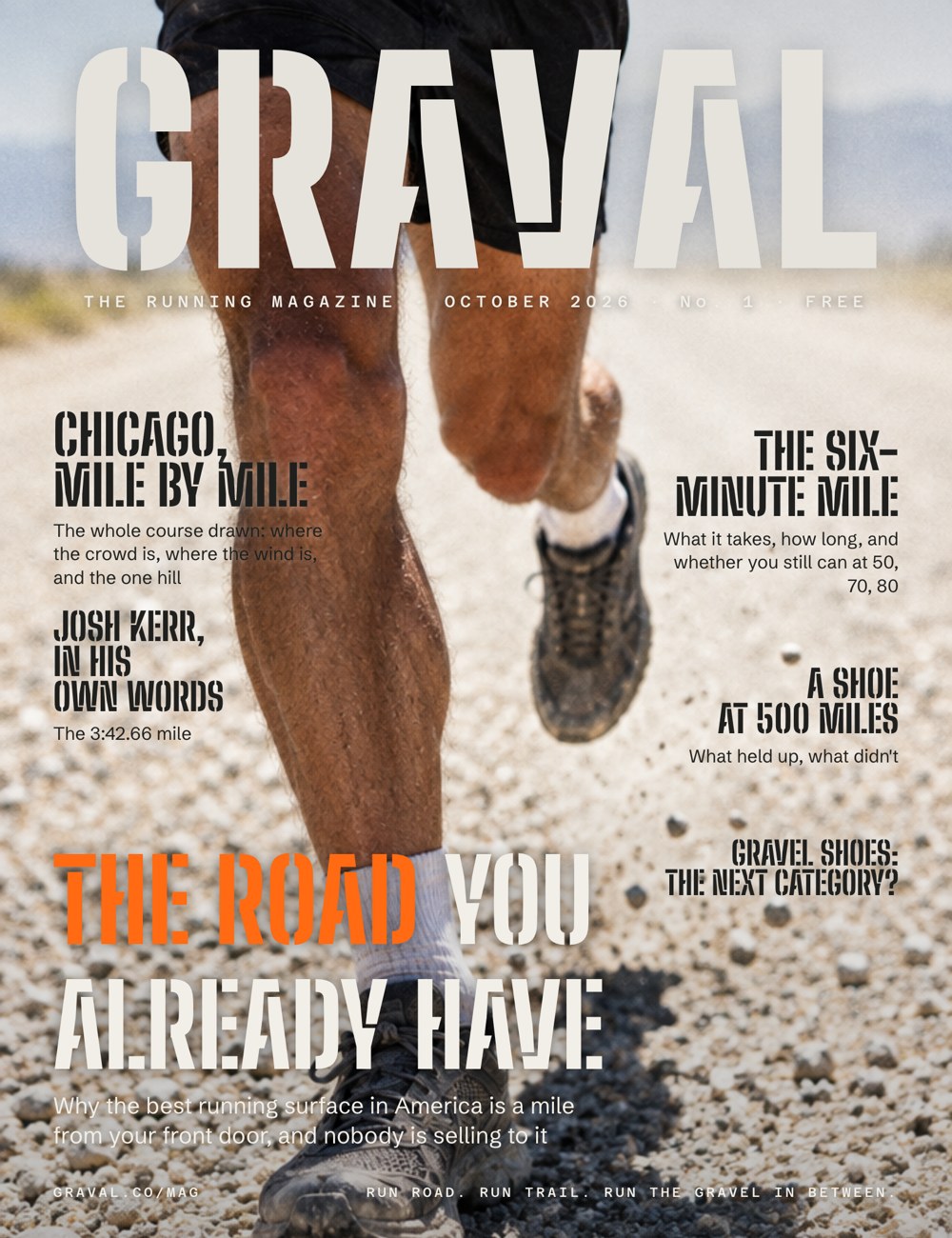
 The running magazine · October 2026 · No. 1 · Free
Contents
- 04
 Why this magazineEditor's note
 - 05
 The RoadWhat happened this month
 - 11
 In his own words: Josh KerrInterview
 - 15
 ChicagoThe Course
 - 25
 What does it take to run a six-minute mile?The Question
 - 33
 Six sessions, thirty seconds at a timeThe Workout
 - 37
 Do you need gels for a marathon?Fuel
 - 41
 The GroundOne road, dawn to dusk
 - 45
 A shoe at 500 milesWhat Holds Up
 - 47
 The road you already haveLoose Ground
 - 49
 The LineKit on the road
Why this magazine
By Matthew Goodman · Photograph: GravalRunning's magazines sit at the edges: the track, the mountain, the city club. This one is for the road in between, the one with no pavement on it, which is most of the roads there are.
Nine things every month. A famous course drawn mile by mile. What running is actually like in your decade. One interview. What happened. One road, one worn object, one opinion, and the kit we make. Mostly pictures. Free.
The Road
The Road
The Road
Eight things from road, trail, ultra, track and gravel this month. Their facts, our words.
Photographs: GravalBerlin: Assefa runs the third-fastest marathon ever and still misses the record
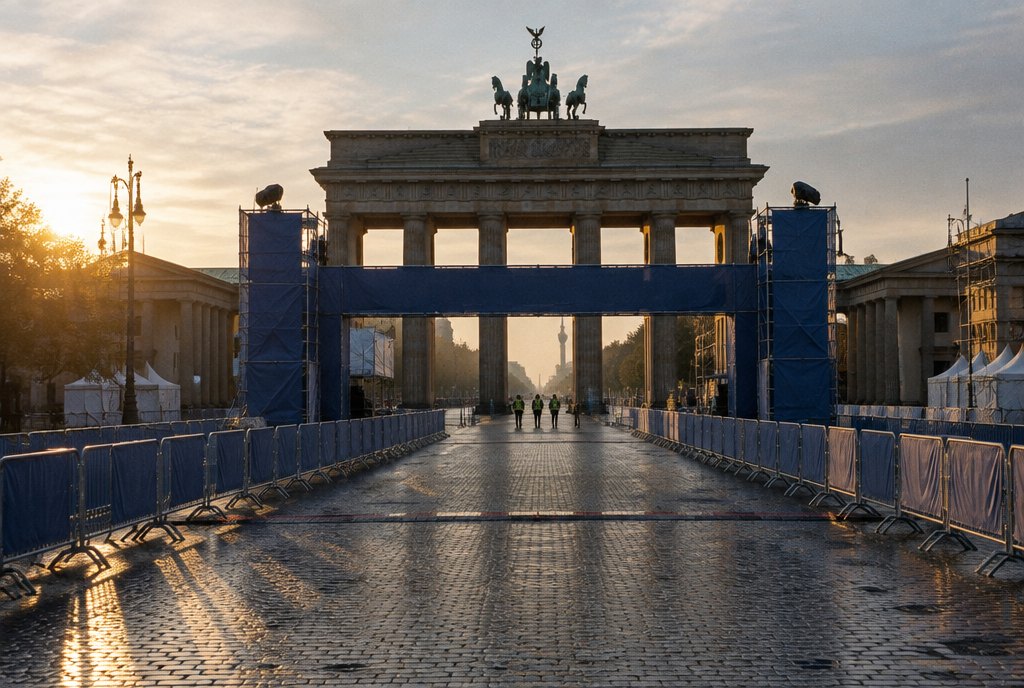
Tigst Assefa won Berlin for the third time in 2:11:04, a course record and the third-fastest women's marathon in history. She was under world-record pace at 40K before her stride went in the last two kilometres, finishing 1:08 outside Ruth Chepngetich's 2:09:56. Guye Adola took the men's race in 2:02:50, a personal best, 29 seconds clear of Gemechu Dida after going alone from 25K.
Source: RUN247; Yahoo Sports; Olympics.com, September 27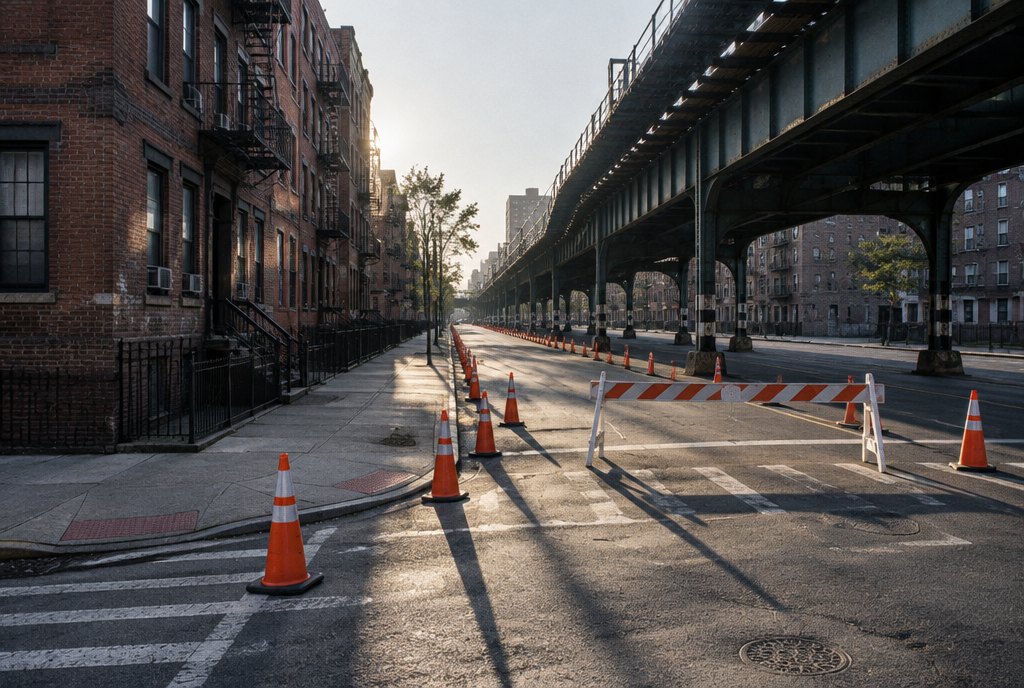
New York moves its Bronx mile for the first time in fifteen years
After the Willis Avenue Bridge the course now turns onto East 135th, up Alexander Avenue, across East 141st and back down Third to the Madison Avenue Bridge. NYRR says it is to lessen the race's impact on the neighbourhood. Nobody has raced it yet; November 1 is the first time.
Source: New York Road Runners; CBS New York, September 22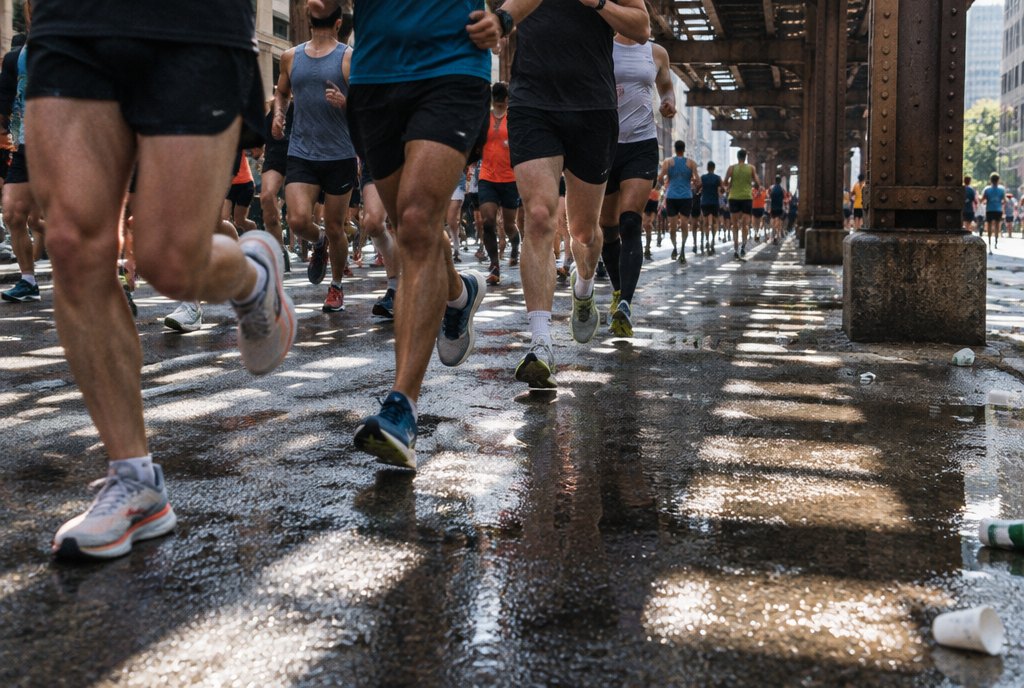
Chicago on October 11: seven world records, 29 neighbourhoods, one hill
The 48th Chicago Marathon runs Sunday October 11 from Grant Park. It has produced seven world records, and the course's net elevation change is about 50 feet, all of it felt on Roosevelt Road with 200 metres to go. The full course guide is in this issue.
Source: Bank of America Chicago Marathon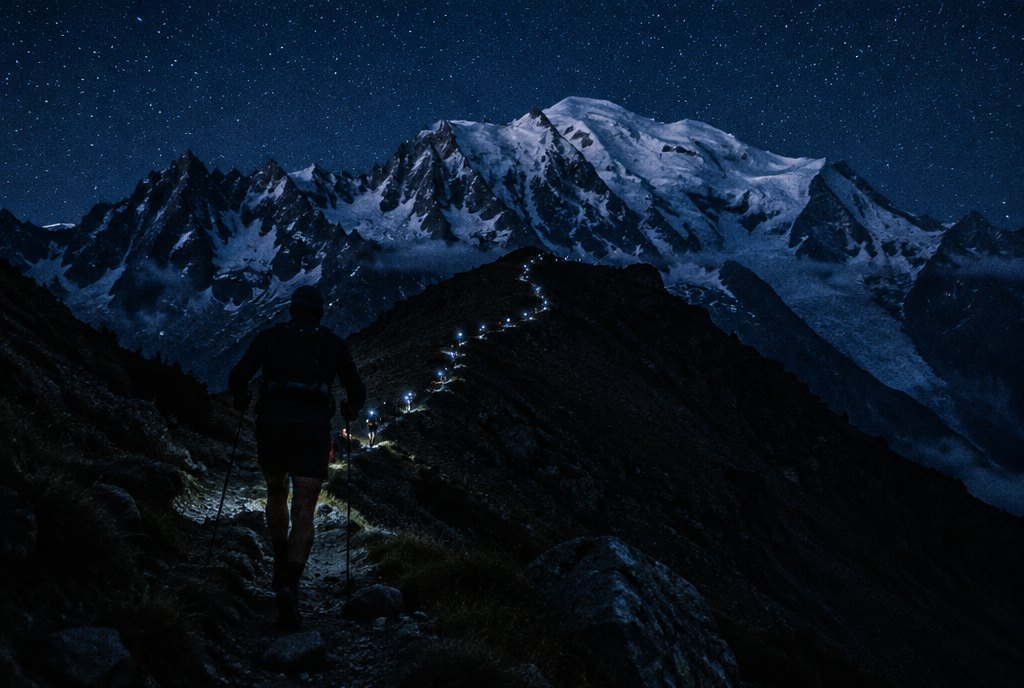
UTMB: the fastest run ever around Mont Blanc, on a course that won't count
Ben Dhiman won in 18:16:29, the first time anyone has gone under 19 hours, and Blandine L'Hirondel took the women's race in 21:54:49. Thunderstorms delayed the start two hours and shortened the course, so the time stands as the fastest and not as the record.
Source: iRunFar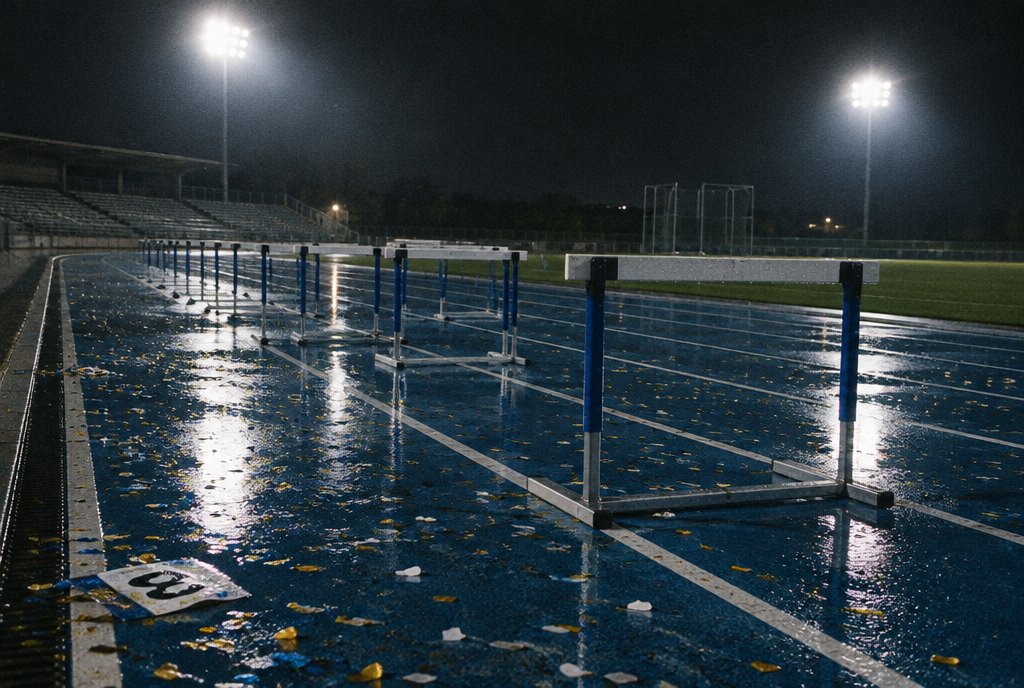
Two world records in one night in Zurich
Alison dos Santos ran 45.80 for the 400 metres hurdles and Masai Russell broke the 100 metres hurdles record on the same evening at Weltklasse Zürich. Audrey Werro's 1:53.70 for 800 metres was a Swiss record. The Diamond League final followed in Brussels on September 4 and 5.
Source: Wanda Diamond League; FloTrack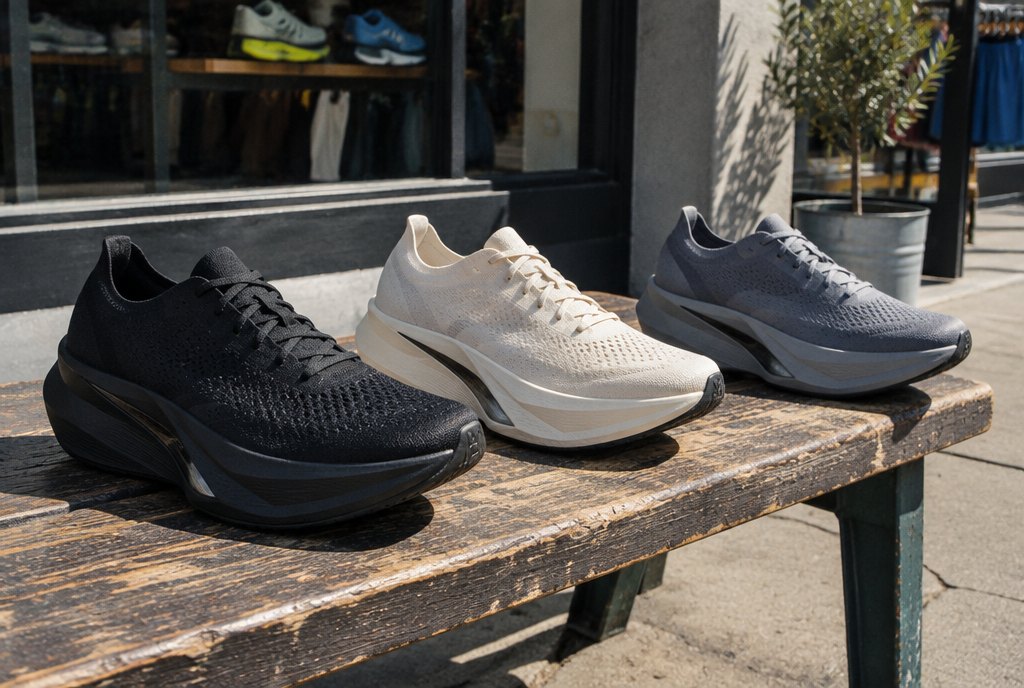
Two super shoes and a super trainer land in the same month
Adidas released the Adios Pro 5 on September 22 and Nike put out the Pegasus Plus 2 on September 3, a curved Air Zoom unit under a daily trainer. On's Cloudboom Strike 2 and Saucony's Paramount Max are also new this month. Our view: the shoe you already own is fine for Chicago.
Source: Solereview release calendar; RunToTheFinishThe brands have started saying the word gravel
Salomon's GRVL concept with Pas Normal Studios, Nike framing the ACG Pegasus Trail around gravel, Hoka calling the Challenger 8 a gravel workhorse. At The Running Event last December a run of road-to-trail shoes were shown as a gravel category for the first time. We have been waiting for this. Whether the shoes are any different is the question on page 28 next month.
Source: Sporting Goods Intelligence; WWD; Trailhead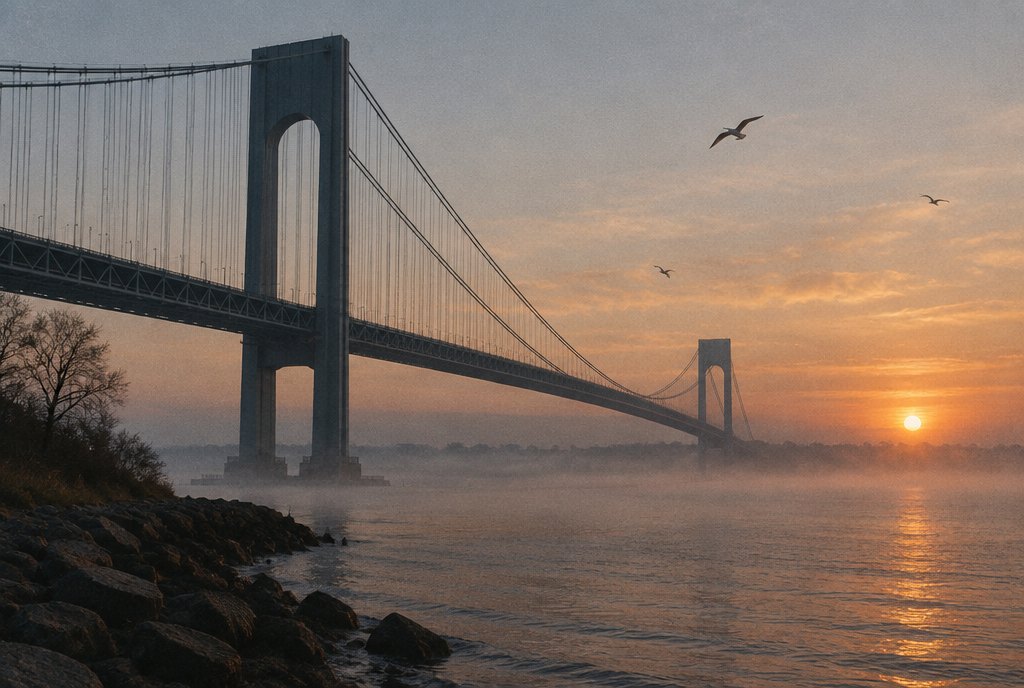
New York's fiftieth five-borough marathon has 60,000 places and they're gone
The 1976 race was the first to leave Central Park and run all five boroughs, for the Bicentennial. The 2026 edition on November 1 marks fifty years of that course, with about 60,000 runners from more than 100 countries starting on the Verrazzano. It is our issue two.
Source: New York Road Runners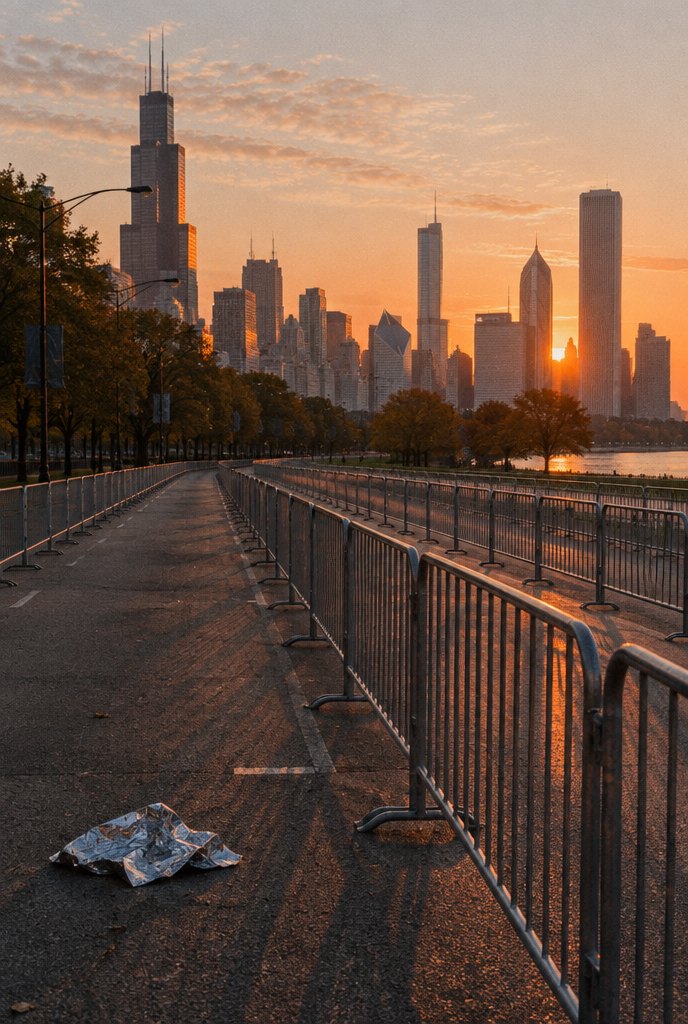 Oct 11
Bank of America Chicago Marathon
Peacock and Roku, 7 to 11 am Central. NBC 5 Chicago and Telemundo Chicago stream free at nbcchicago.com and in their apps, 7 am to 3 pm Central.
www.chicagomarathon.com/spectators/race-day-broadcasts/Nov 1TCS New York City Marathon, the 50th five-borough running
WABC-TV Channel 7 in New York, 8 to 11:30 am Eastern, and ESPN2 nationally. Our course guide is issue two.
www.nyrr.org/tcsnycmarathon/watch-the-race Nov 1
Nov 1Interview
In his own words: Josh Kerr
In his own words: Josh Kerr
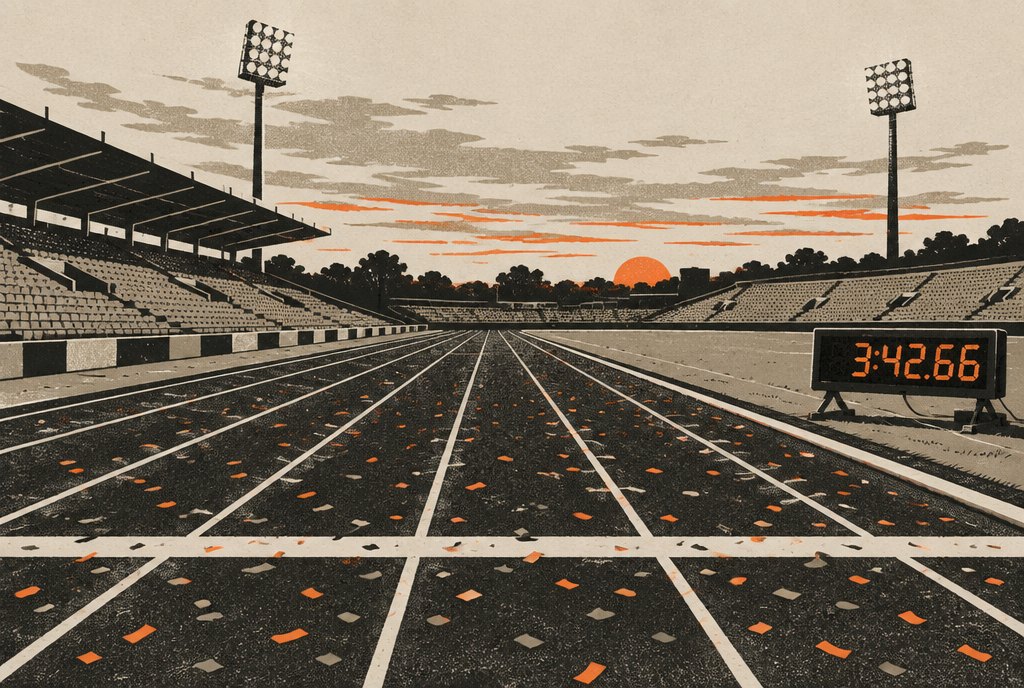
On July 18 in London, Josh Kerr ran 3:42.66 for the mile and took down a world record that had stood for 27 years. He'd told everyone he would. Here is what he said after.
Illustration: Graval. Quotes as credited.Kerr called the shot months out. He named it Project 222, the number of seconds he wanted the mile to take, and went after Hicham El Guerrouj's 3:43.13 from Rome, 1999, in the Emsley Carr Mile at the London Athletics Meet. He ran 3:42.66.
For scale: that's about 55.7 seconds a lap, four laps in a row. The six-minute mile in this issue is 90 seconds a lap. Same four laps, same track, same base underneath. That's the part he talked about.
“It's silly to call your shot that early, obviously a lot of things can go wrong.” — to BBC Sport
“I knew I had a 3:42 in me.” — to World Athletics
“I nearly lost it there at the end, but I got over the line. … I was deaf in the last 110 metres.” — to World Athletics
“That last 350 meters was the most fun 40 seconds of my life.” — as reported by Olympics.com
“Out there, I am just the body, but there is an incredible amount of work behind the scenes.” — to World Athletics
Sources: World Athletics, London Athletics Meet report, July 18, 2026; BBC Sport, via Olympics.com, July 18, 2026; Olympics.com, Josh Kerr world record report, 2026.
The Course
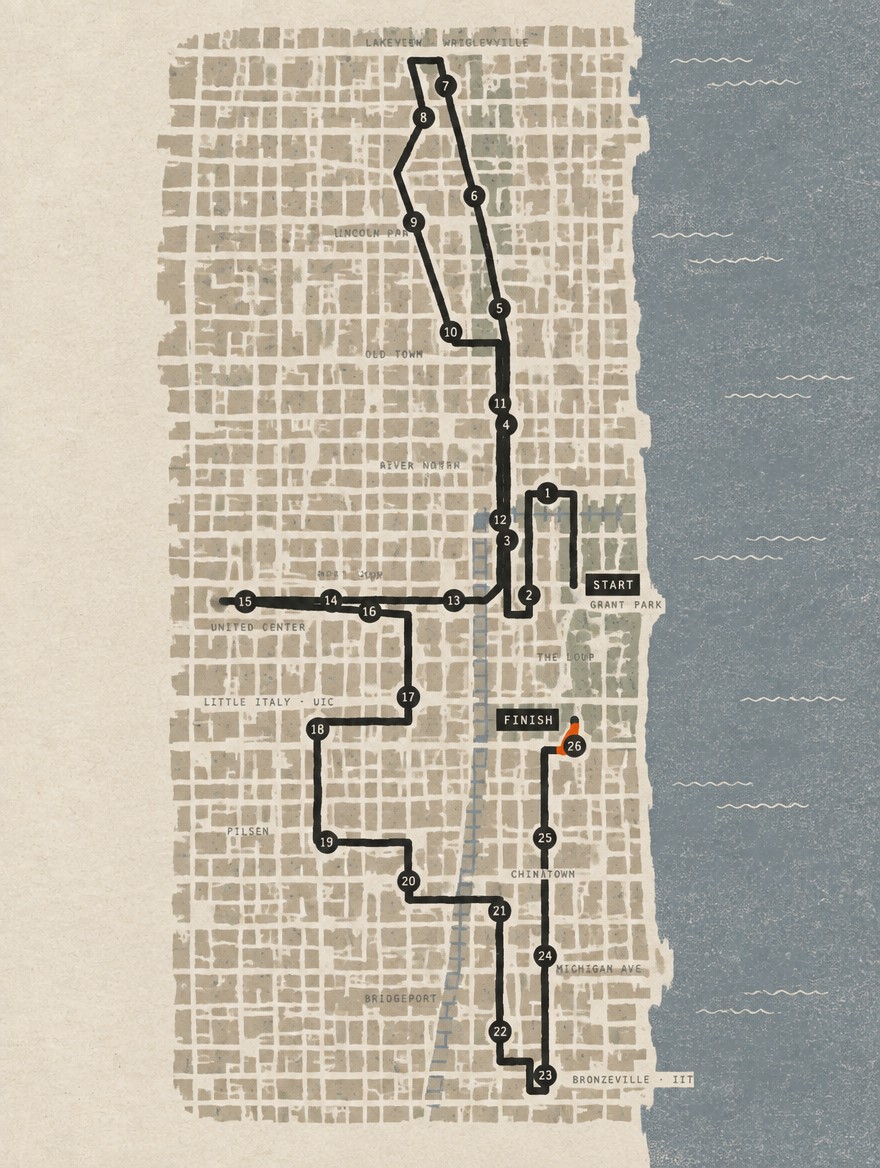
Chicago, mile by mile
Chicago
Flat, fast and loud for 26 miles, then 25 feet of hill with 200 metres to go. The whole course, mile by mile: where the turns are, where the crowd is, where the wind is, where your watch lies. Sunday October 11.
By Words, map and photograph: Graval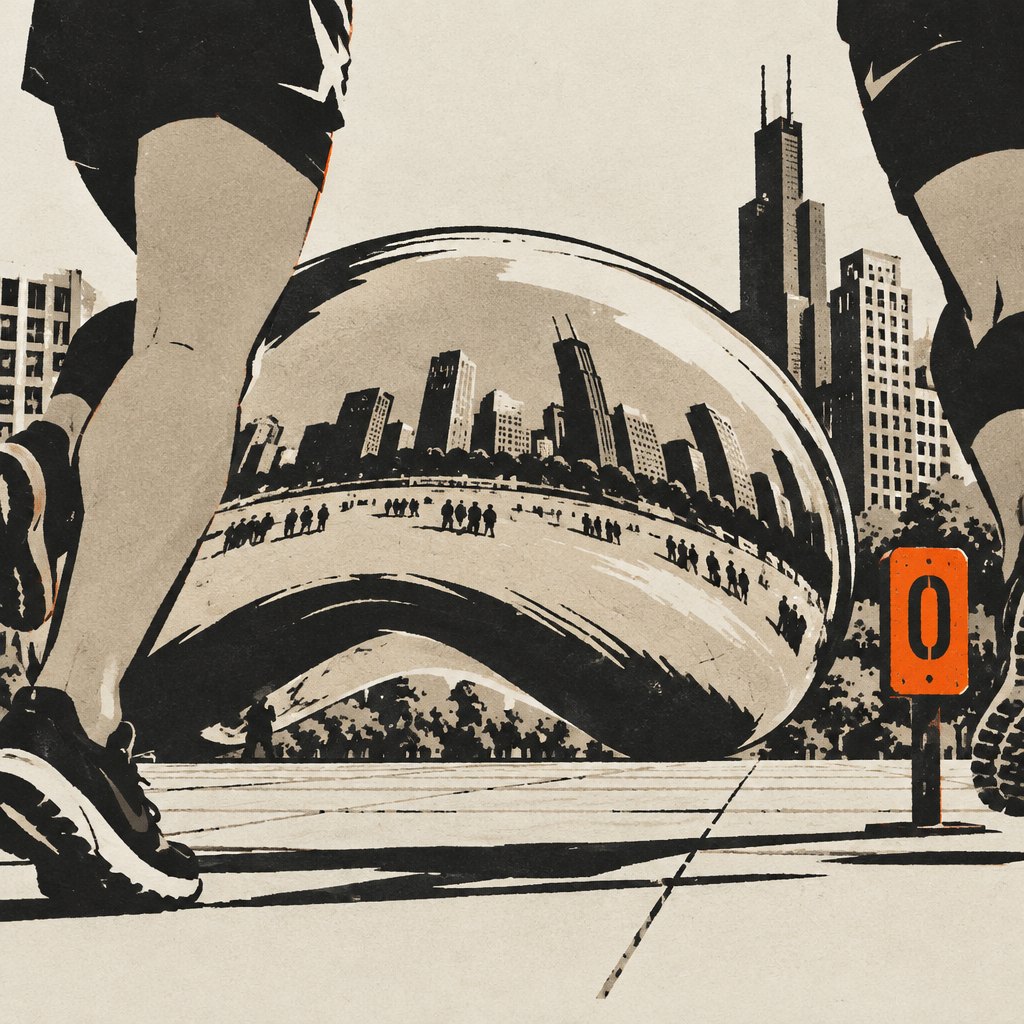 Stage 1
Miles 0 to 5
Don't trust the watch
You leave Columbus Drive north, swing west on Grand, south down State, west on Jackson and north up LaSalle. That zigzag crosses under the river three times in the first two miles and it is the reason your GPS will show you running a 6:40 mile you did not run. The towers eat the signal. Run on feel until you're clear of downtown around mile 3.
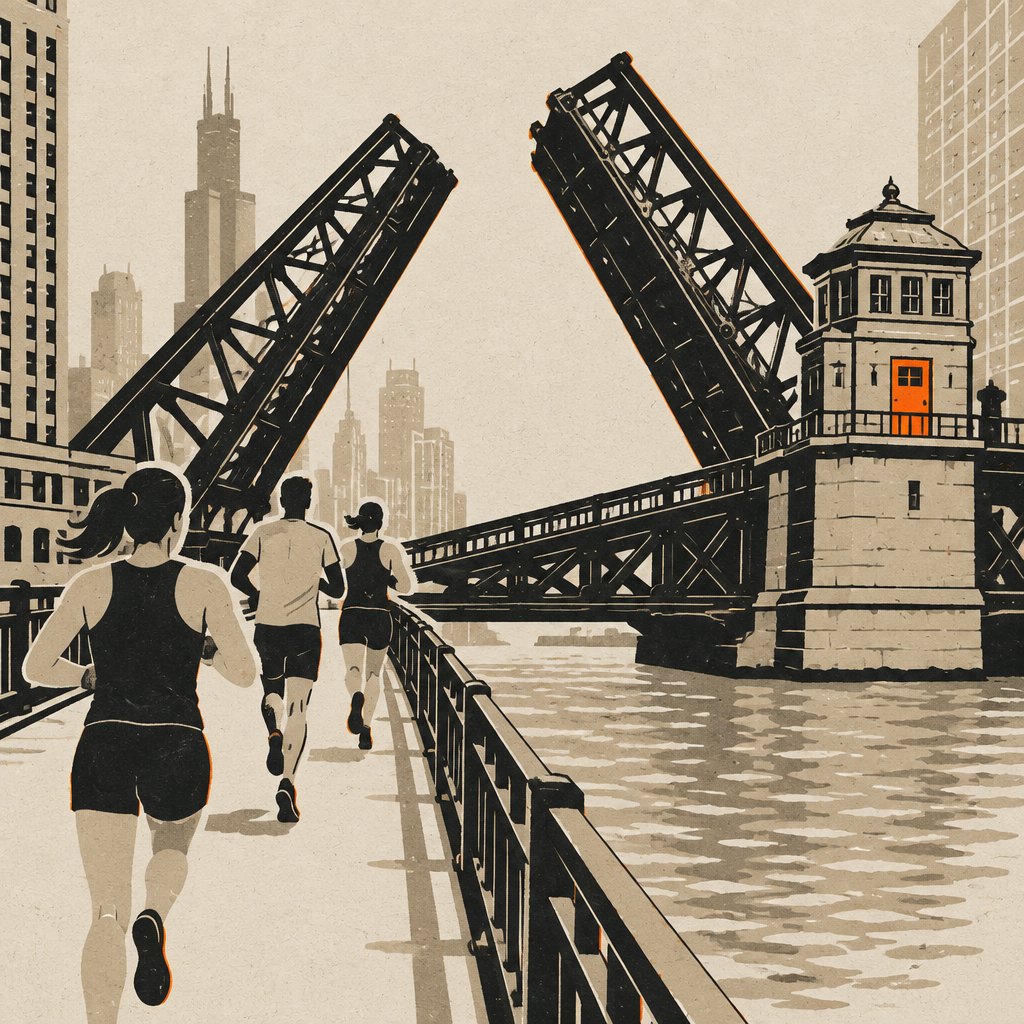
It is slightly downhill overall, net about 20 feet, and the streets are tight with 50,000 people in them. Crowd: good, not yet great. Aid: the first station is at mile 1.6.
Mile 0, Cloud Gate. The Bean is a block west of the start on Michigan. You won't see it from the corral. Everyone you know will be standing under it at 7 am.
Mile 1 to 2, The river, three times. Columbus, State and LaSalle all cross the Chicago River on bascule bridges. Steel grating underfoot on some; watch your footing when it's wet.
 Stage 2
Miles 5 to 10
The loudest miles
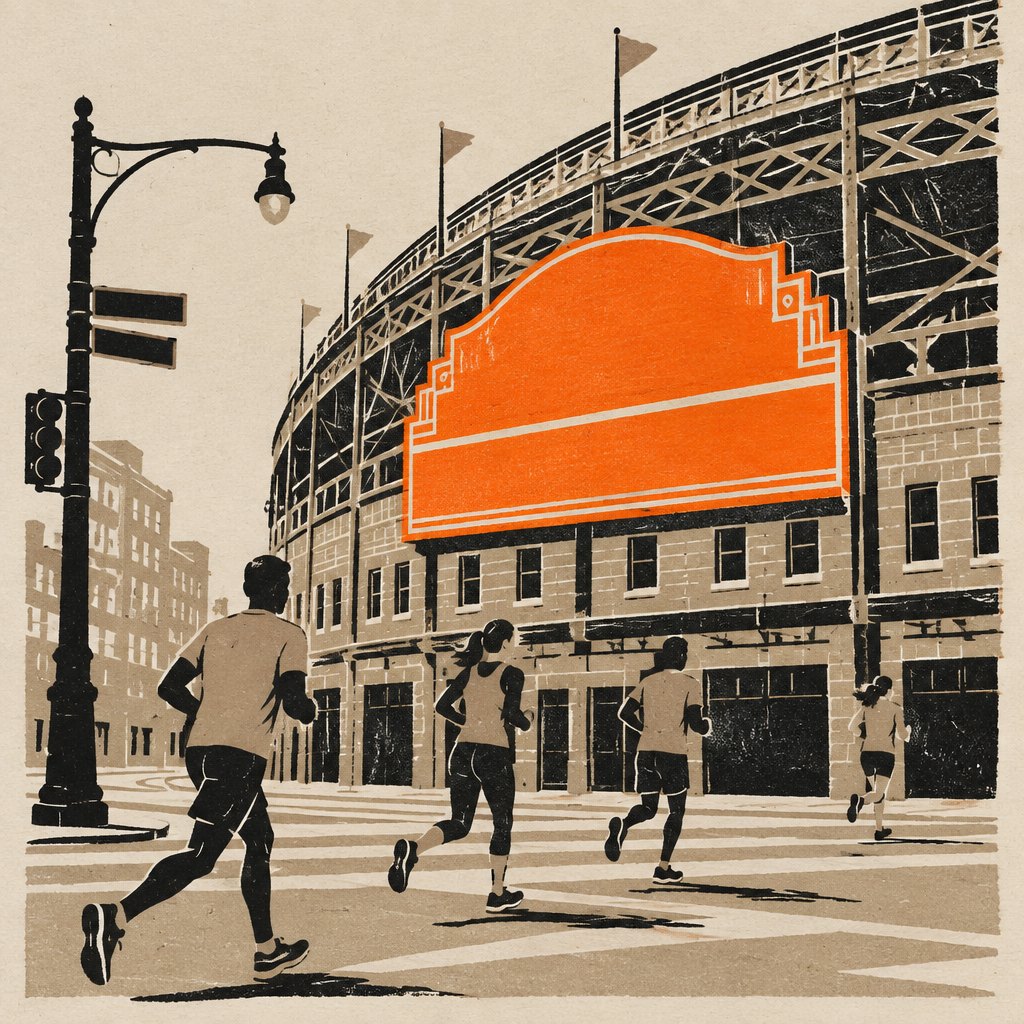
LaSalle becomes the park drive and you run up through Lincoln Park to Sheridan Road. This is where the crowd is thickest on the whole course and where your watch starts behaving. Old Town can turn into a wind tunnel between the buildings; if the flags are out, tuck in behind someone. Wrigley Field is at the top of the turn at Addison, mile 8. Aid at 3.1, 4.6 and 6.2.
West on Addison, then south down Broadway. Northalsted has a stage on the course with music and drag performers, and it is one of the two places the crowd will genuinely change your pace. It is also the first time you are heading back toward the finish, which the head likes. Aid at 7.8 and 9.3.
Mile 8, Wrigley Field. The turn at Clark and Addison. The marquee is on your right. This is the top of the course and the moment you start heading home.
 Stage 3
Miles 10 to 16
Back into the canyon, then dead flat
Clark to Wells, south through Old Town for the second time, then Franklin into downtown. The halfway mat is near the river. The buildings close in again and the GPS goes wrong again; know your real half split from the mat, not the wrist. The Bank of America cheer zone is at mile 13 on North Wacker. Aid at 10.9 and 12.4, and the first Maurten gel station is 12.4.
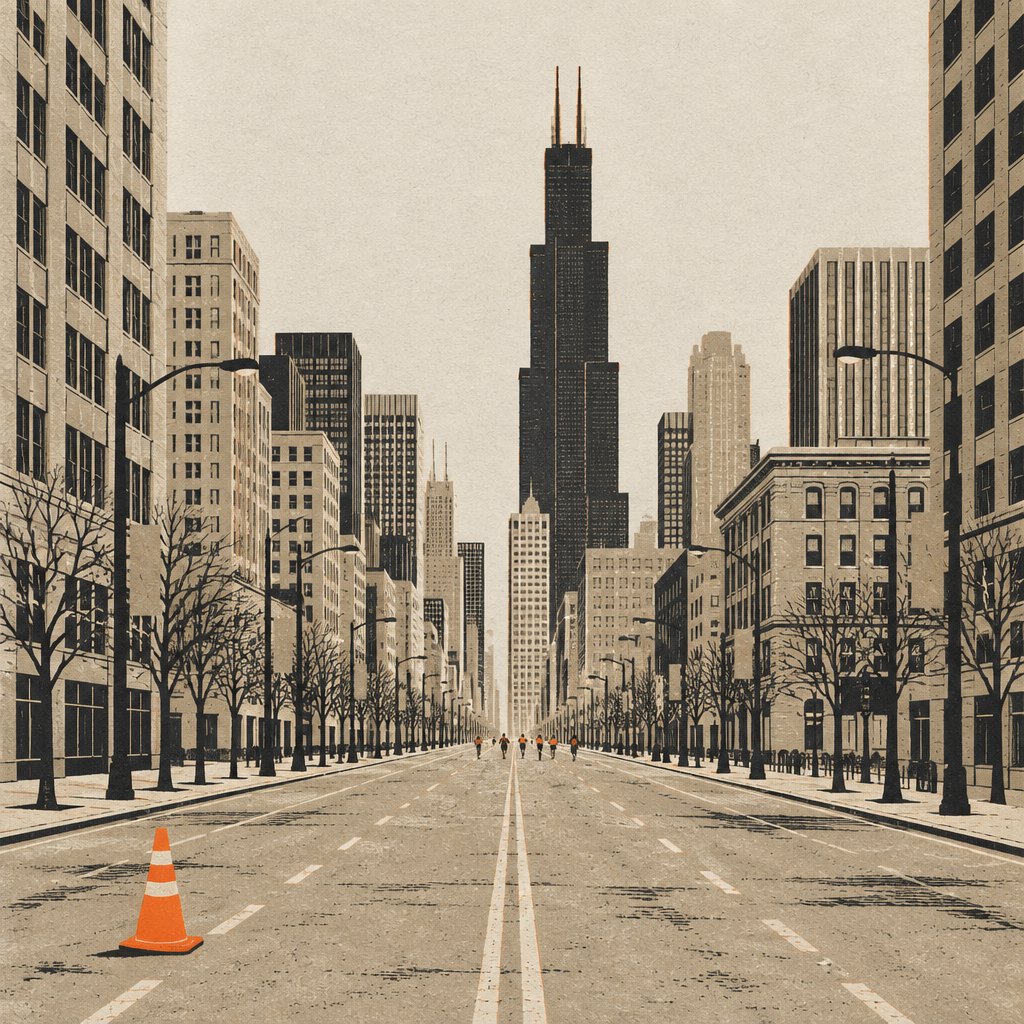
West on Adams all the way out to Damen, then back east on Jackson. It is dead flat and the crowd thins to a few deep. The Willis Tower sits straight ahead of you for the whole return, which is either a comfort or a taunt. The Charity Block Party is at Adams and Loomis by Skinner Park around mile 15: bands, tents, noise. Aid at 13.7 and 15.2.
Mile 14 to 16, The Willis Tower. Straight ahead down Jackson for the whole return from Damen. It doesn't get closer as fast as you'd like.
 Stage 4
Miles 16 to 21
The quiet middle, then the last of the noise
South on Halsted, west on Taylor past the university, south again toward Pilsen. Flat. Crowd two out of five. This is where a marathon is actually run: nothing to look at, nothing to hear, twelve miles to go. The second gel station is at 18.1. Aid at 16.6 and 18.1.

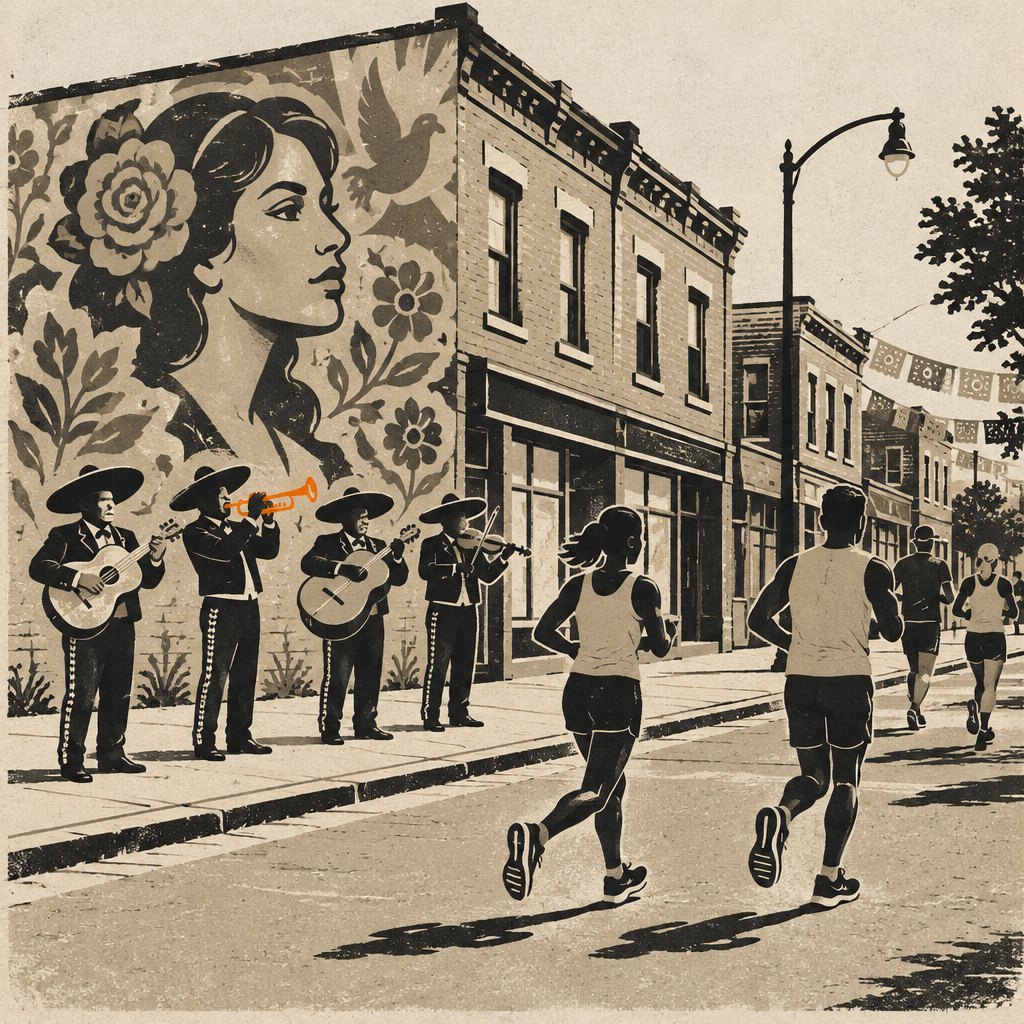
East along 18th Street through Pilsen: mariachi bands, murals, and the last place on the course where the crowd will lift you. South on Halsted, east on Cermak into Chinatown at mile 21, lion dancers at the gate and a near 180-degree turn onto Wentworth. Bananas start at 20.2. The Biofreeze zone is at 21.2. Aid at 19.6, 20.2 and 21.2.
Mile 19, Pilsen. 18th Street: murals, mariachi, the loudest block party on the south half. The last free energy on the course.
Mile 21, The Chinatown Gate. Lion dancers at the paifang on Wentworth, then a hairpin. Slow down for the turn; it's tighter than it looks.
 Stage 5
Miles 21 to 26
The hard part, into the wind
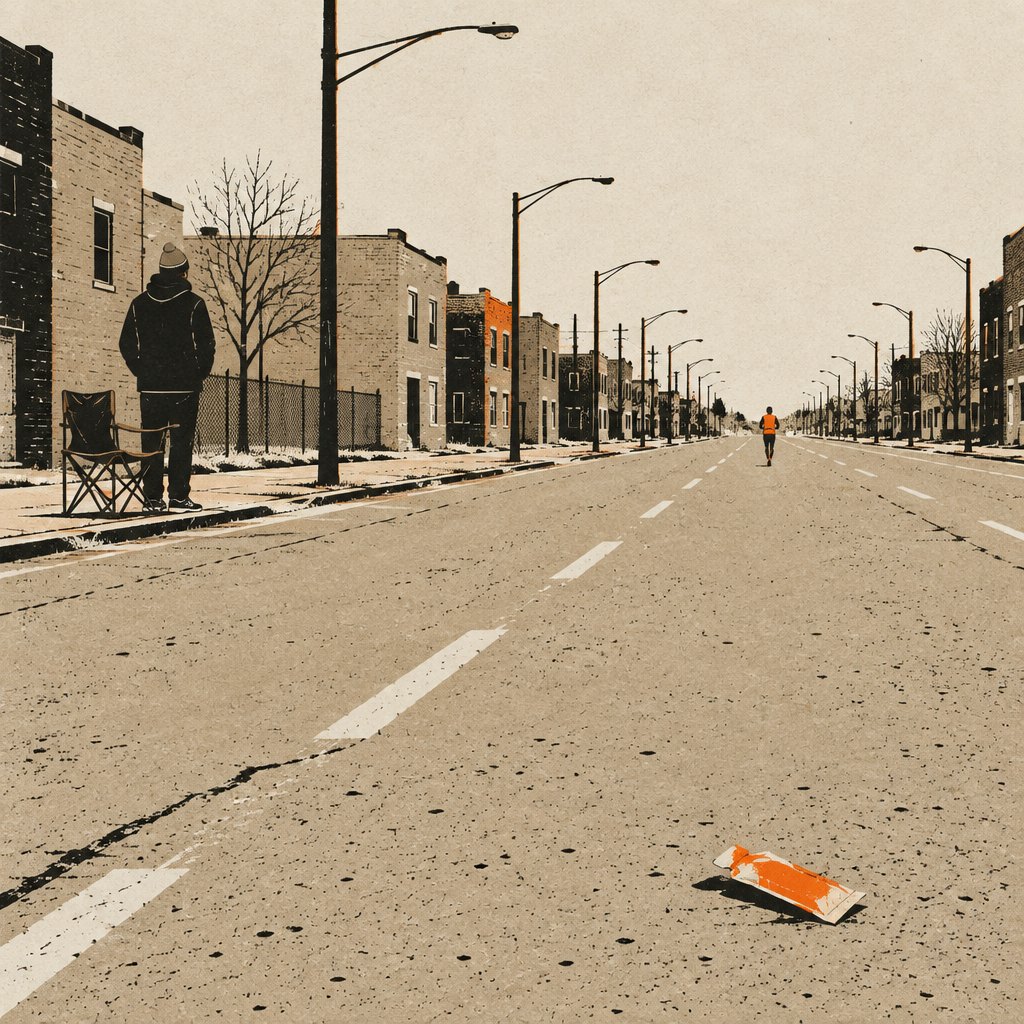
South on Wentworth, the little jog at 33rd, State and 35th. The crowd disappears almost completely; one out of five. It is the emptiest, flattest, most exposed part of the course, and it comes exactly where the race gets hard. Nobody is going to carry you here. Decide before the race what you will say to yourself at 22. Aid at 22.4 and 23.
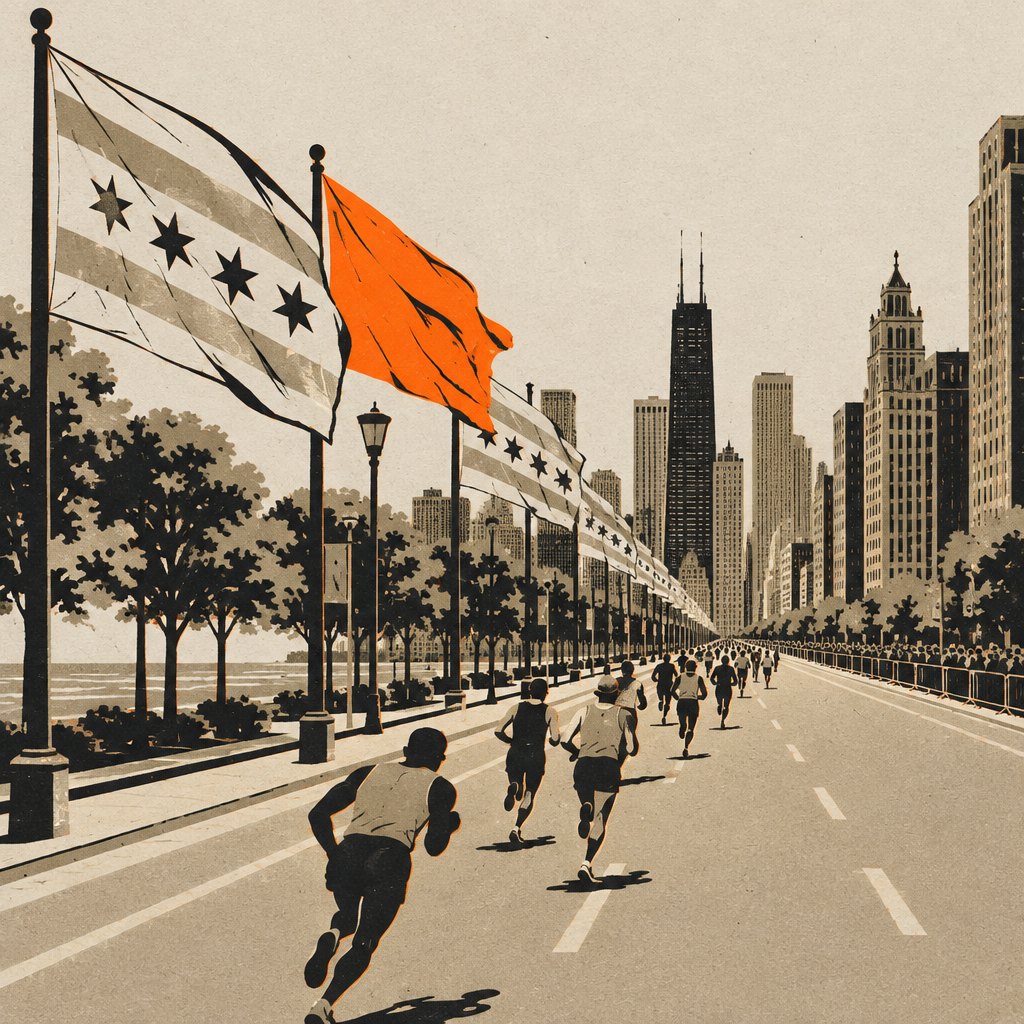
Left onto Michigan and it is a straight shot north for nearly three miles, a tiny incline you will feel more than see. This is the stretch that decides your time. If the wind is out of the north, and in October it often is, it is in your face from here to the finish and it can cost you minutes. The crowd builds back with every block. Aid at 24.5 and 25.6.
Mile 22, Wentworth Avenue. The quietest mile on the course. One spectator, a folding chair, and you.
Mile 24, Michigan Avenue, north. Three miles straight at the skyline. If the flags are pointing at you, tuck in and wait.
 Stage 6
Mile 26 to the finish
The hill, then home
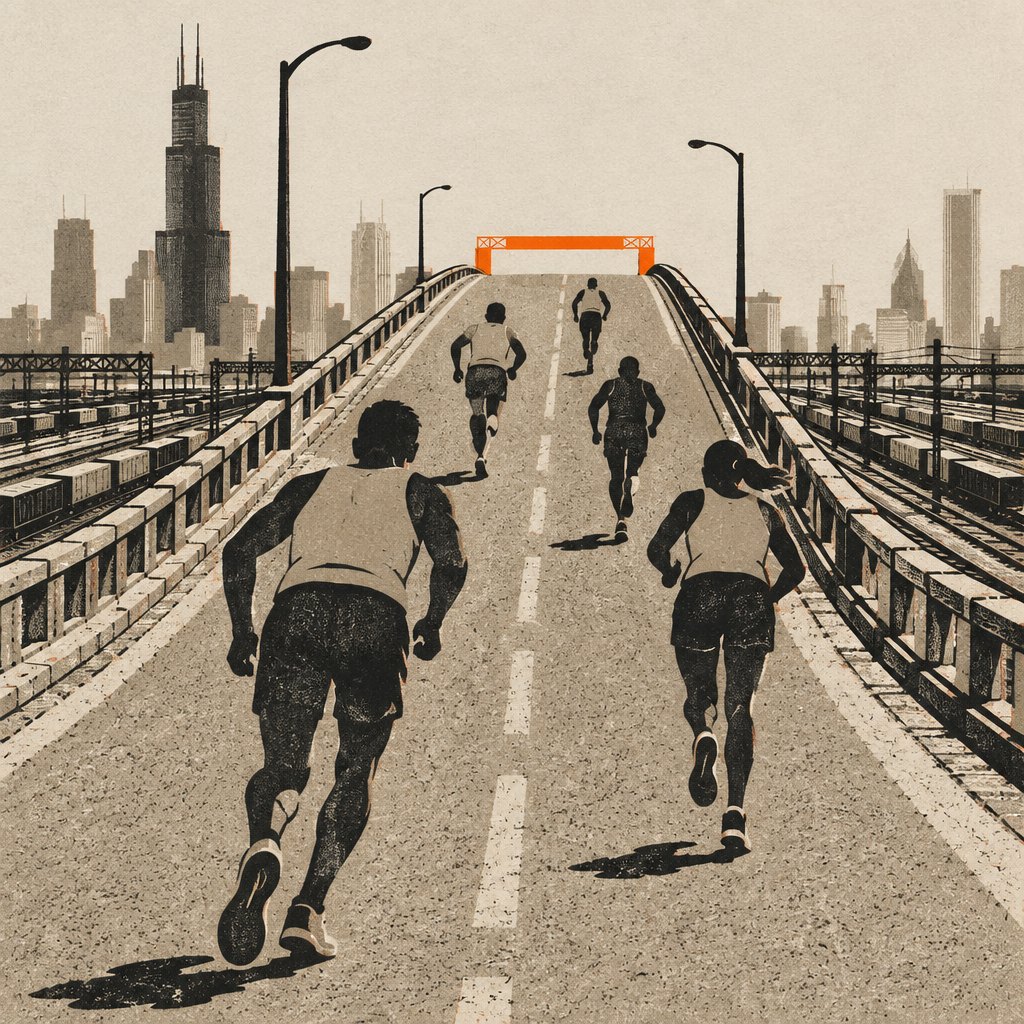
Right onto Roosevelt and there it is: about 25 feet of climb over the rail lines, the only hill in Chicago, with the finish in sight and 400 metres to go. It is not a hill. It is a hill at mile 26.
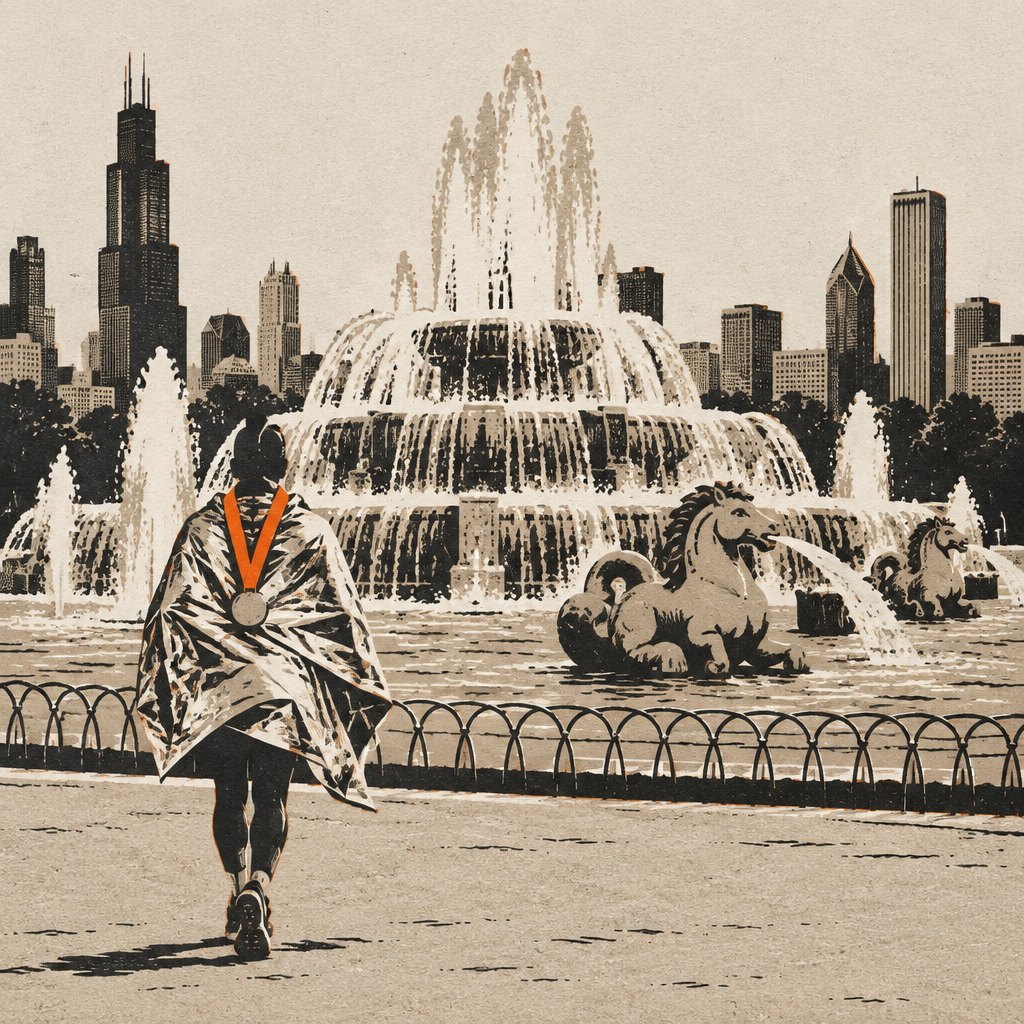
Crest it, turn left onto Columbus, and it's under 200 metres of downhill to the line. The Bank of America cheer zone at Michigan and Roosevelt is the loudest corner of the day.
Mile 26, Roosevelt Road. The bridge over the rail yards. Twenty-five feet. You'll see the finish gantry from the crest.
Mile 26.2, Buckingham Fountain. Where you'll be standing in a foil blanket twenty minutes later, wondering why you did it and when you can do it again.
20 aid stations roughly every mile from mile 1.6. Gatorade Endurance on the left, water on the right, medical tent, toilets and an announcer at every one. Refill stations at 5.7, 10.1, 15.7 and 20.3. Gels at 12.4 and 18.1. Bananas 20.2 to 23. Extra medical tents between 14 and 15 and in the last mile: 22 medical points in all.
Five things- Run the first three miles by effort. The watch is lying.
- Bank nothing on the way north. The wind decides the last six miles, not you.
- Pilsen at 19 is the last free energy on the course. Chinatown at 21 is the last of the noise.
- Have a sentence ready for mile 22. You will need it on Wentworth.
- Roosevelt is 25 feet. Don't attack it; crest it and let Columbus take you home.
- 5Lincoln Park, the 8K cheer zone. Brown Line to Sedgwick.
- 8Northalsted, Broadway between Sheridan and Belmont. Red Line to Addison or Belmont.
- 13North Wacker, the halfway cheer zone.
- 15Charity Block Party, Adams and Loomis. Blue Line to Racine.
- 21Chinatown, Cermak and Wentworth. Red Line to Cermak-Chinatown.
- 26Michigan and Roosevelt. The finish cheer zone; the east-side viewing area is ticketed.
- Where to stay
- Anywhere on the L. The start is a walk from the Loop hotels; the finish is the same park.
- Getting there
- CTA runs early. Red, Blue and Brown Lines all touch the course.
- The weather
- October in Chicago: 40s at the start, 60s by noon, and the wind is the variable.
- After
- Post-3:30 finishers exit west of the line. The park is the party.
Sources: Bank of America Chicago Marathon: course, amenities, spectator and street-closure pages (chicagomarathon.com); chi.run, the course mile by mile; Choose Chicago, spectator guide 2025; City of Chicago OEMC, marathon closures.
The Question
The six-minute mile
What does it take to run a six-minute mile?
Six minutes is the currency of respectable. It's the door to a sub-20 5K, a sub-40 10K and, eventually, a three-hour marathon. Most people have no idea how you get there. Here's the honest answer.
By Graval · Illustrations: GravalMonths of easy running at a low heart rate to build a base, then speed on top of it. That's it. It's boring, it's slow, and it's the part almost everyone skips, which is why almost everyone stays at seven-thirty.
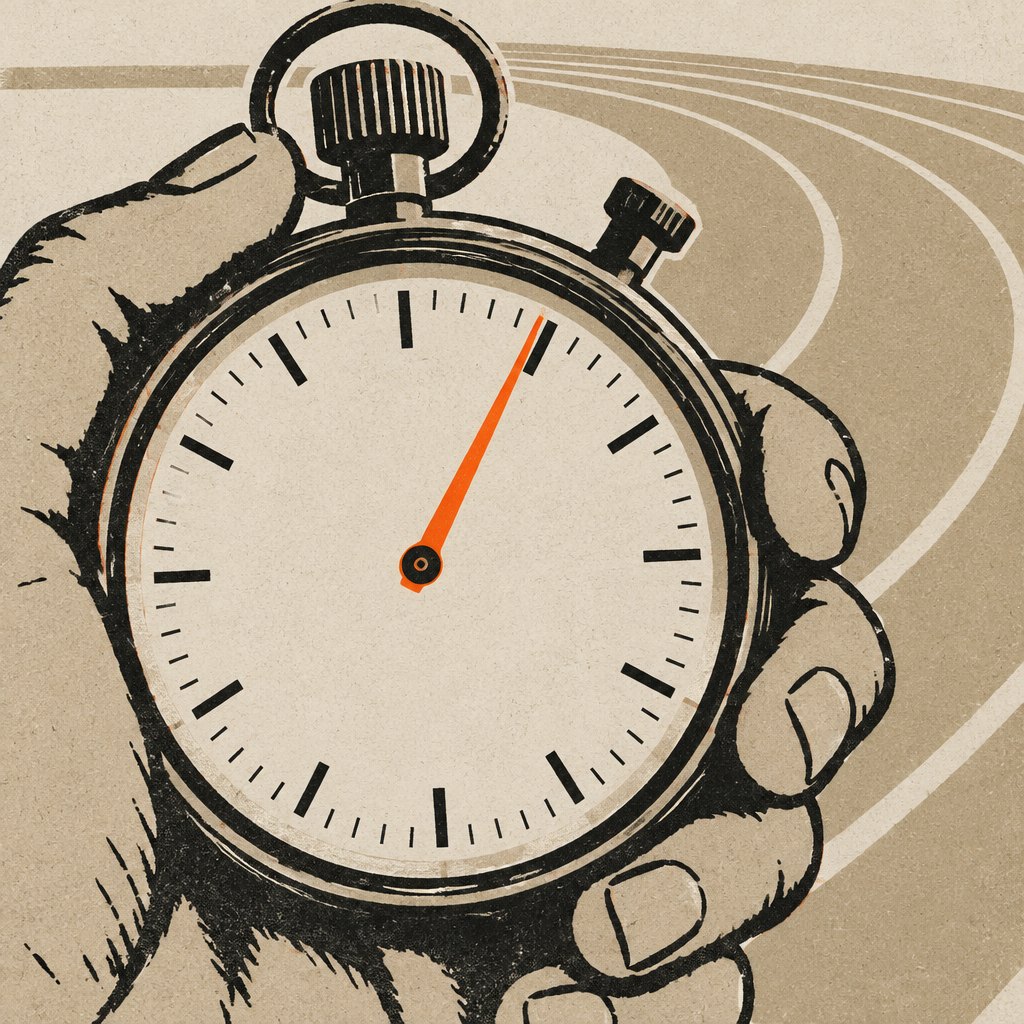
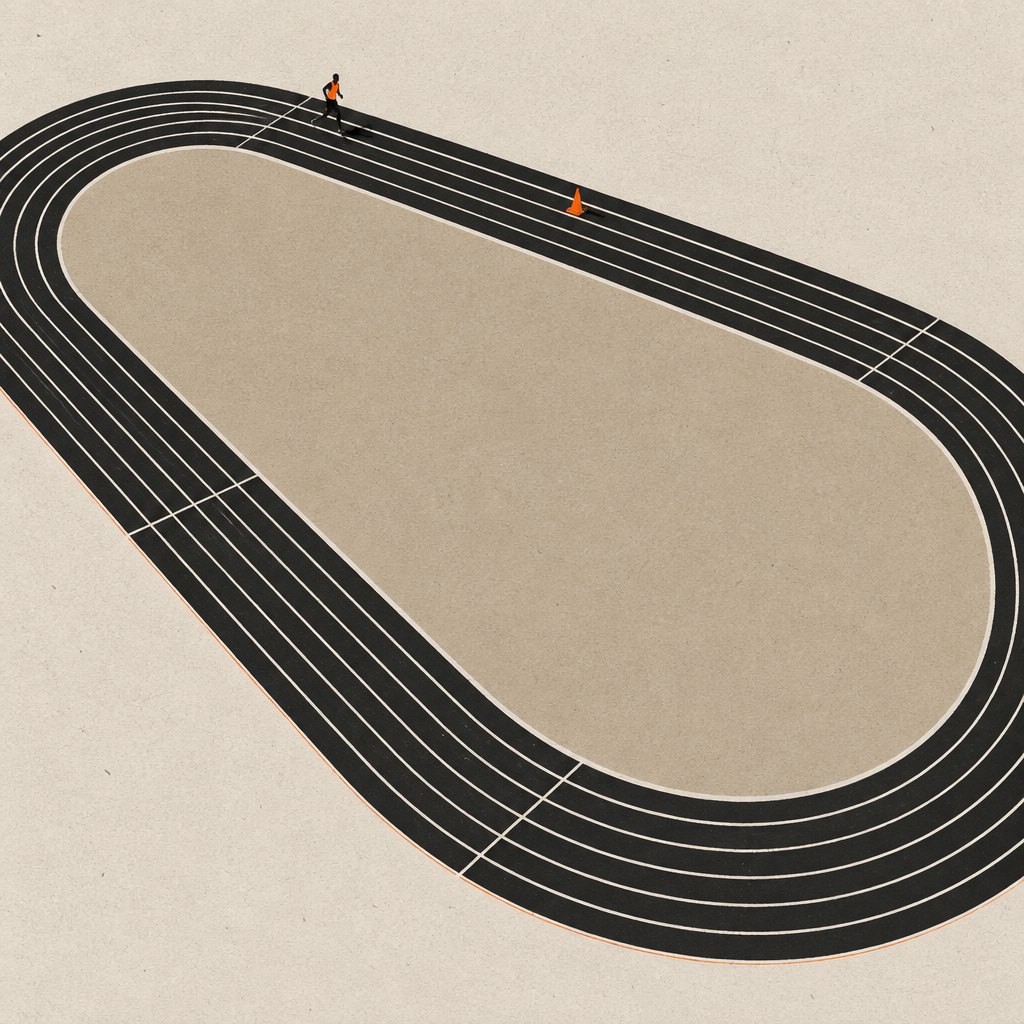
Start with what six minutes actually is. It's 3:44 a kilometre, 90 seconds a lap of the track, 22.5 seconds per hundred metres. Say it that way and it stops being a number and becomes a feeling: fast, controlled, and held for four laps. Jack Daniels' tables put a 6:00 mile alongside roughly a 20:30 5K, a 42:30 10K and a 3:15 marathon. Nobody runs those off a good day. They run them off a base.
The base is the answer nobody wants. It means running most of your miles slowly, at a pace where you can talk in full sentences, for months, before you do anything that feels like training. The research on elite endurance athletes across sports keeps finding the same split: about 80 percent of training easy, 20 percent hard. The easy running builds the engine: more capillaries, more mitochondria, a heart that moves more blood per beat. Speed work on top of no base is a loan you can't repay; it works for six weeks and then you're injured or stale.
How long? Honestly, it depends where you start, and anyone who gives you one number is selling something. The coaching rule of thumb, and our own experience: from a comfortable 7:30 mile, one focused season of base then speed, twelve to twenty weeks. From nine minutes, most of a year, sometimes more. From not running, two years is a fair expectation and a good one. The number that matters isn't the weeks. It's the months in a row you don't miss.
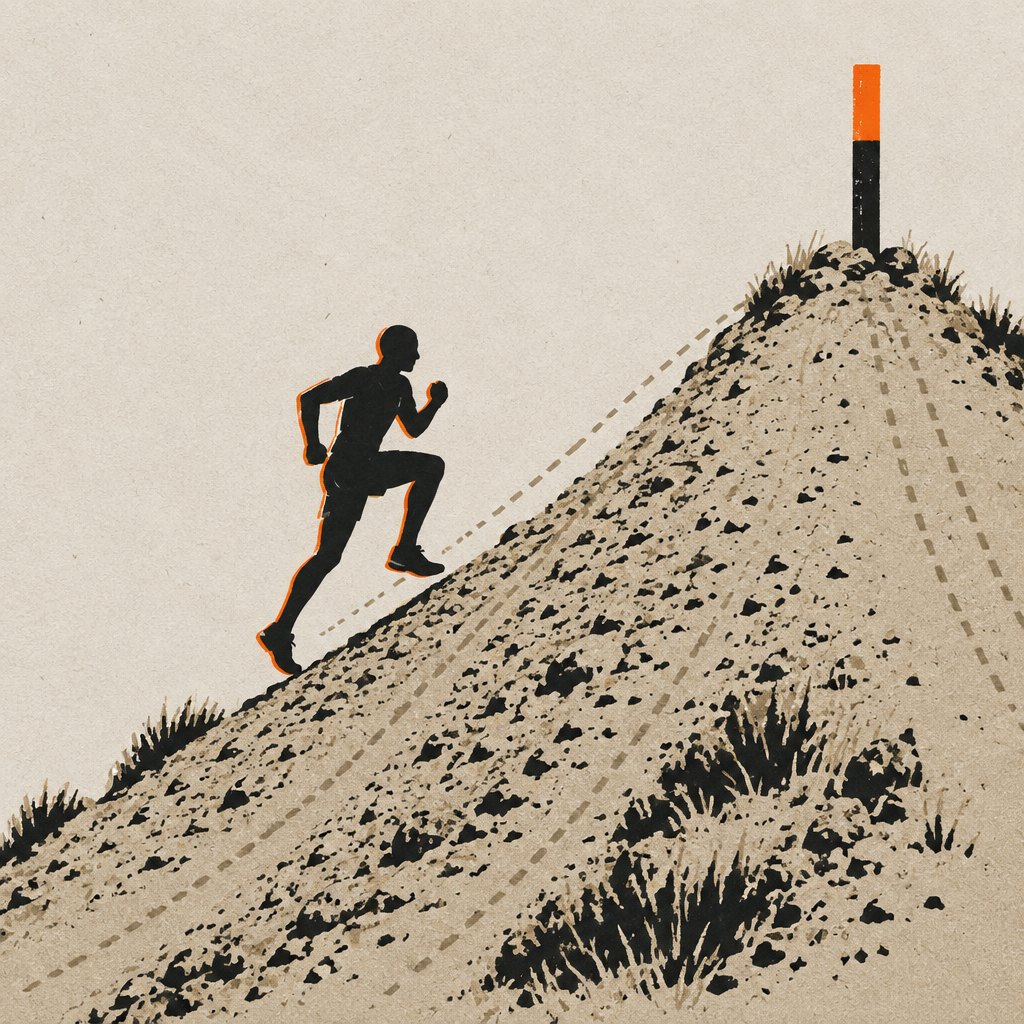
Then, and only then, the speed. Strides at the end of easy runs, first. Then one session a week: 400 metre repeats at goal pace with a lap jog between, building from six to twelve. Then a tempo run, twenty minutes at a pace you could hold for an hour. Hills when the track bores you; they're strength work in disguise. One hard day a week, then two. Never three. The easy days stay easy, or none of it works.
The last thing to know is that the six-minute mile is not a mile. It's a way of training that, once you have it, gets you every other time you've ever wanted. The 5K falls, then the 10K. The marathon gets thinkable. That's why six matters. It's not the finish line. It's the door.
Six minutes at every age
Was it even possible in your eighties? Yes. Once. Here is what the mile record is at every age, and what six minutes means against it.
Men 3:42.66, the open record, Josh Kerr, 2026
Women 4:07.64, the open record, Faith Kipyegon, 2023
Six minutes is a fit high-schooler's time. Nobody keeps a record for it.
Men 3:51.38, Bernard Lagat, 35 and over
Nothing has changed yet. If you can't run six, it isn't your age.
Men 3:57.91, Bernard Lagat, at 40. 4:10.30 at 45
A 40-year-old has run under four. Six is ordinary-good at 40, and a real target from any starting point.
Men 4:17.19 at 50. 4:29.60 at 55
Women 5:08.47 at 55, Anne Gilshinan
The record is still 100 seconds under six. Six at 50 is a season's work for a runner and a year for a beginner.
Men 4:41.81 at 60, Andrew Ridley. 4:56.4 at 65
Women 5:27 indoors at 60, Anne Gilshinan
Still well inside six for the best men; the best women are inside it too. This is where six starts to mean something.
Men 5:19.75 at 70, Joop Rüter. 5:36.09 at 75
Women 6:47.91 at 70, and 6:58.44 at 75, Jeanne Daprano
At 70 the men's record is 40 seconds inside six. No woman has run six at 70; the record is 6:47.
Men 5:56.93 at 80, José Rioseco, 2021. 6:40.25 at 85
Women 8:52.77 at 80, Jeanne Daprano
Yes, it has been done at 80. Once, by the fastest 80-year-old there has ever been, by three seconds. At 85, nobody.
Men 7:43.58 at 90, Manuel Alonso
Seven forty-three at ninety. Read that twice.
So: six is possible for the best of us into our eighties, and for the rest of us it's a fair target into our fifties, a hard one in our sixties, and a story to tell in our seventies. What changes with age isn't whether. It's how long the base takes and how much the easy days matter.
- Easy
- Conversational pace, most of your miles. The engine.
- Long run
- One run a week that's longer than the others, still easy. Endurance and durability.
- Strides
- Six to eight relaxed 20-second pickups after an easy run. Speed without cost.
- Tempo
- Twenty to forty minutes at a pace you could hold for an hour. Teaches the body to clear lactate.
- Intervals
- Repeats of 400 to 1,000 metres at goal pace with a jog between. Where the six-minute mile is built.
- Hills
- Short, hard efforts up a slope, walk down. Strength and form.
- Repeats
- Any hard effort done again with rest. The rest is part of the workout.
- Weeks 1 to 6
- Base. Four or five easy runs a week, one of them long. Strides twice a week. No hard days.
- Weeks 7 to 9
- Add one hard day: 6 to 8 x 400 at 90 seconds, lap jog between. Everything else stays easy.
- Weeks 10 to 11
- Two hard days: the 400s, growing to 10 to 12, and a 20-minute tempo. Long run holds.
- Week 12
- Cut volume by a third. One short session of 4 x 400 at pace. Then a Thursday evening, an empty track, a watch.
Sources: Jack Daniels, Daniels' Running Formula, VDOT equivalence tables; Stephen Seiler, research on training-intensity distribution in endurance athletes; Matt Fitzgerald, 80/20 Running; World Athletics, London Athletics Meet report, July 18, 2026 (Kerr's 3:42.66); Pace arithmetic is arithmetic; Masters records: see Six minutes at every age.
The Workout
Six sessions, thirty seconds at a time
Six sessions, thirty seconds at a time
The shortest hard workout there is: a handful of all-out thirty-second efforts with long rests. It takes twenty-five minutes and the research on it is better than you'd guess.
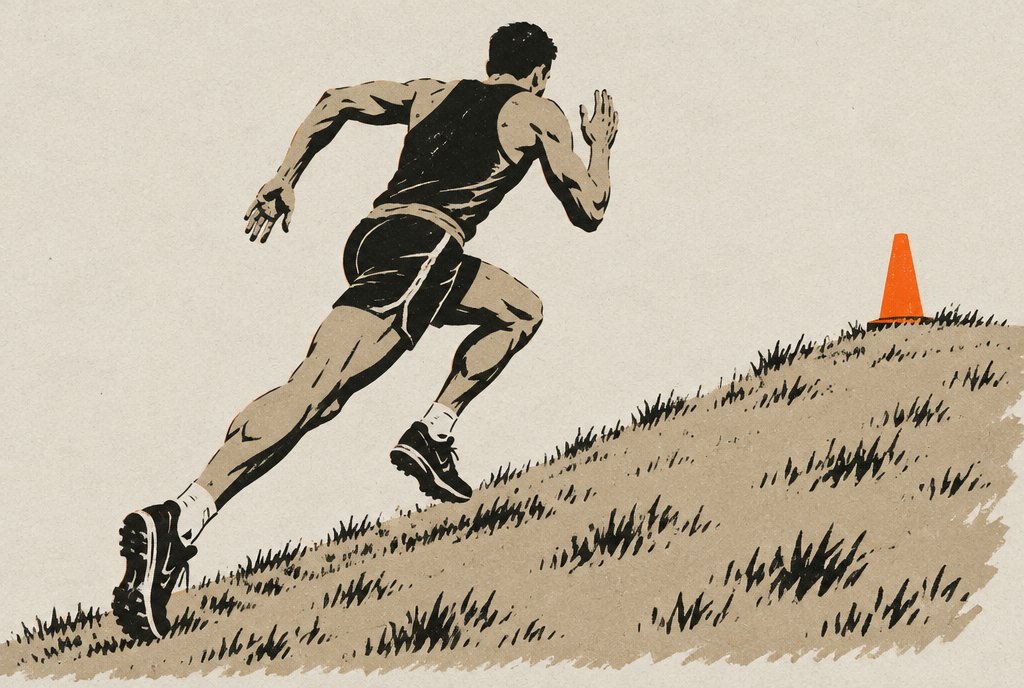
By Graval · Illustrations: GravalFour to seven sprints of thirty seconds, flat out, with four minutes of walking between. Twice a week for a few weeks, on grass or a hill. It builds speed you can't get from easy miles, and it's over before it gets boring.
Most runners only have two gears: easy, and the slightly-too-hard pace they do everything else at. A proper sprint is a third gear, and almost nobody trains it, because it sounds like something for track athletes. It isn't.
The study worth knowing: trained runners did just six sessions over two weeks. Each session was four to seven all-out thirty-second sprints with four minutes of recovery between. Their 3,000 metre time improved by 5.7 percent. Six sessions. A separate Danish study had trained runners do ten sessions of thirty-second efforts over forty days and found 10K times improved by about three percent, with running economy up around two percent.
Why would thirty seconds help a 10K? Sprinting recruits muscle that easy running never touches and teaches your legs to produce force quickly. That makes every slower pace cost a little less. It's the same reason the six-minute mile plan in this issue starts with strides.
Do it where a fall is cheap. A grass field or a gentle hill is kinder than a track, and uphill sprinting is hard on the lungs and easy on the hamstrings. Warm up for ten minutes first, and make the first two sprints about ninety percent. Flat-out sprinting on cold legs is how people pull things.
And respect the rest. Four minutes of walking feels like too much. It's the point: each sprint should be as fast as the first. If the third one is slow, you've stopped doing this workout and started doing a different, worse one.
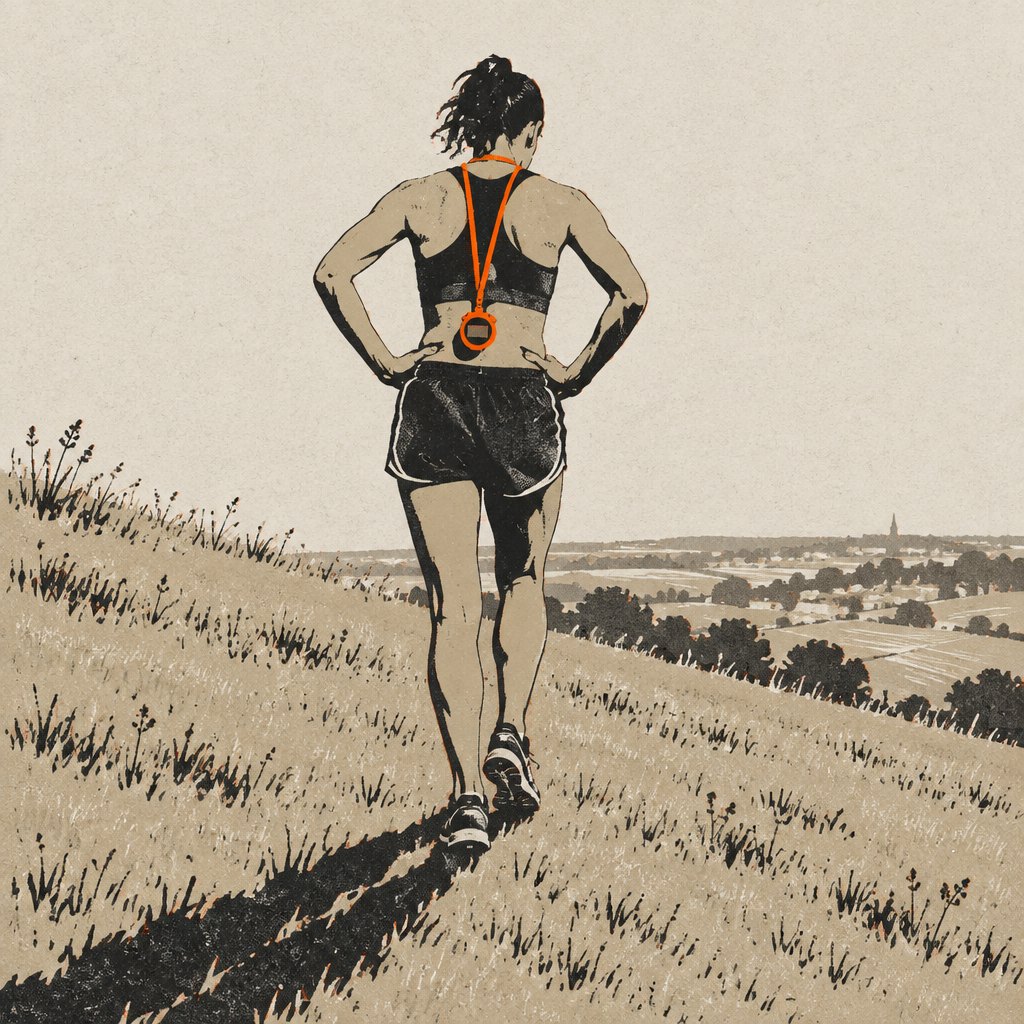
The session
Ten minutes easy, then two relaxed pickups.
4 x 30 seconds, as fast as you can hold. Build to 7 over a few weeks.
Four minutes of walking between each. All of it.
Grass or a gentle hill. Not downhill.
Twice a week, with easy days around it. Swap it in for one hard day; don't add it.
If you're new to running or coming back from injury, do strides for a month first: 20 seconds, relaxed, fast but not flat out.
Sources: Koral and others, Six sessions of sprint interval training improves running performance in trained athletes, Journal of Strength and Conditioning Research, 2018; Skovgaard and others, The effect of repeated periods of speed endurance training on performance, running economy, and muscle adaptations, Scandinavian Journal of Medicine & Science in Sports, 2018.
Fuel
Do you need gels for a marathon?
Do you need gels for a marathon?
Chicago hands out gels at two places on the course. The research says you need a lot more than two. Here's the arithmetic, and how to practise it.
By Graval · Illustrations: GravalFor a marathon, yes. Your body stores enough carbohydrate for roughly two hours of hard running, and the race is longer than that. The research says 30 to 60 grams an hour, more if you're out past two and a half. That's a gel every 25 to 45 minutes, starting early.
The wall is a fuel problem. You carry a limited store of carbohydrate in your muscles and liver, enough for something like ninety minutes to two hours of marathon effort. When it runs low you slow down hard, and no amount of wanting it fixes that. Taking in carbohydrate during the race pushes the wall back, sometimes past the finish.
How much is not a mystery. The standard guidance, from the researcher whose name is on most of this work, is about 30 grams an hour for efforts of one to two hours, rising to 60 grams an hour as it gets longer, and up to 90 grams an hour beyond two and a half hours. At the high end it has to be a mix of two sugars, glucose and fructose, because the gut can only absorb about 60 grams an hour of one type.
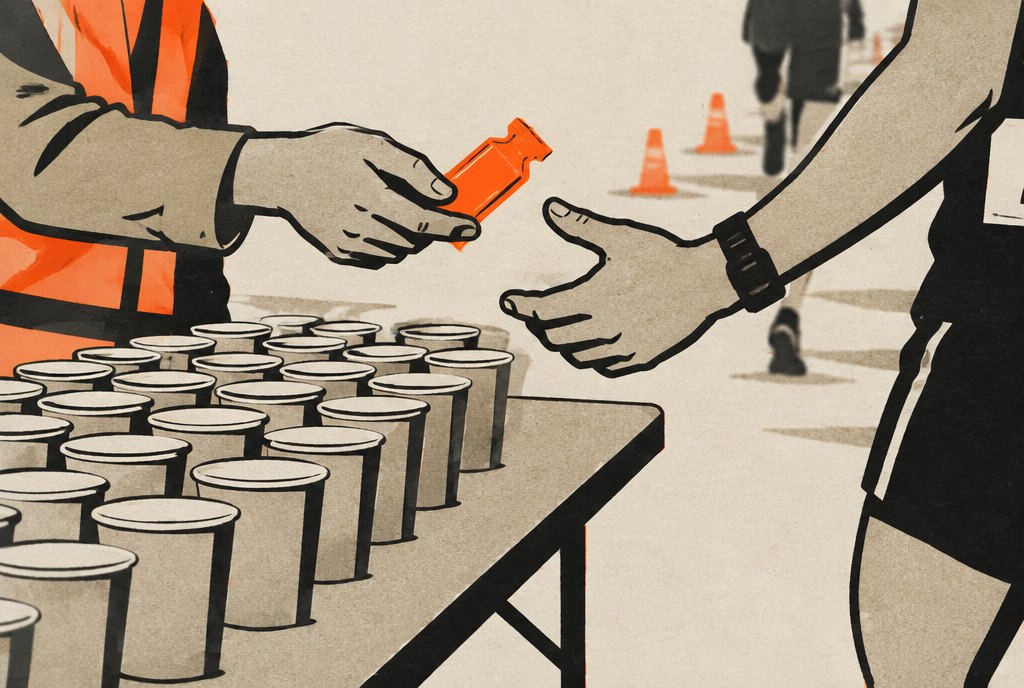
Now look at a gel. Most carry 20 to 25 grams. So 60 grams an hour is a gel roughly every 25 minutes; 30 grams an hour is one every 45. Over a four-hour marathon that's somewhere between five and nine gels. Chicago offers them at mile 12.4 and mile 18.1. If the course is your plan, you're taking two.
So carry your own, and start early, around 30 to 40 minutes in, before you feel you need it. By the time you're hungry at mile 18 it's too late for that gel to save mile 22. Take them with water, not sports drink, or the sugar load in your stomach doubles.
The rule every marathoner learns once: nothing new on race day. Your gut adapts to carbohydrate the same way your legs adapt to miles. Use the gel you'll race with on your long runs, at the rate you'll race at. If it's going to upset your stomach, find out on a Sunday in training.
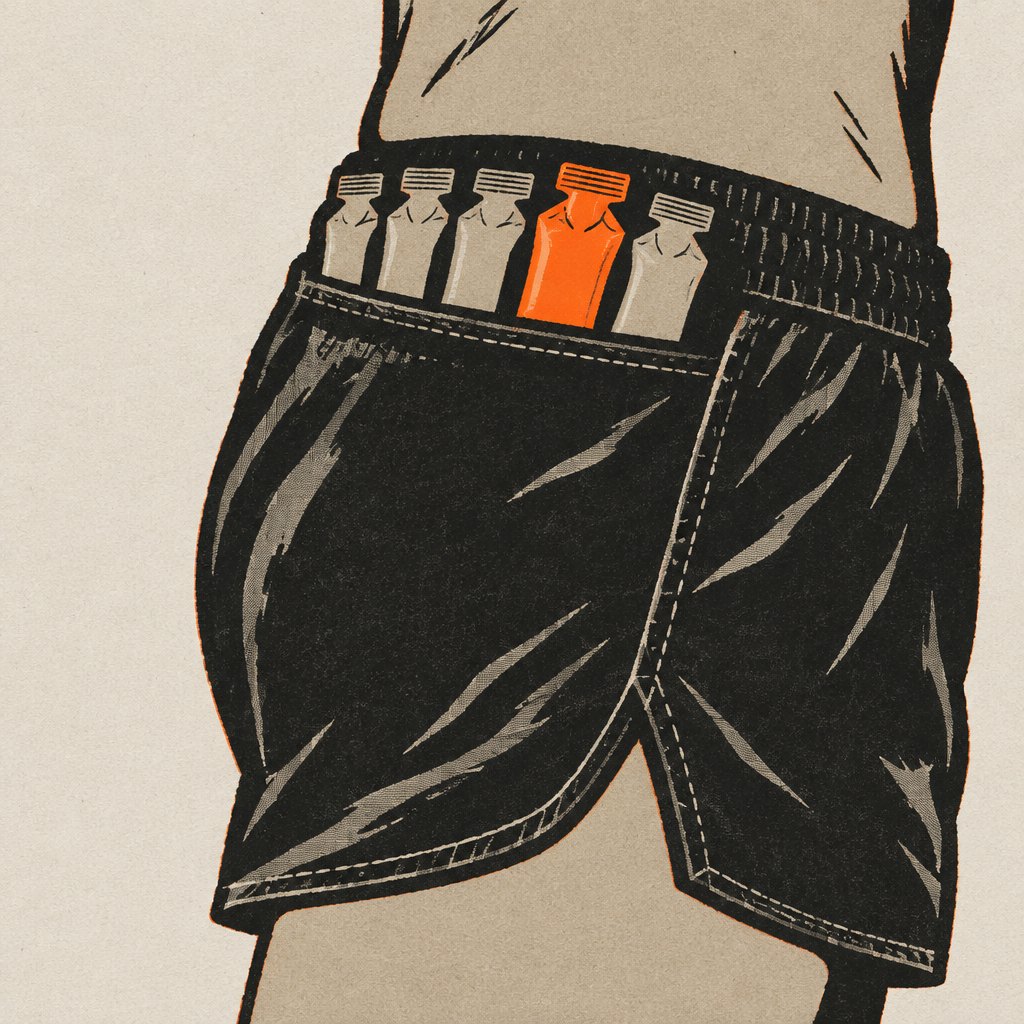
The arithmetic
Nothing needed. Water if it's hot.
About 30 g of carbohydrate an hour. One gel every 45 minutes.
Up to 60 g an hour. One gel every 25 minutes or so.
Up to 90 g an hour, from a glucose and fructose mix. Train your gut for it.
20 to 25 g. Read the packet.
Course gels at 12.4 and 18.1 only. Carry the rest.
Not medical advice. If you have diabetes or a condition that affects blood sugar, plan your fuelling with your doctor.
Sources: Jeukendrup, A step towards personalized sports nutrition: carbohydrate intake during exercise, Sports Medicine, 2014; Bank of America Chicago Marathon, course amenities (gel stations at miles 12.4 and 18.1); Gel carbohydrate content is from typical product labels and varies by brand.
The Ground
The Ground
The Ground
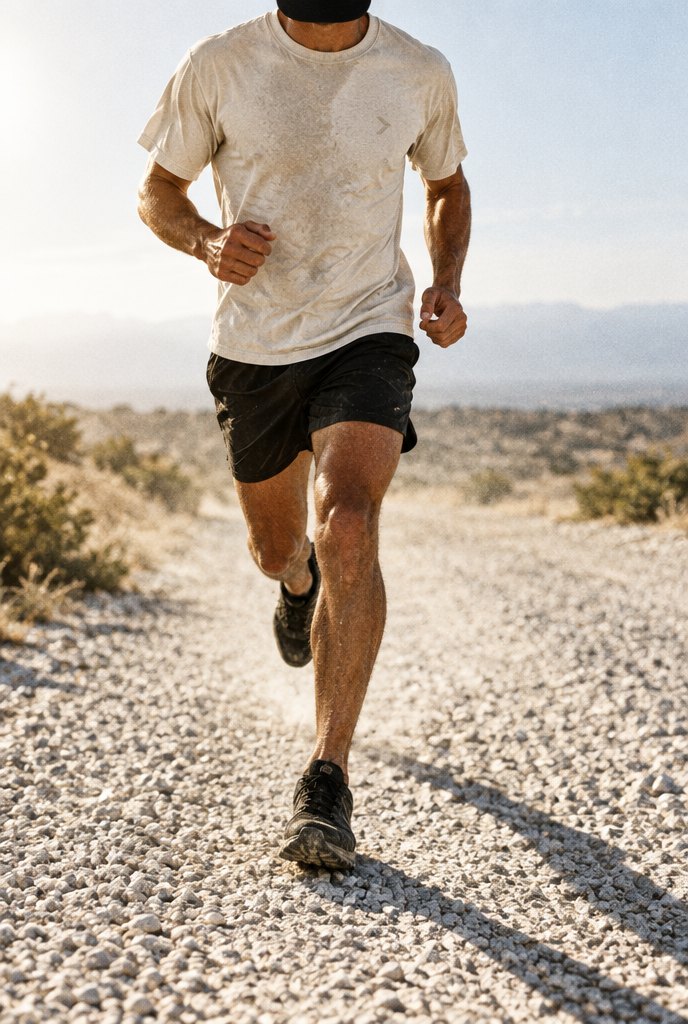
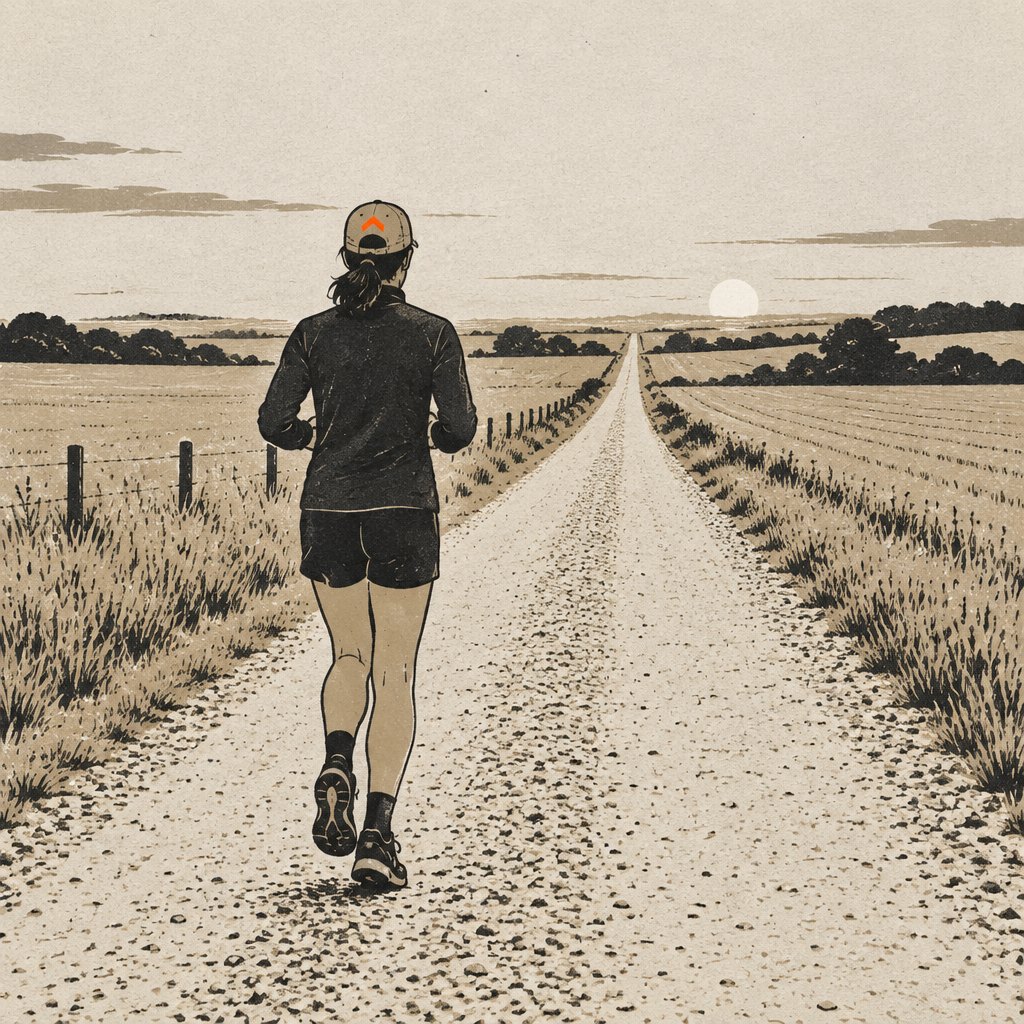
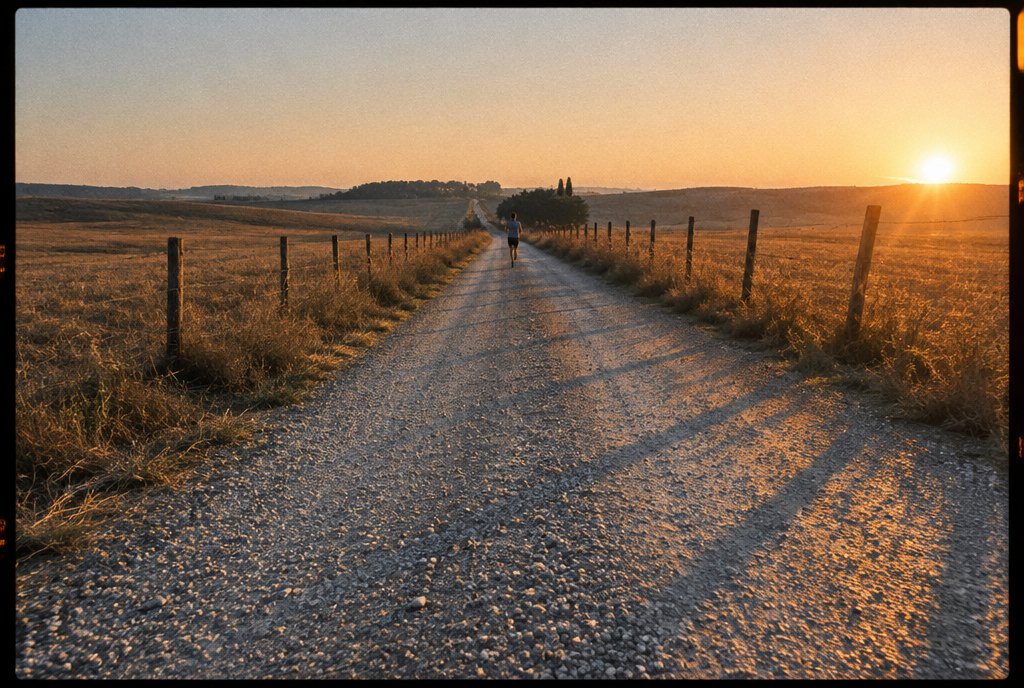
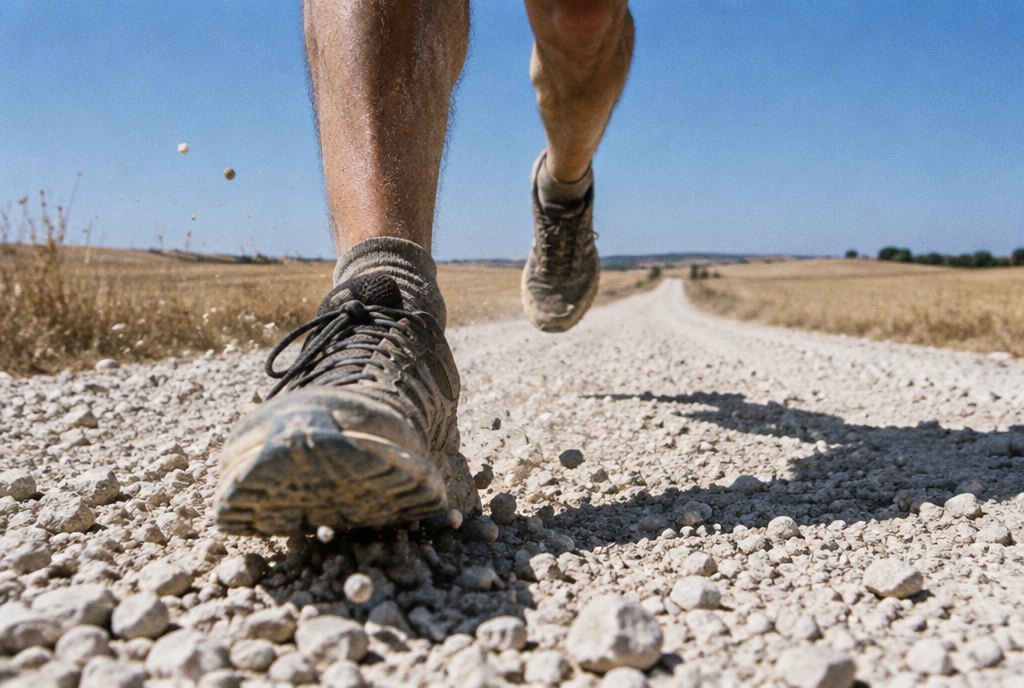
One gravel road, one day, six frames. Nobody else on it.
Photographs: Graval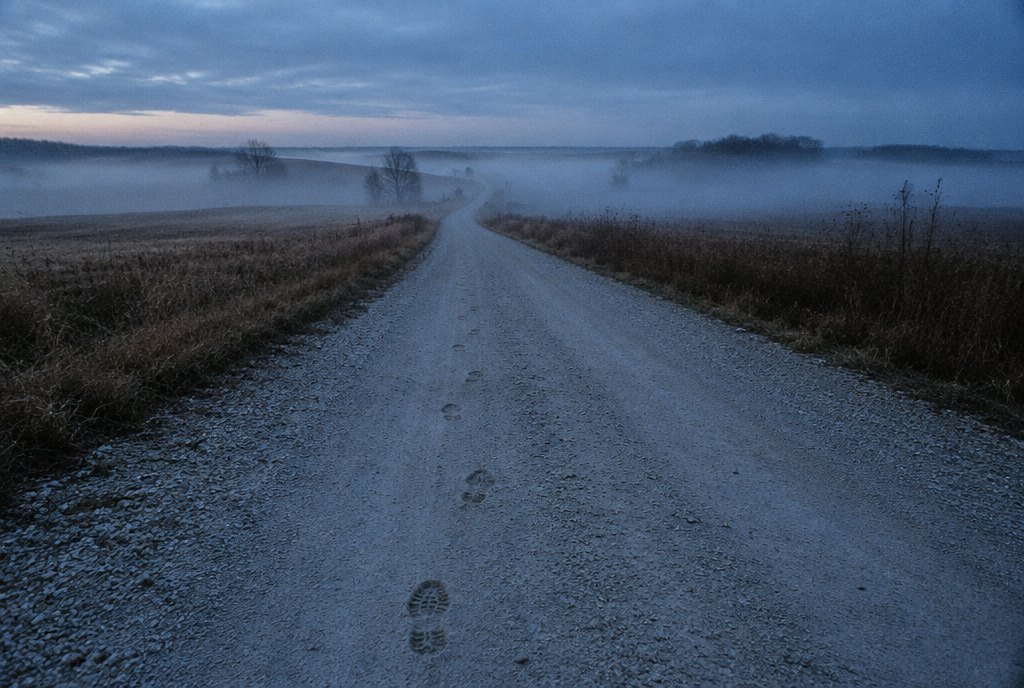
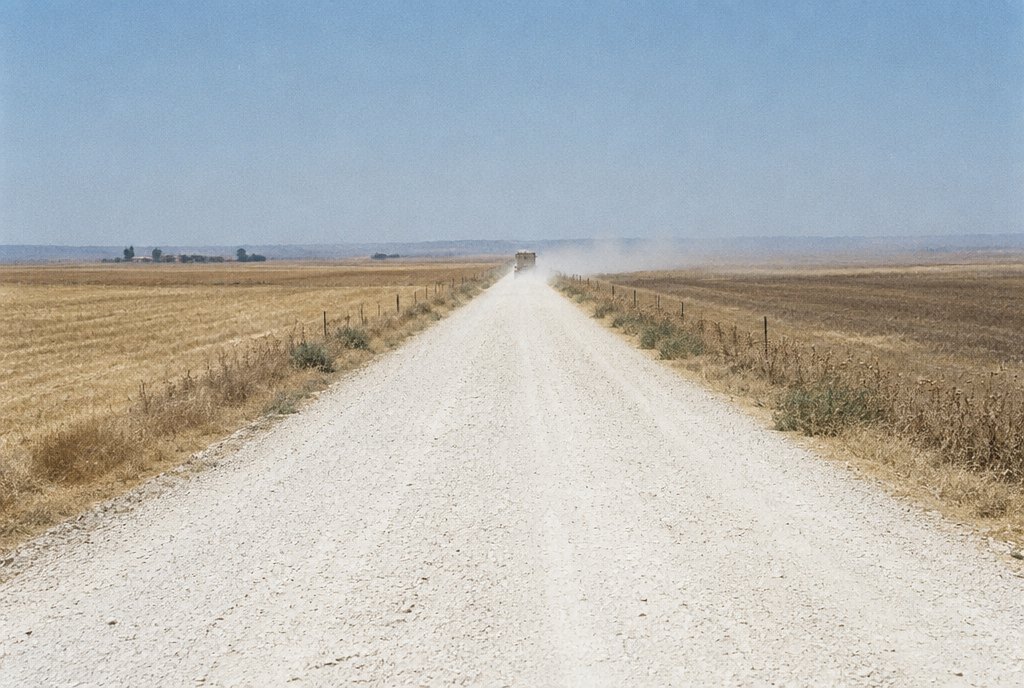
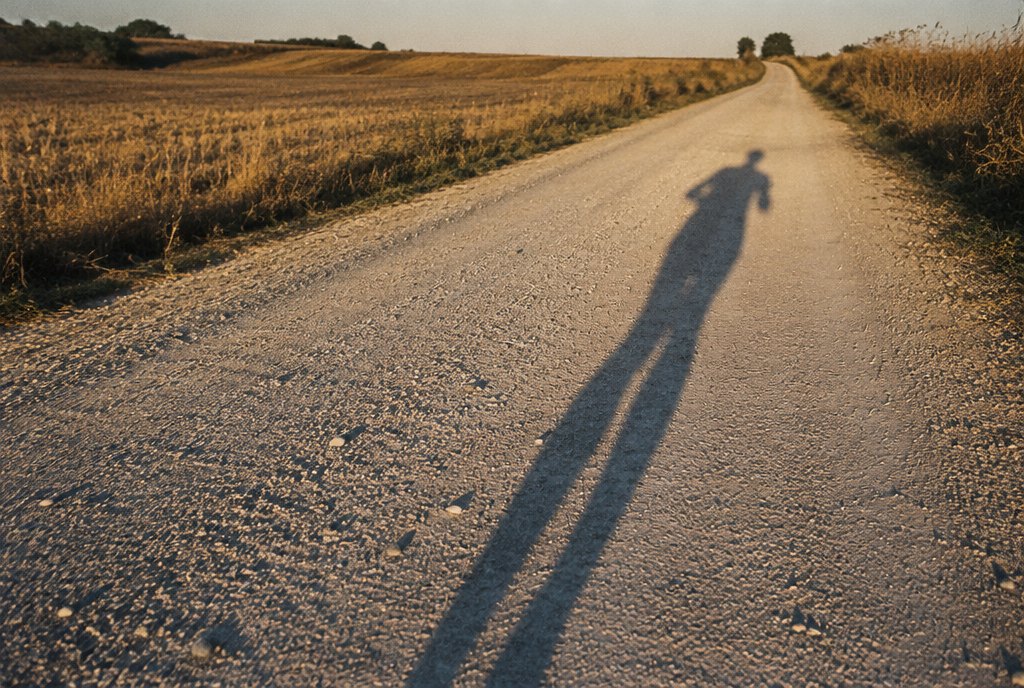
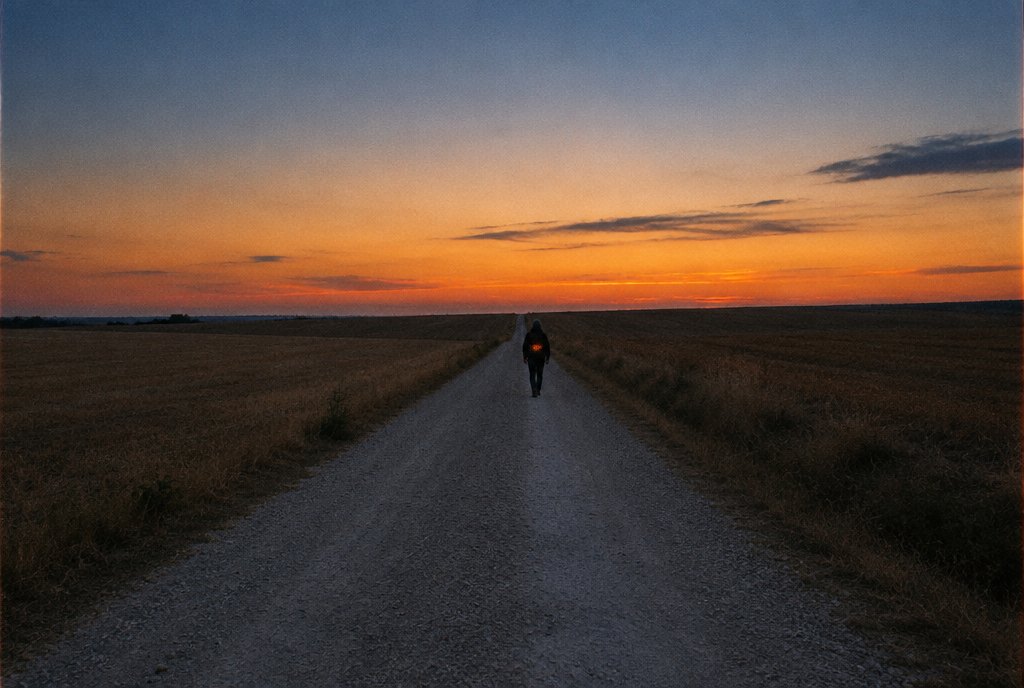
What Holds Up
A shoe at 500 miles
A shoe at 500 miles
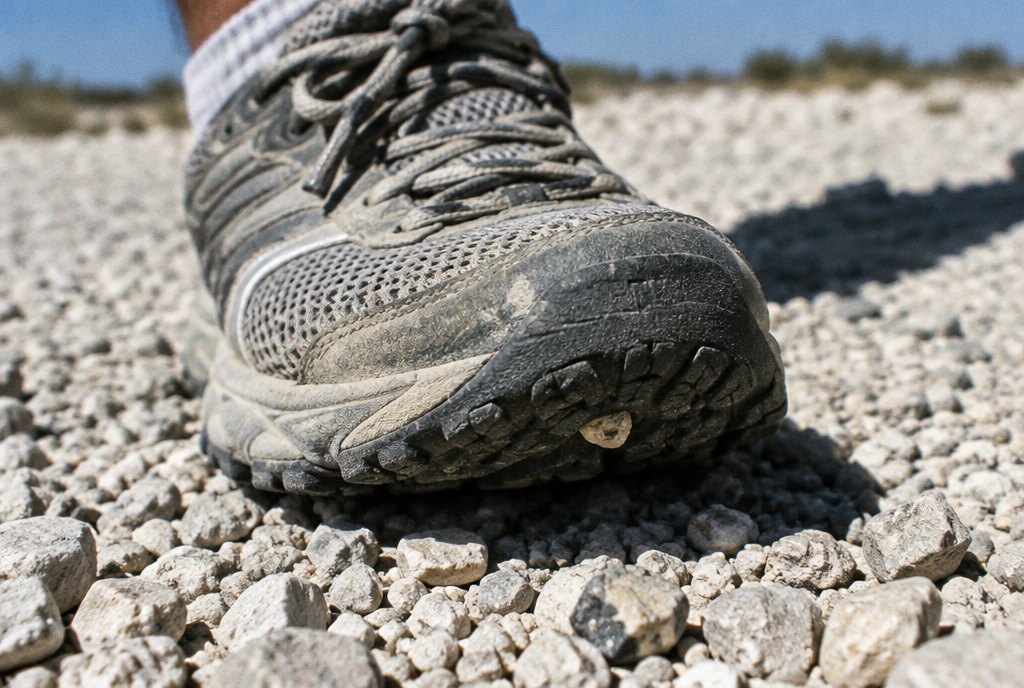
One object per issue, worn, photographed like evidence. This month: a shoe at 500 miles.
Photographs: Graval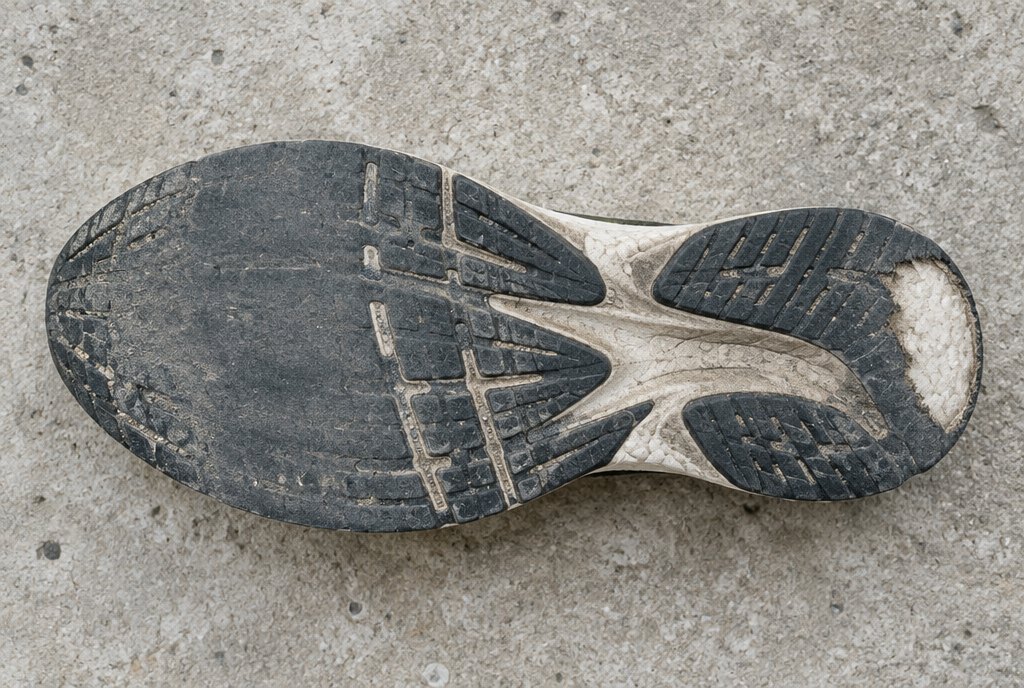
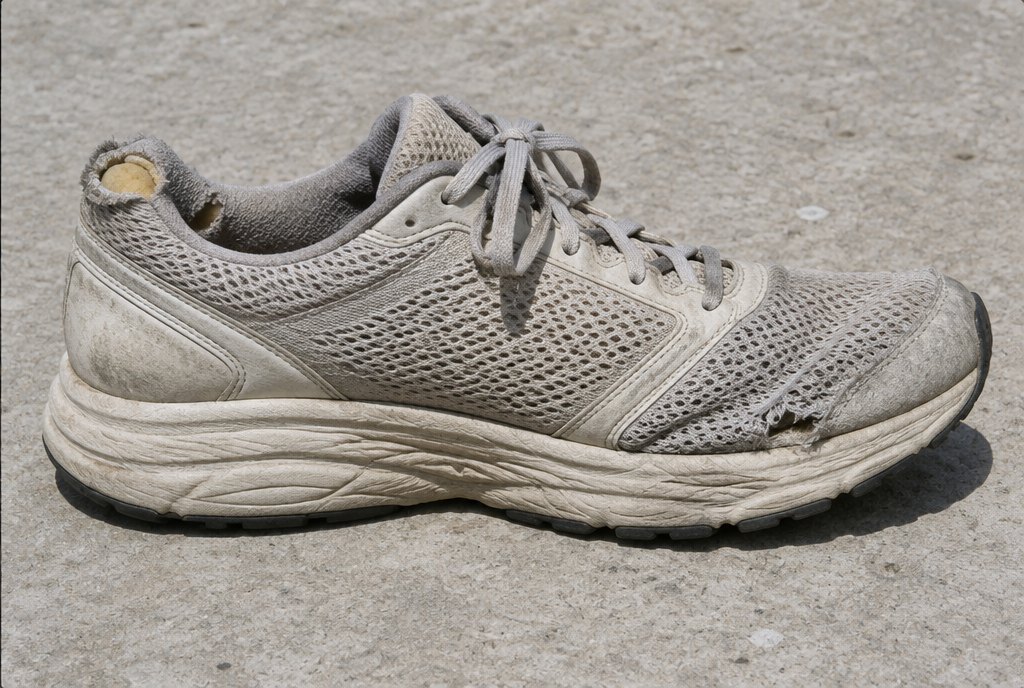
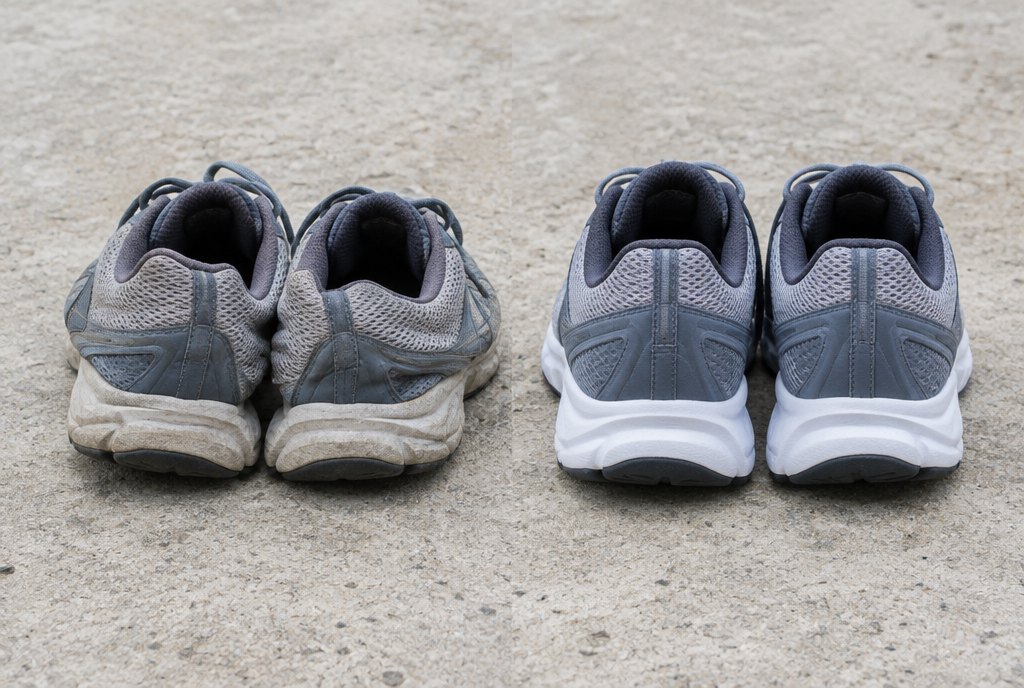
Five hundred miles is the number the industry gives a road shoe. Here is what that looks like from underneath: the rubber under the ball of the foot is gone, the outside heel is through to the foam, and the midsole has creased where it folds on every step.
From behind is the part that matters. The old pair leans inward at the heel because the foam has packed down unevenly; the new pair stands square. That lean is what your knees have been running on for the last hundred miles.
Verdict: the upper would go another five hundred. The sole was done at four. Retire a road shoe when it leans, not when it looks tired.
Loose Ground
The road you already have
The road you already have
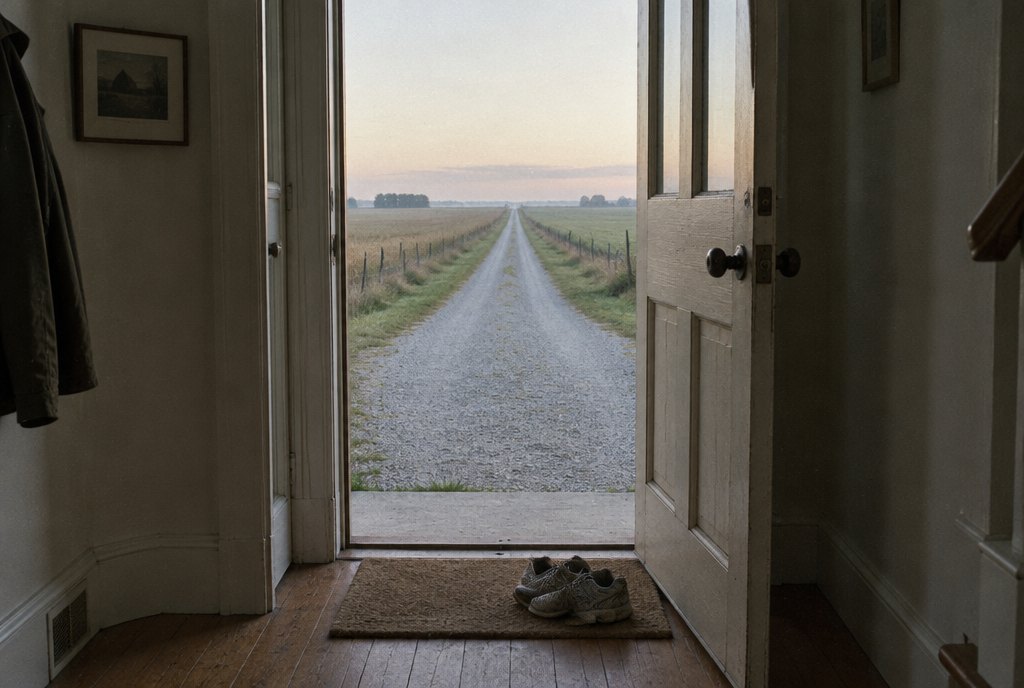
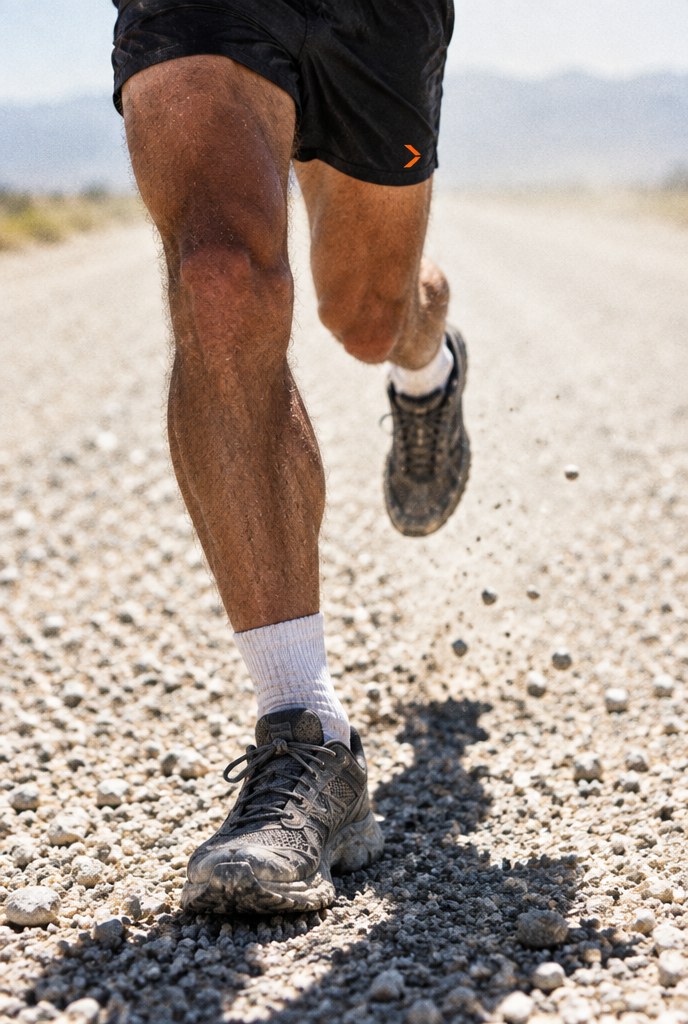
Every running brand sells you somewhere else. The best surface in America is a mile from your front door, and nobody is selling to it.
By Matthew Goodman · Photograph: GravalEvery running brand sells you somewhere else. The mountain. The track. The city at night with a club. The pitch is always that the real running is happening somewhere you are not.
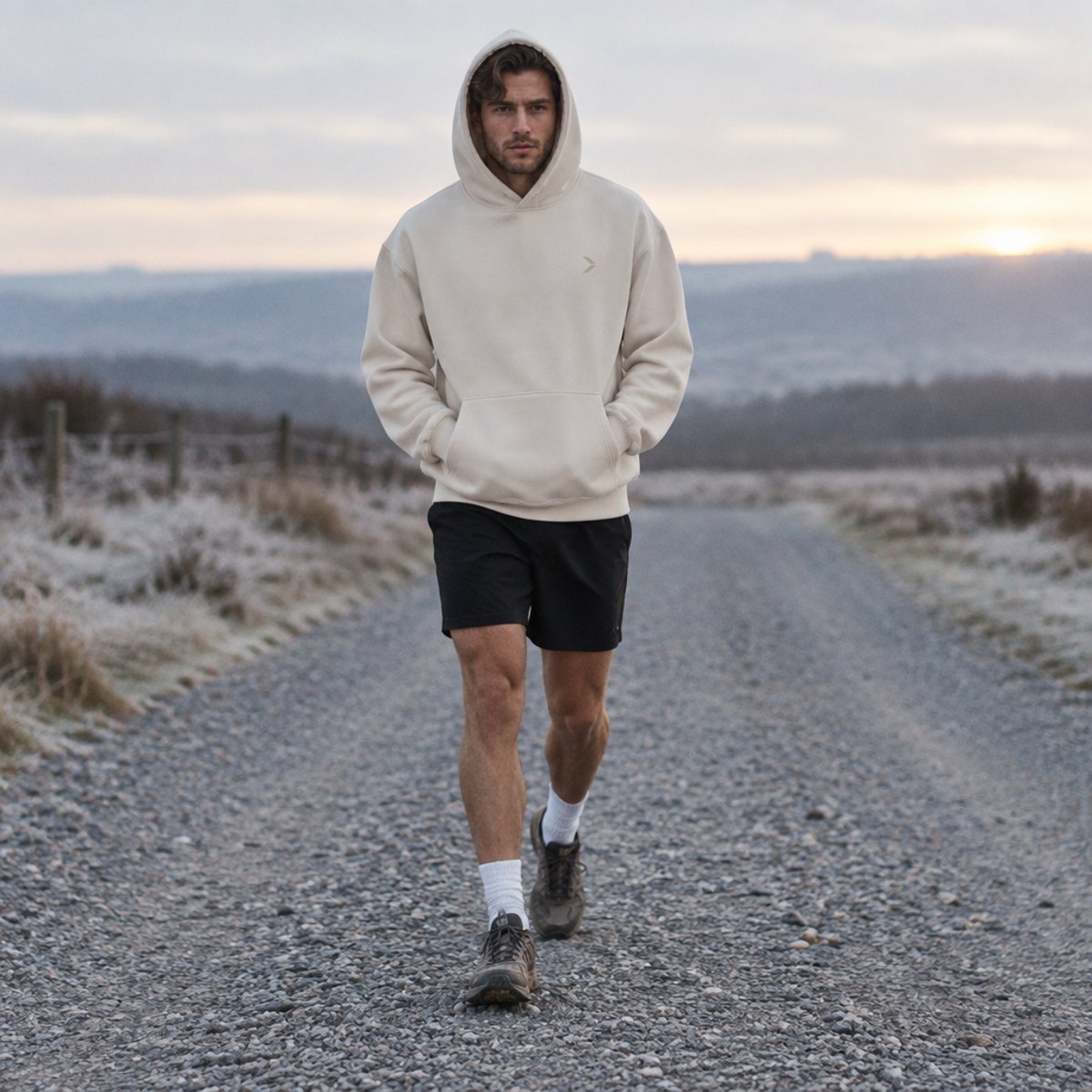
Walk out of most front doors in this country and within a mile there is a road with no pavement on it. A farm road, a service road, a rail trail, a path along a field. Nobody photographs it. Nobody sells to it. It's just the road you already have.
That road is the point. It doesn't need a trip, a lift pass or a race entry. It needs shoes and a door. Gravel is the one surface that's free, everywhere, and quiet, and the industry has spent thirty years pretending it isn't there.
Run road. Run trail. Run the gravel in between. Mostly the in between.
The Line
The Line
The Line
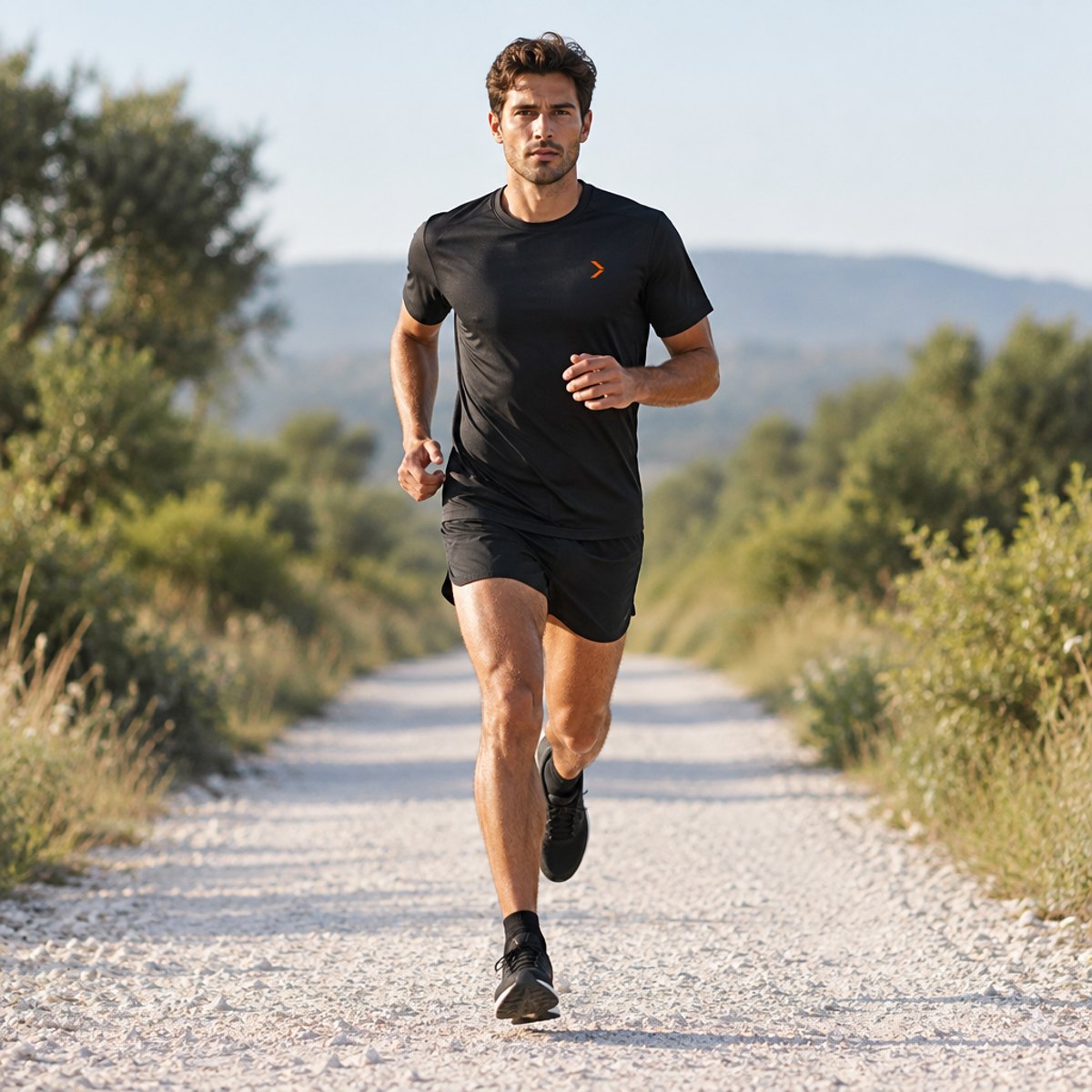
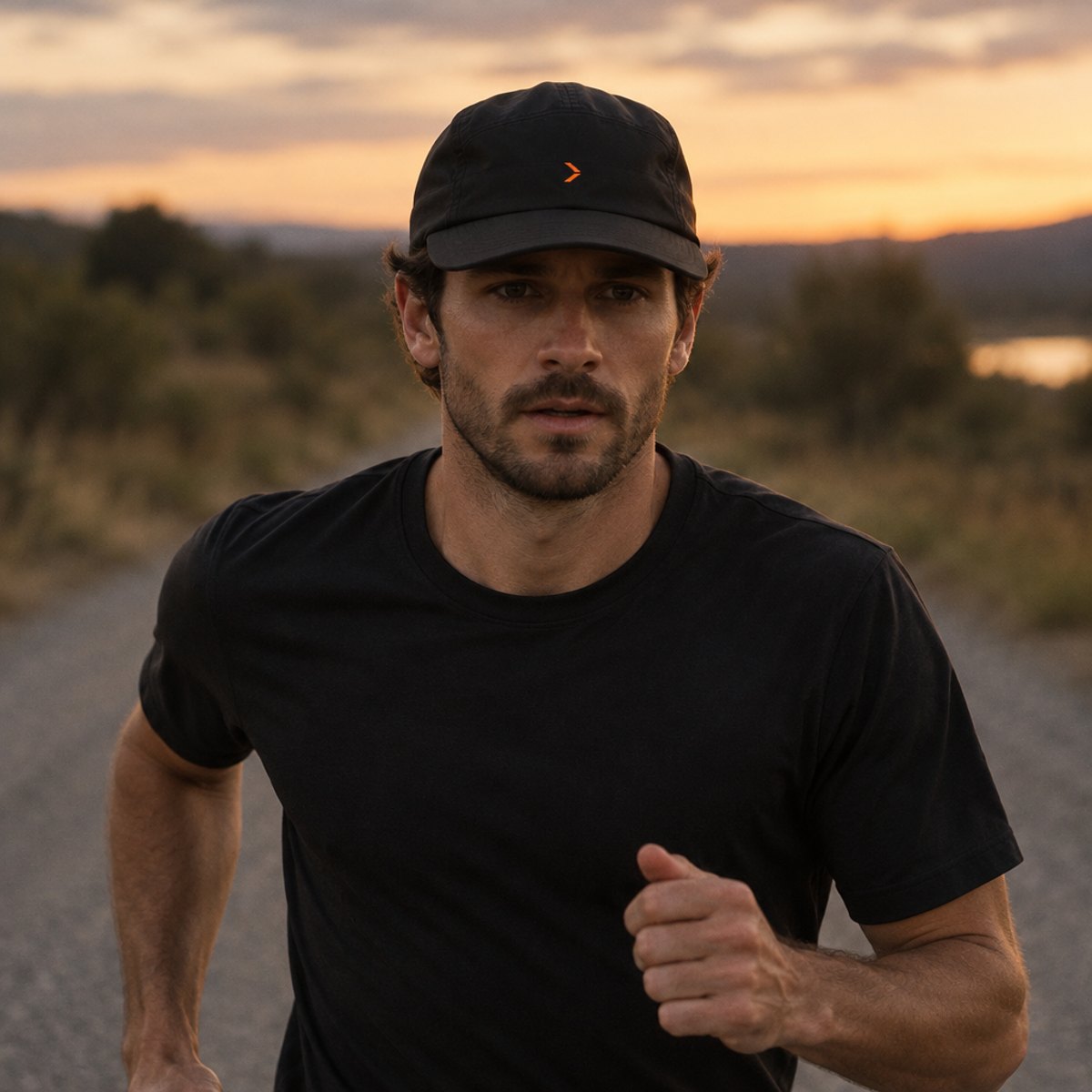
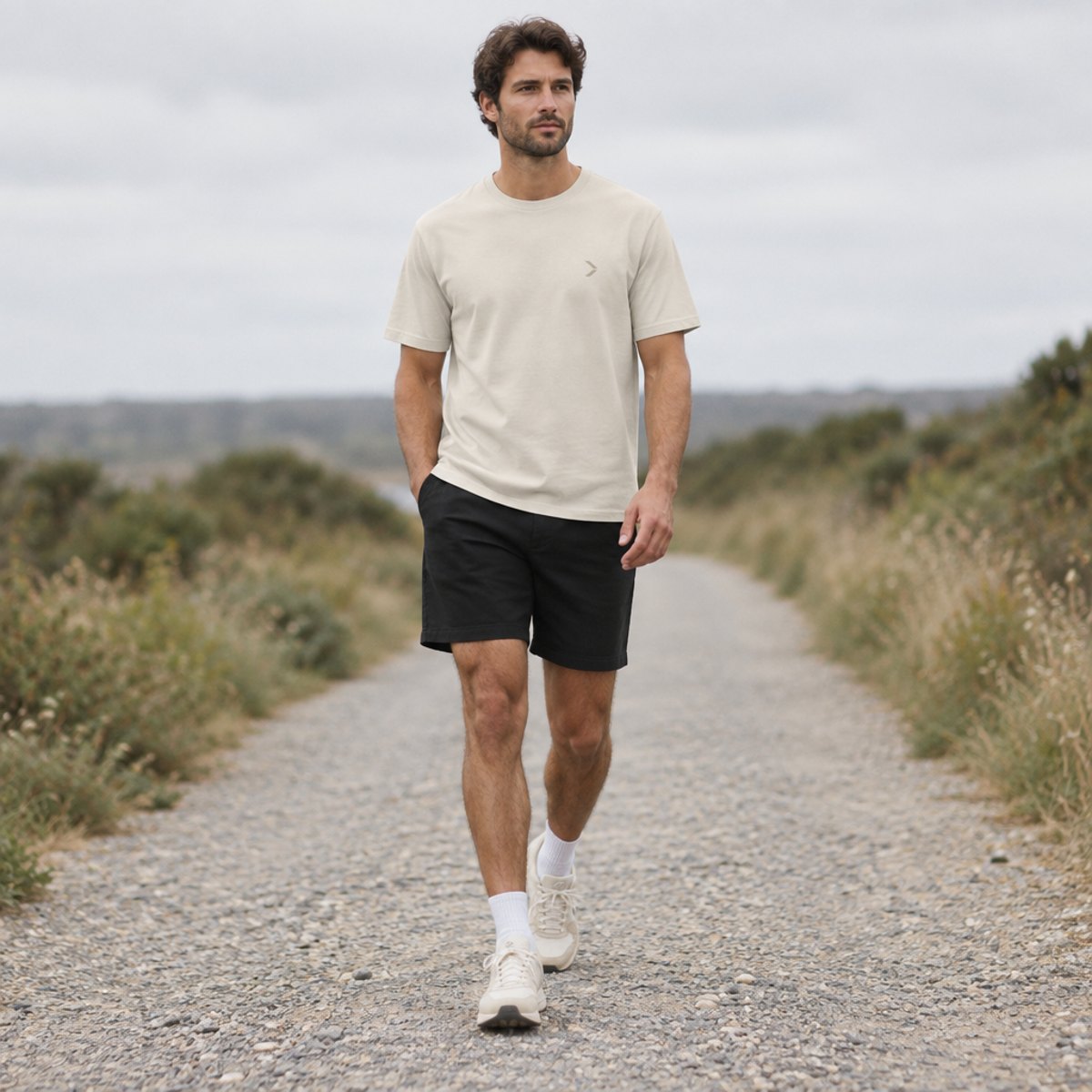
What we make, worn where it's meant to be worn.
No. 2
- New York, mile by mile: fifty years of the five boroughs
- How long does it take to get fast?
- The Bronx turn nobody has run yet
Issue two lands November 1, the morning of the New York City Marathon. Check back on the first of every month, or get the app and it comes to you.