Facts from race organisers, governing bodies and brands, rewritten in our words and credited.
Reach us
Everything
hello@graval.co
Read
graval.co/mag, and the Graval app for iPhone and iPad
Watch
YouTube, Instagram, TikTok: Graval
Colophon
Set in Big Shoulders Stencil Display, Schibsted Grotesk and Azeret Mono. Letter size, 8.5 by 11 inches, for screen and print from the same files. The palette is a quarry, with one hi-vis orange per page.
Maps are drawn to each race's published route, then painted. Photographs show no faces on purpose. Facts are sourced at the foot of each piece; if we got one wrong, tell us.
Graval, the chevron and the GRAVAL wordmark are trademarks of Atlas Learning Group, LLC. The only advertiser is Graval, in one section, The Line.
No. 2, published 2026-11-01. Free, monthly, on the first.
November 2026 · Graval2
November 2026 · No. 2 · 49 pages
Contents
04Editor's noteFifty years of five boroughs
05The Road · what happened last monthOctober in running
13The CourseNew York
23The QuestionHow long does it take to get fast?
29The WorkoutPush-ups and sit-ups, after every other run
33FuelWhat is the bicarb craze?
37One road, dawn to duskThe Ground
41What Holds UpA cap after a summer
43Loose GroundThe quiet mile
45Kit on the roadThe Line
November 2026 · Graval3
Editor's note
Fifty years of five boroughs
By Matthew Goodman · Photograph: Graval
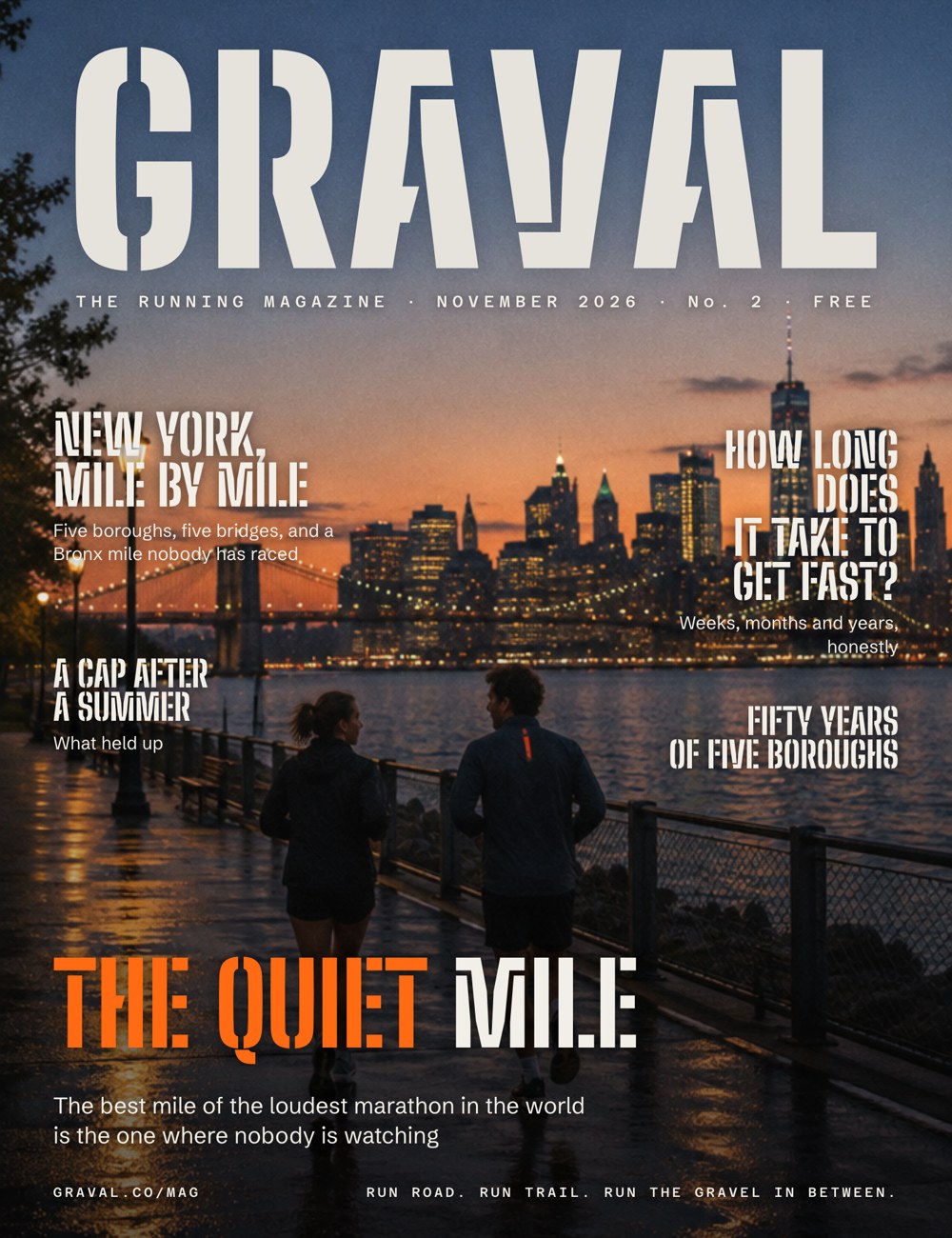
In 1976 the New York City Marathon left Central Park for the first time and ran through all five boroughs. This November is the fiftieth year of that course, and it is the whole issue: every bridge, every turn, the mile that's new this year, and the one mile where nobody cheers.
Issue one had the tan block prints. This one is orange and blue, like a poster pulled off a wall in Brooklyn. The look changes every month. What's in it doesn't: one course, one question, what happened, one road, one object, one opinion.
November 2026 · Graval4
02
The Road · what happened last month
October in running
November 2026 · Graval5
The Road · what happened last month
October in running
The highlights of October, as the journal reported them day by day. Every story links to the whole of it. At the end of the year these become the book.
Track
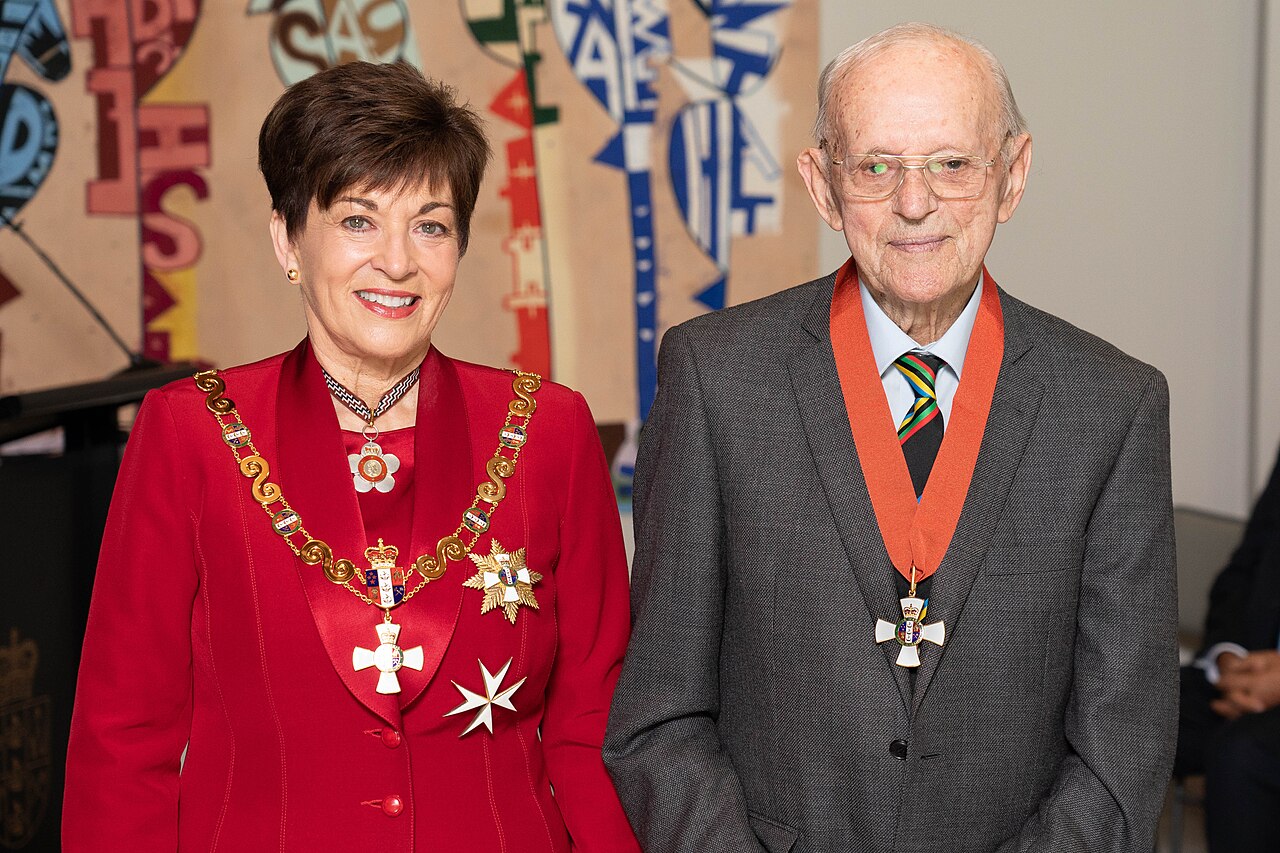
Arch Jelley, the coach behind John Walker's first sub-3:50 mile, dies at 104
New Zealand coach Arch Jelley, who guided John Walker to the world mile record and 1976 Olympic gold, has died at 104.
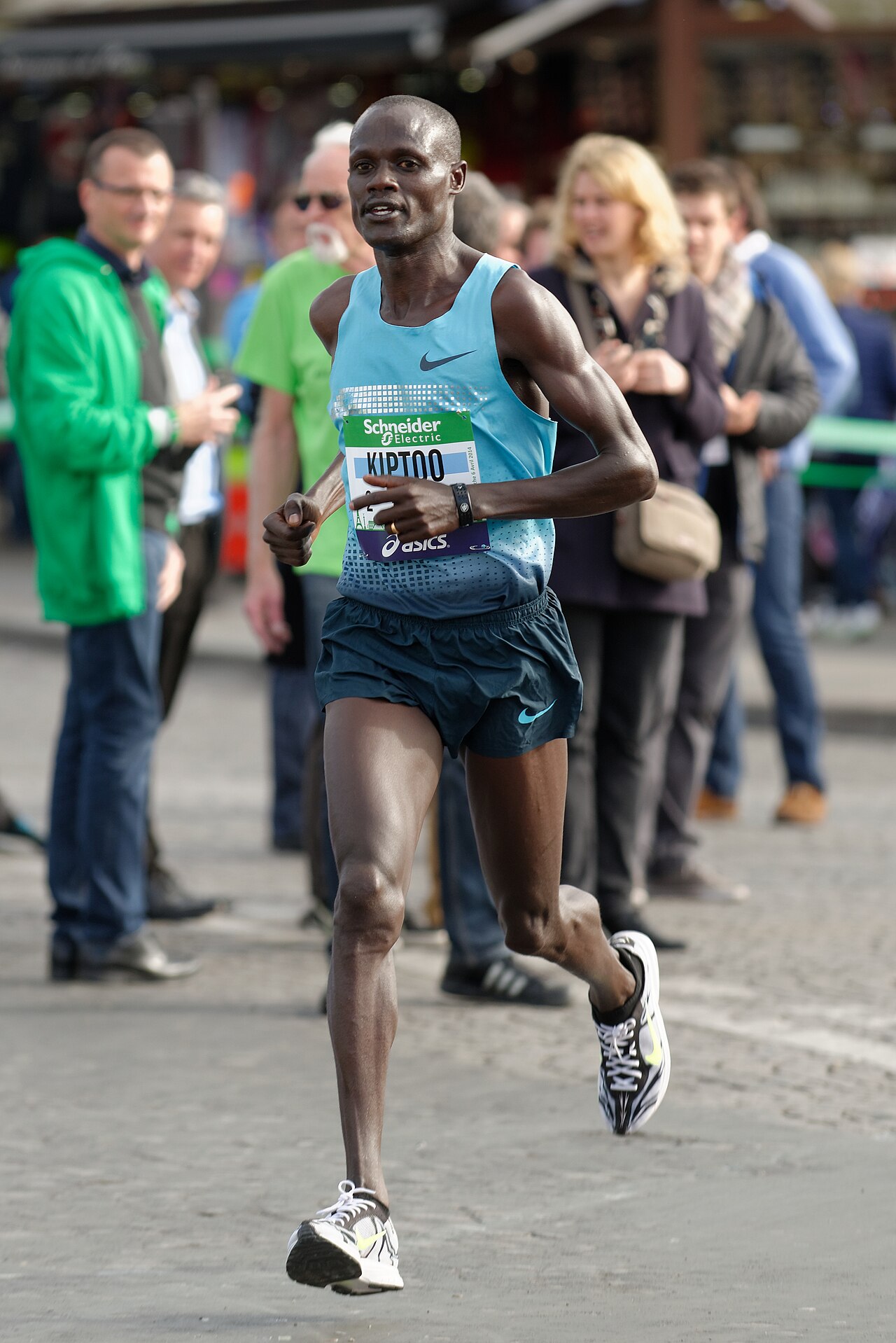
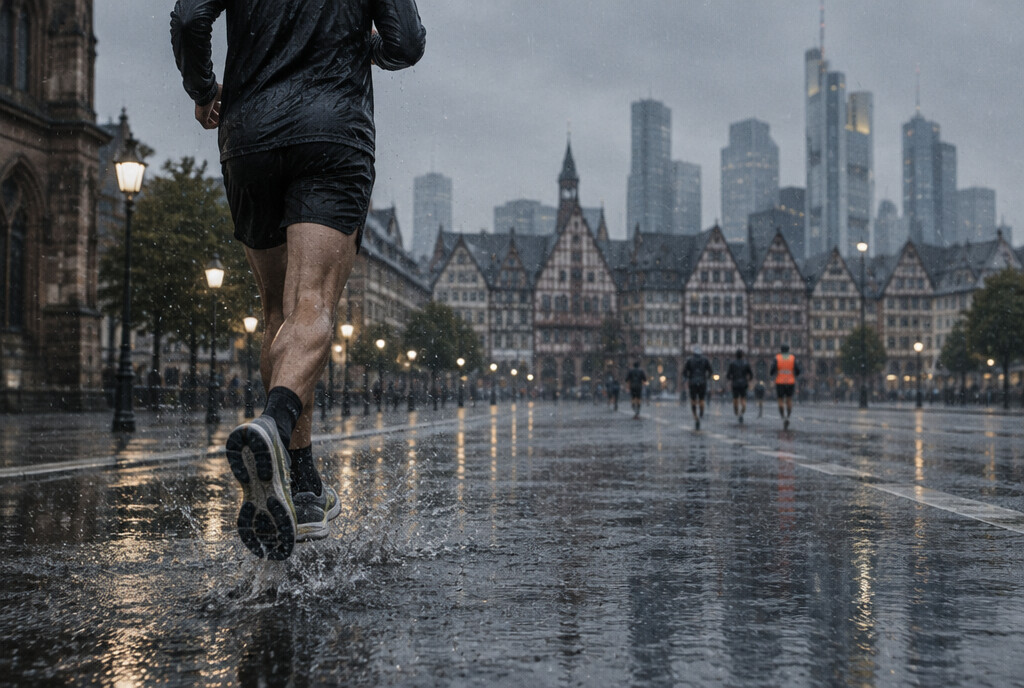
Dinki wins Frankfurt Marathon as Petros and Dörfel lead Germany's best day in years
Jirata Dinki and Zeineba Yimer won the Frankfurt Marathon in heavy rain as Amanal Petros and Blanka Dörfel delivered Germany's best results there in decades.
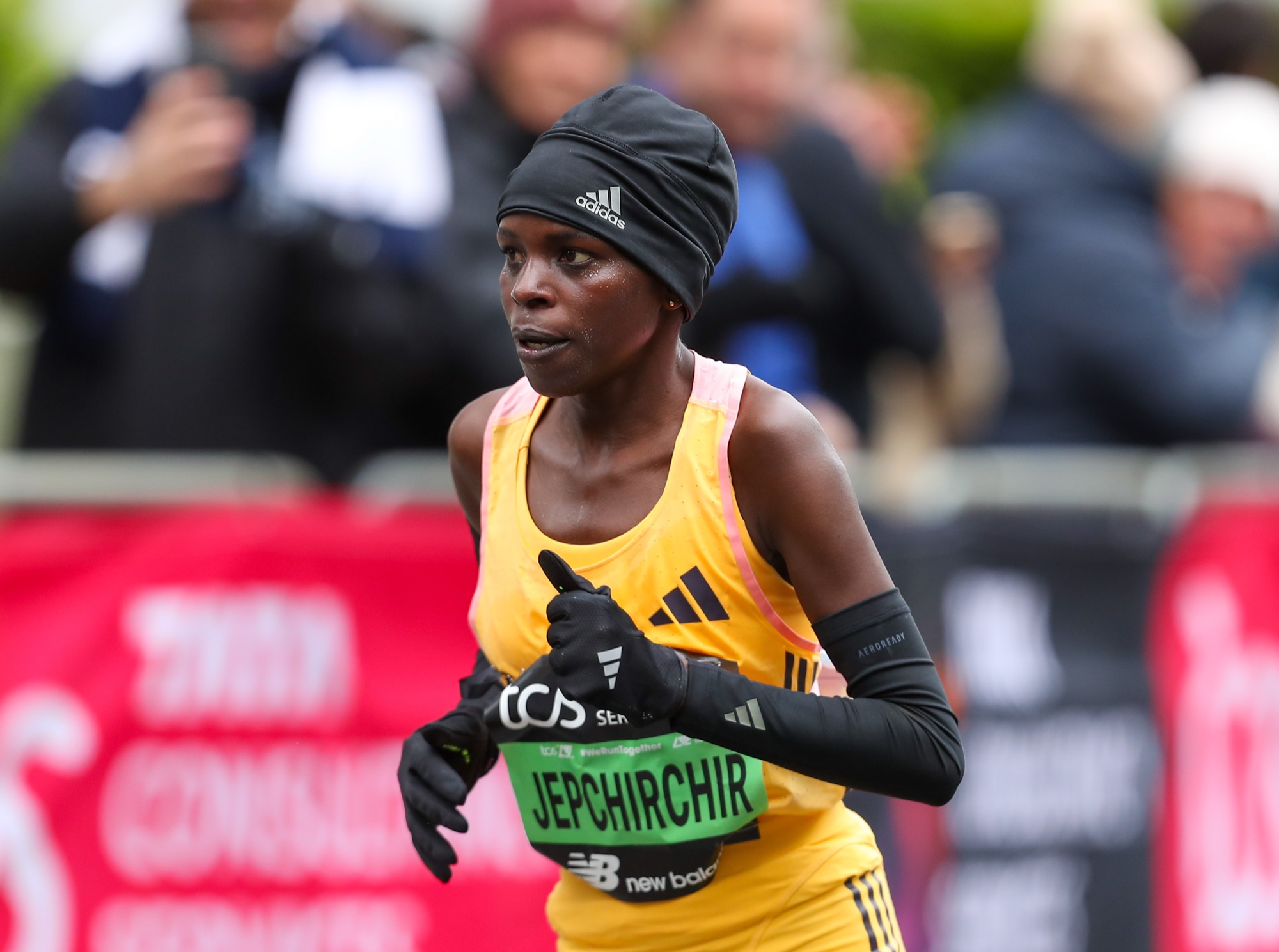
Olympic marathon champion Peres Jepchirchir provisionally suspended for EPO
The Athletics Integrity Unit suspended Peres Jepchirchir after an out-of-competition sample taken in Kenya before her Sydney Marathon win tested positive for EPO.
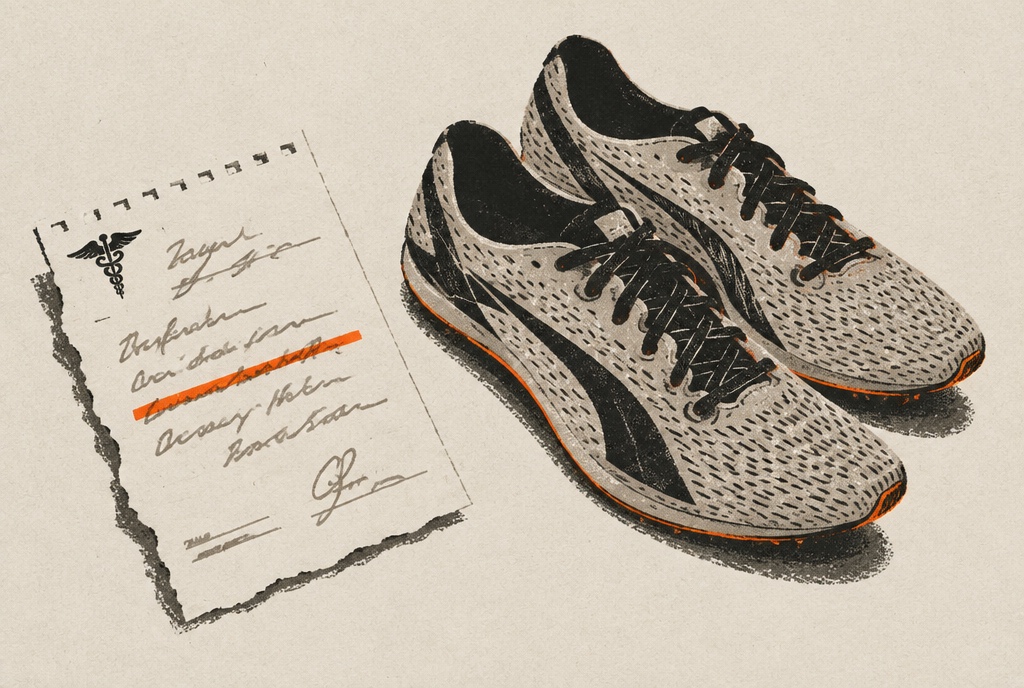
Ruti Aga banned six years for a steroid positive and a forged prescription
The Athletics Integrity Unit banned the 2019 Tokyo Marathon champion six years: two for methylprednisolone and four for tampering with a fake prescription.
WABC-TV Channel 7 in New York, 8 to 11:30 am Eastern, and ESPN2 nationally.
www.nyrr.org/tcsnycmarathon/watch-the-race
Dec 1
Graval Magazine No. 3
In the app and at graval.co/mag.
graval.co/mag
Sources: New York Road Runners, watch the race.
November 2026 · Graval12
03
The Course
New York
November 2026 · Graval13
The Course
New York
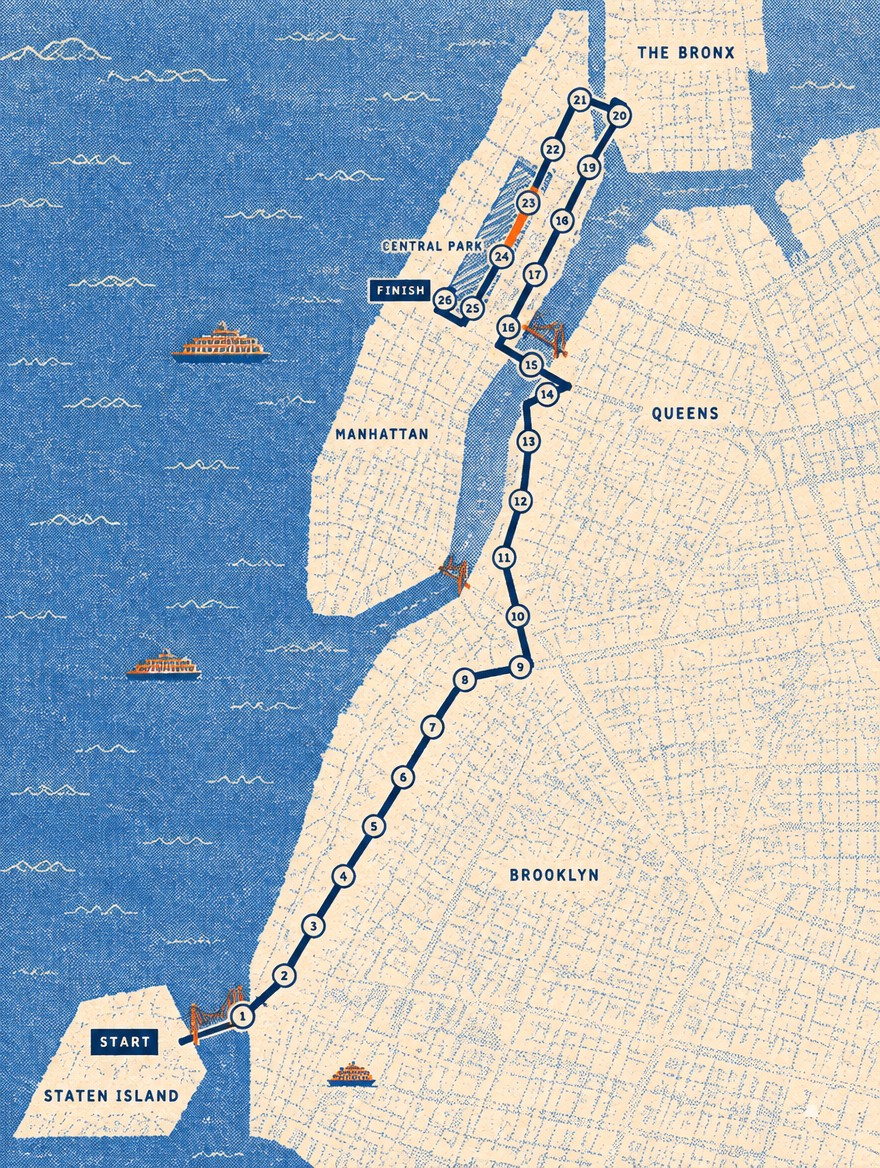
Five boroughs, five bridges, and more than 800 feet of climbing. The fiftieth running of the five-borough course, with a Bronx mile nobody has raced. Sunday November 1.
November 2026 · Graval14
The Course · stage 1 of 6
Miles 0 to 2
Don't win the bridge
WhereStaten Island, the Verrazzano-Narrows BridgeCrowd●○○○○AidNone until mile 3
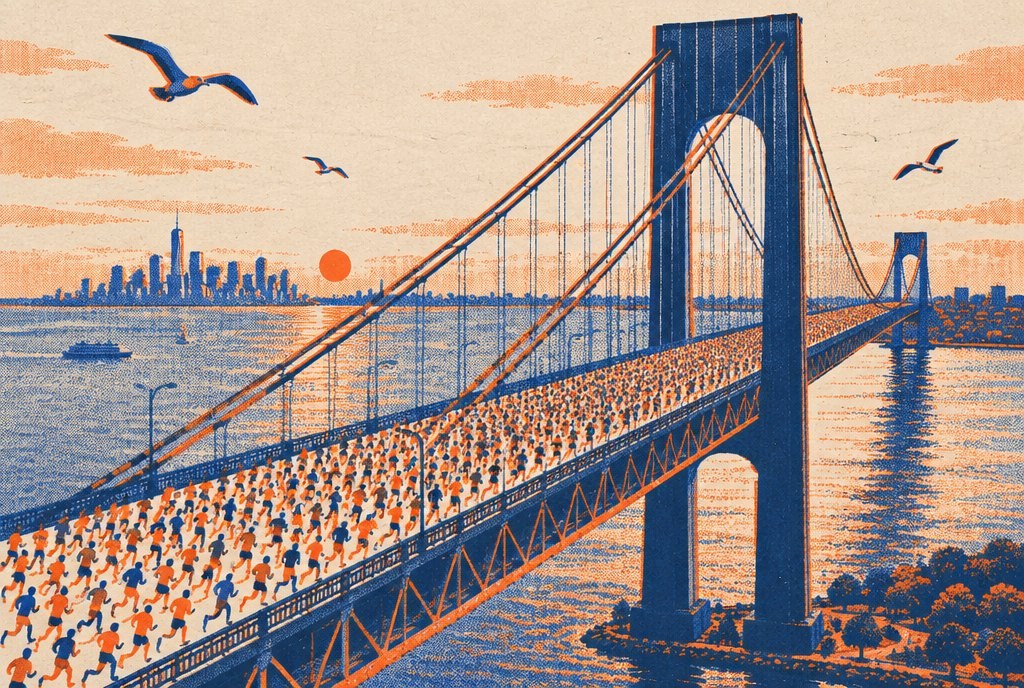
The gun goes and the first mile is uphill, about 150 feet to the top of the span, usually into wind off the harbour. The second mile gives nearly 200 feet back as you drop into Brooklyn. Expect to be 30 to 45 seconds slow on mile one and fast on mile two, and let both happen. There are no spectators and no fluids up here. Five waves leave between 9:10 and 11:30, in three colours that take different sides of the bridge.
Mile 0 to 2, The Verrazzano. The longest climb of the day is the first mile. The harbour is on your left, the whole city is ahead, and nobody is watching. Look once, then run.
November 2026 · Graval15
The Course · stage 2 of 6
Miles 2 to 8
Five straight miles, and all of Brooklyn out to watch
WhereBay Ridge, Sunset Park, Park Slope: Fourth AvenueCrowd●●●●●Aid3, 4, 6, 8
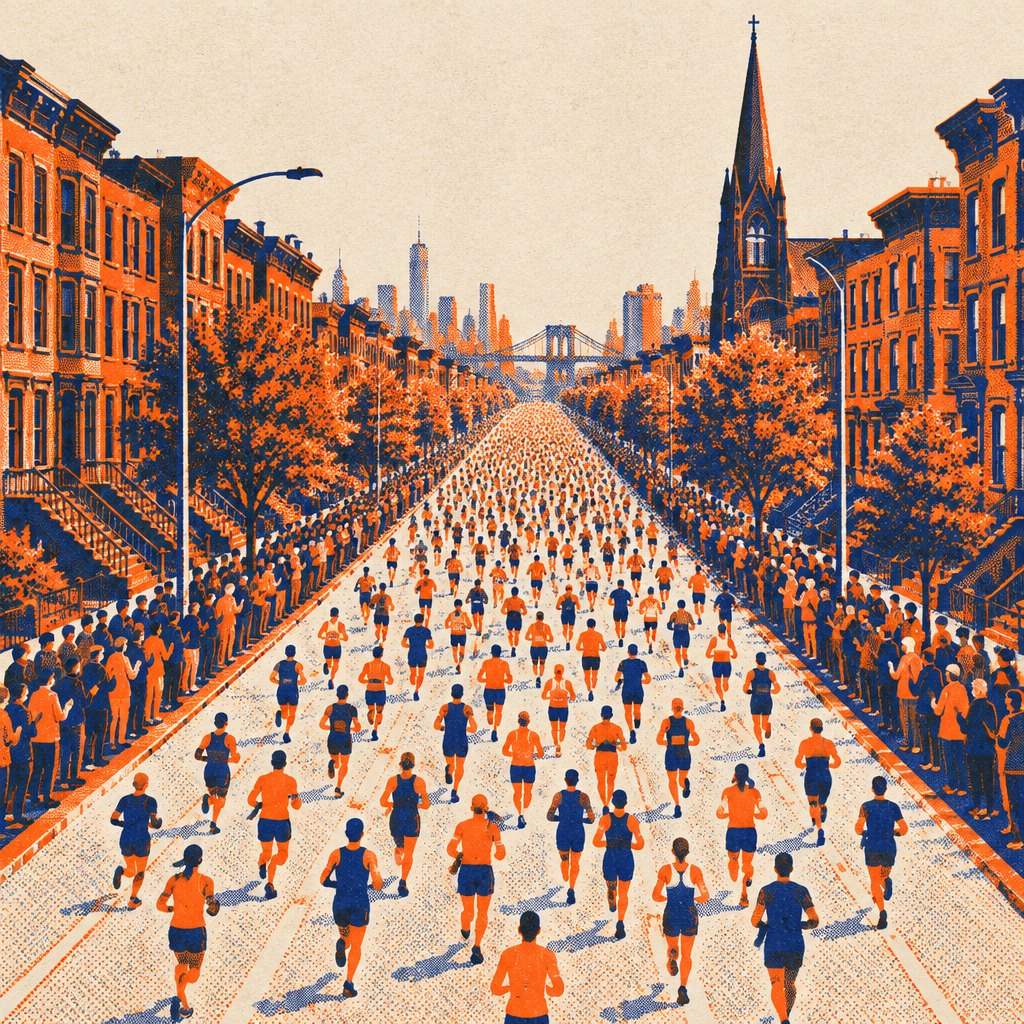
Fourth Avenue runs dead straight and gently rolling for five miles, with crowds on both sides the whole way. This is where you find your pace and where most people run too fast, because it feels easy and it's loud. The three start colours stay on separate sides of the avenue and merge around mile 8, at the turn onto Flatbush and Lafayette. Water and Gatorade start at mile 3 and come every mile to 25, except miles 5, 7 and 9.
Mile 3 to 8, Fourth Avenue. Five miles dead straight through Bay Ridge, Sunset Park and Park Slope. The three start colours run on separate sides and only meet at mile 8.
November 2026 · Graval16
The Course · stage 3 of 6
Miles 8 to 13.1
Brownstones, then bands, then halfway
WhereFort Greene, Clinton Hill, Bedford-Stuyvesant, Williamsburg, GreenpointCrowd●●●●●Aid8, 10, 11, 12, 13
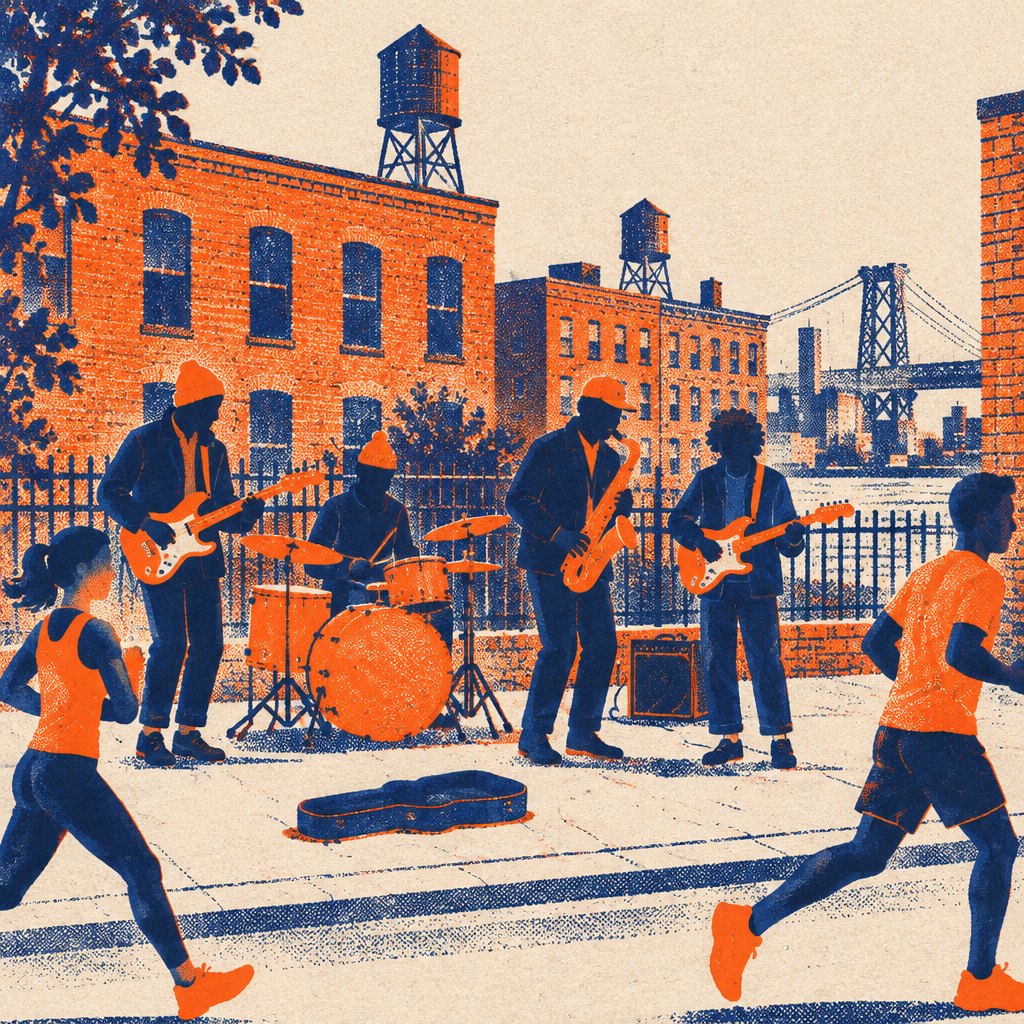
Lafayette Avenue is tree-lined, narrower, and climbs about 50 feet over half a mile before it lets you down. Then it's north up Bedford Avenue through Williamsburg, where the bands play on the sidewalks, into Greenpoint. The Pulaski Bridge is a short, steep 50 feet and the halfway mat is on it. Check the clock there, not your watch.
Mile 10 to 12, Bedford Avenue. Bands on the sidewalks through Williamsburg and Greenpoint. The loudest stretch of Brooklyn.
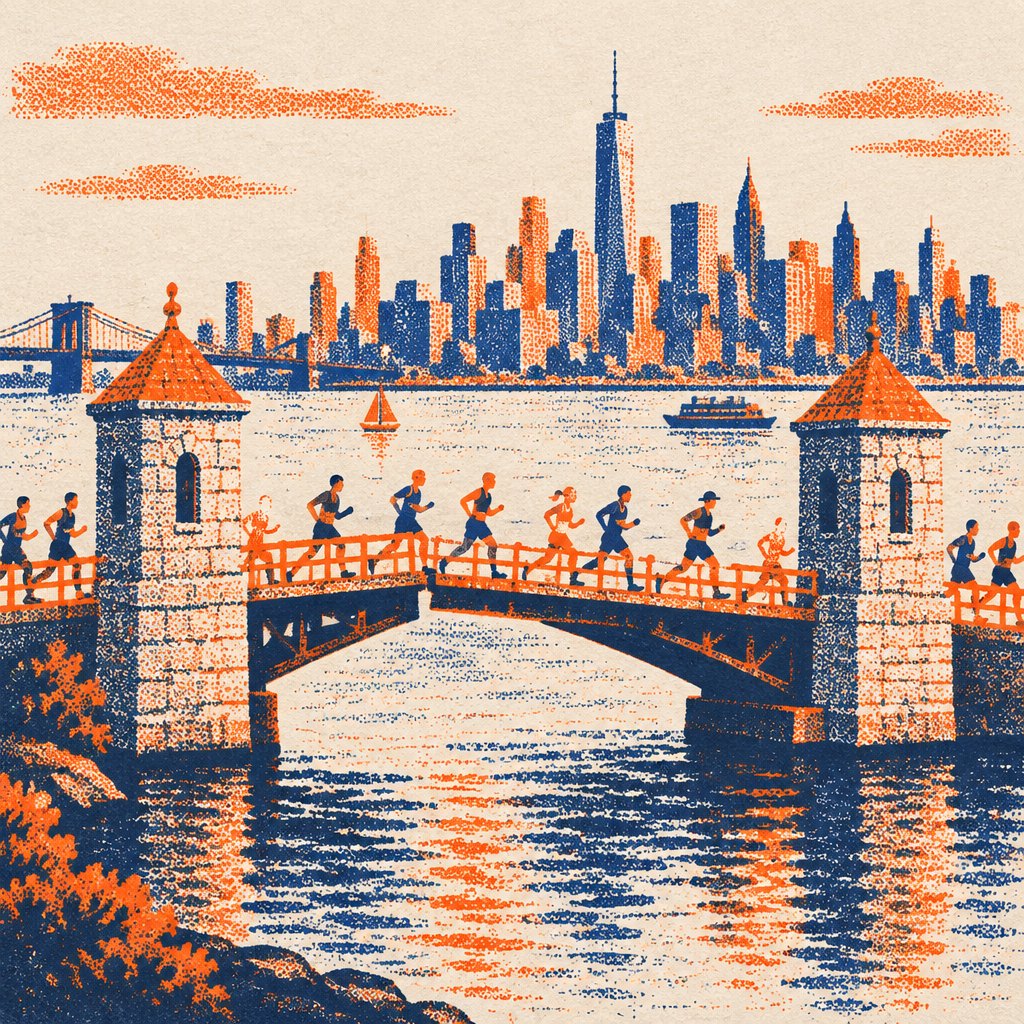
Mile 13.1, The Pulaski Bridge. Halfway, and a short steep bump of about 50 feet into Queens. The skyline is across the water.
November 2026 · Graval17
The Course · stage 4 of 6
Miles 13.1 to 16
The quiet before the noise
WhereLong Island City, the Queensboro BridgeCrowd●●○○○Aid14, 15
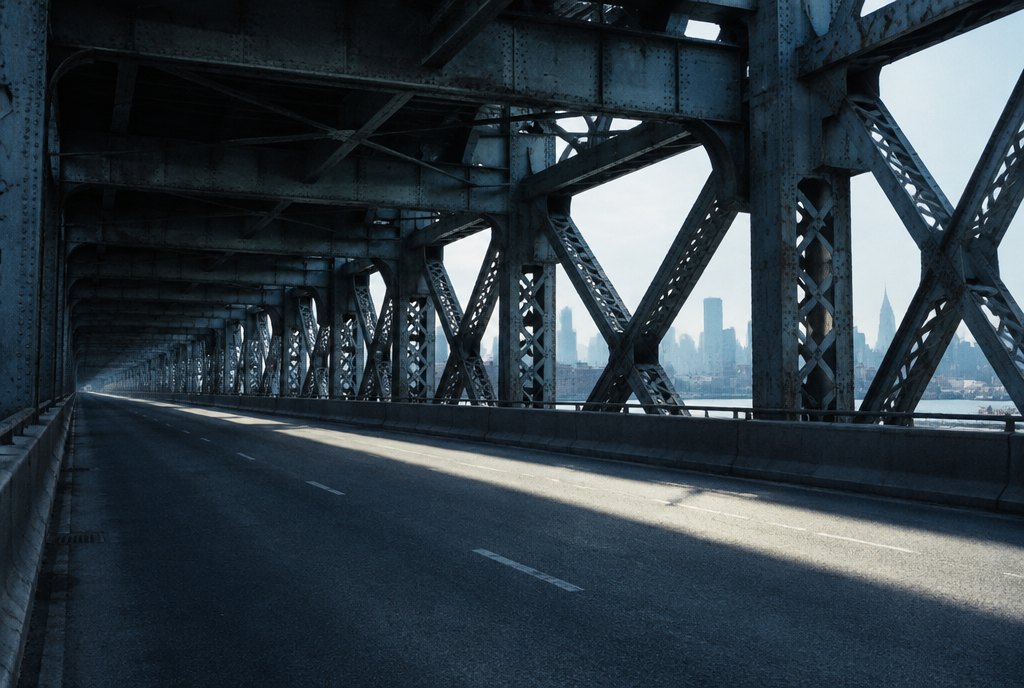
Queens is brief and thin on crowd: a good place for a full check of fuel, fluid and form. Then the Queensboro. It climbs about 100 feet over three quarters of a mile on the lower deck, there are no spectators, and after two hours of noise you can suddenly hear everyone's shoes. People call it the wall before the wall. Run it on effort, shorten your stride, and don't pound the downhill on the far side.
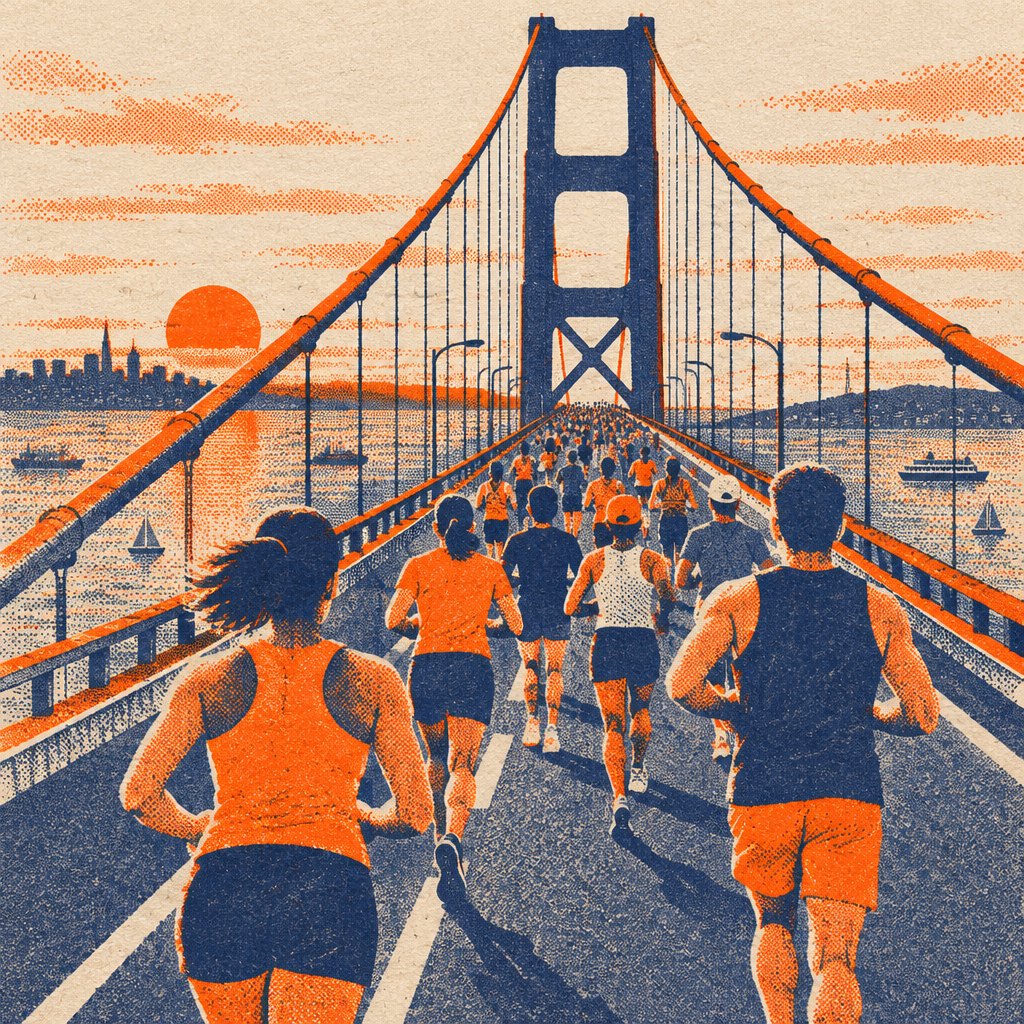
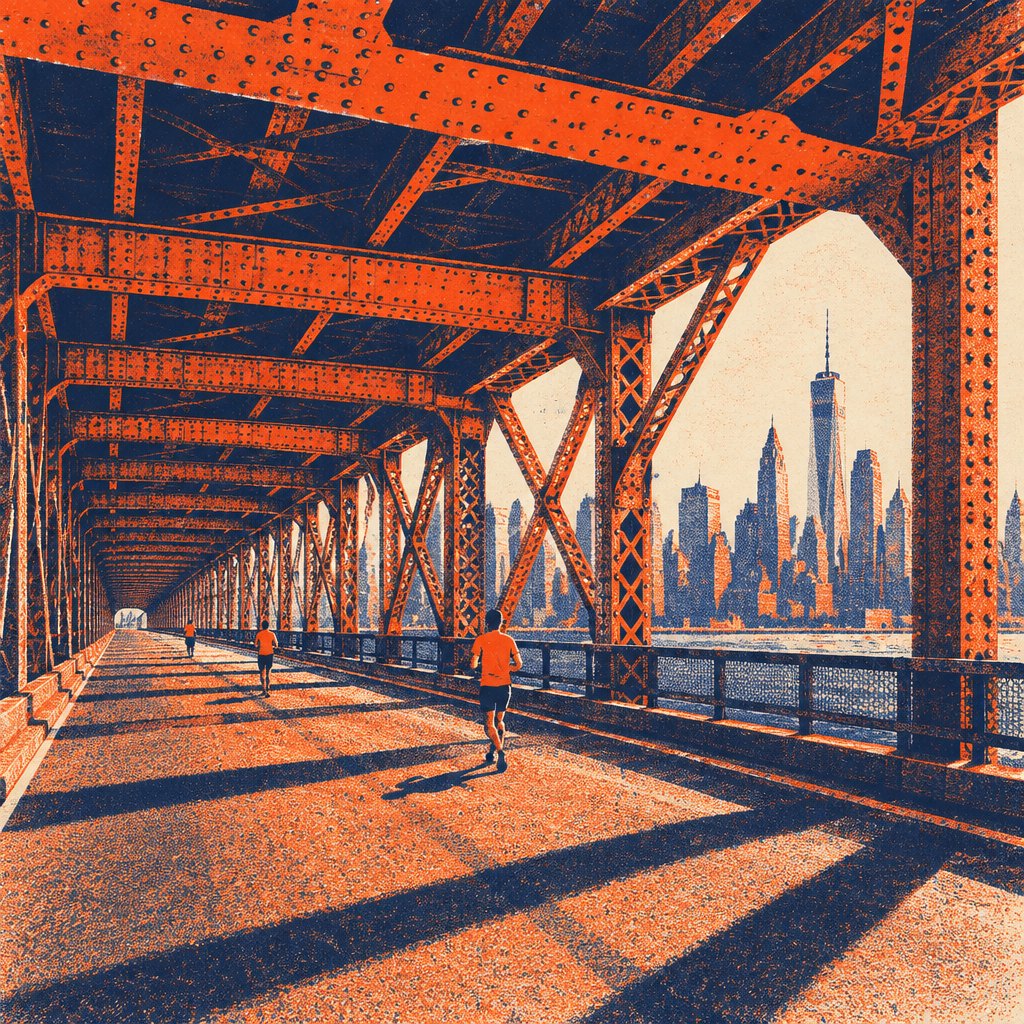
Mile 15 to 16, The Queensboro Bridge. Three quarters of a mile uphill on the lower deck, about 100 feet of climb, and no spectators at all. You hear shoes and breathing.
November 2026 · Graval18
The Course · stage 5 of 6
Miles 16 to 21
The wall of sound, and the trap
WhereFirst Avenue, East Harlem, the BronxCrowd●●●●●Aid16, 17, 18 (gels), 19, 20, 21
You turn off the bridge onto First Avenue and it's the loudest moment in road running: crowds ten deep, a wide avenue tilting gently downhill, three miles of it. This is where races are lost, by people who feel wonderful at 16 and run their fastest mile at 17. Gels are at mile 18. Past 96th Street the crowd thins and the grind begins. The Willis Avenue Bridge at 19.5 takes you into the Bronx for about a mile and a half. New for 2026: a left on East 135th Street, right up Alexander Avenue, left on East 141st, down Third Avenue, right on East 138th to the Madison Avenue Bridge. Nobody has raced those turns yet.
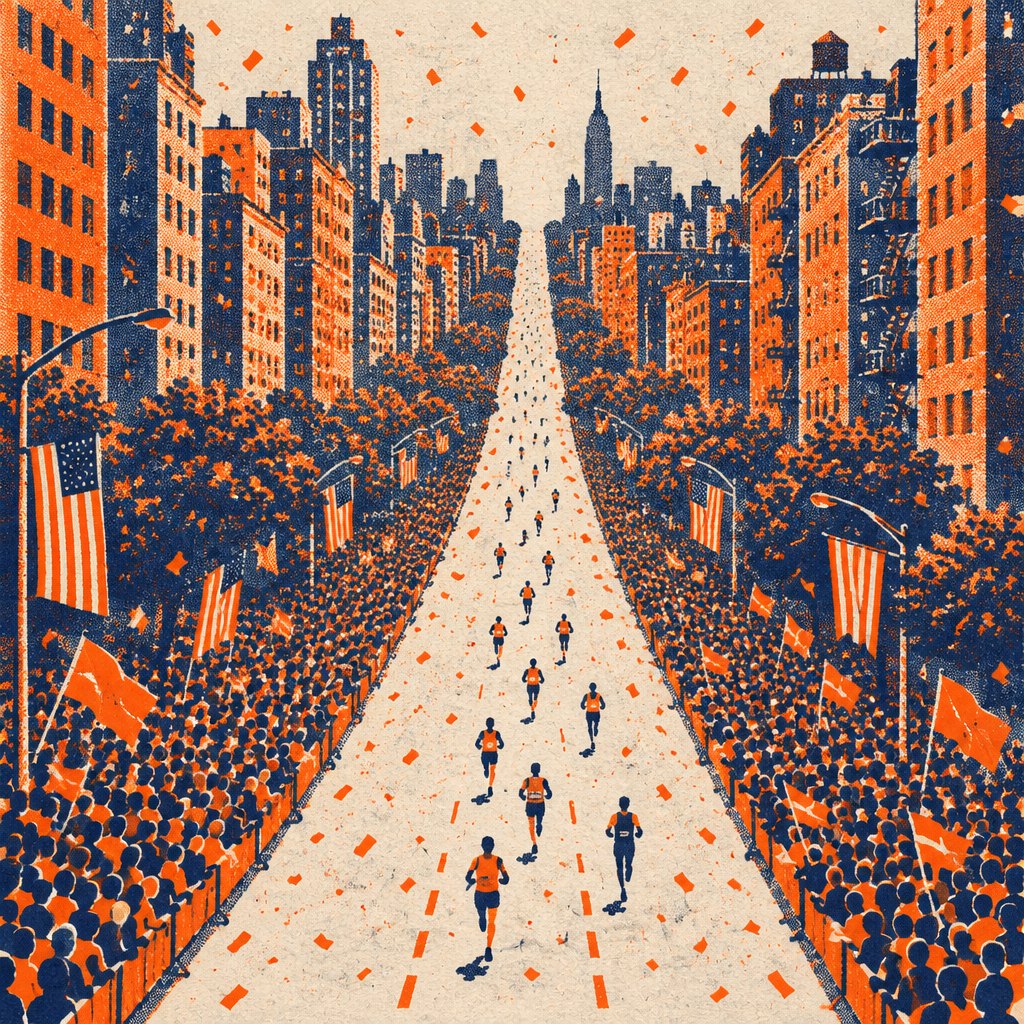
Mile 16 to 18, First Avenue. You come off the bridge into a wall of sound, crowds ten deep, slightly downhill. It is the easiest place on the course to run too fast.
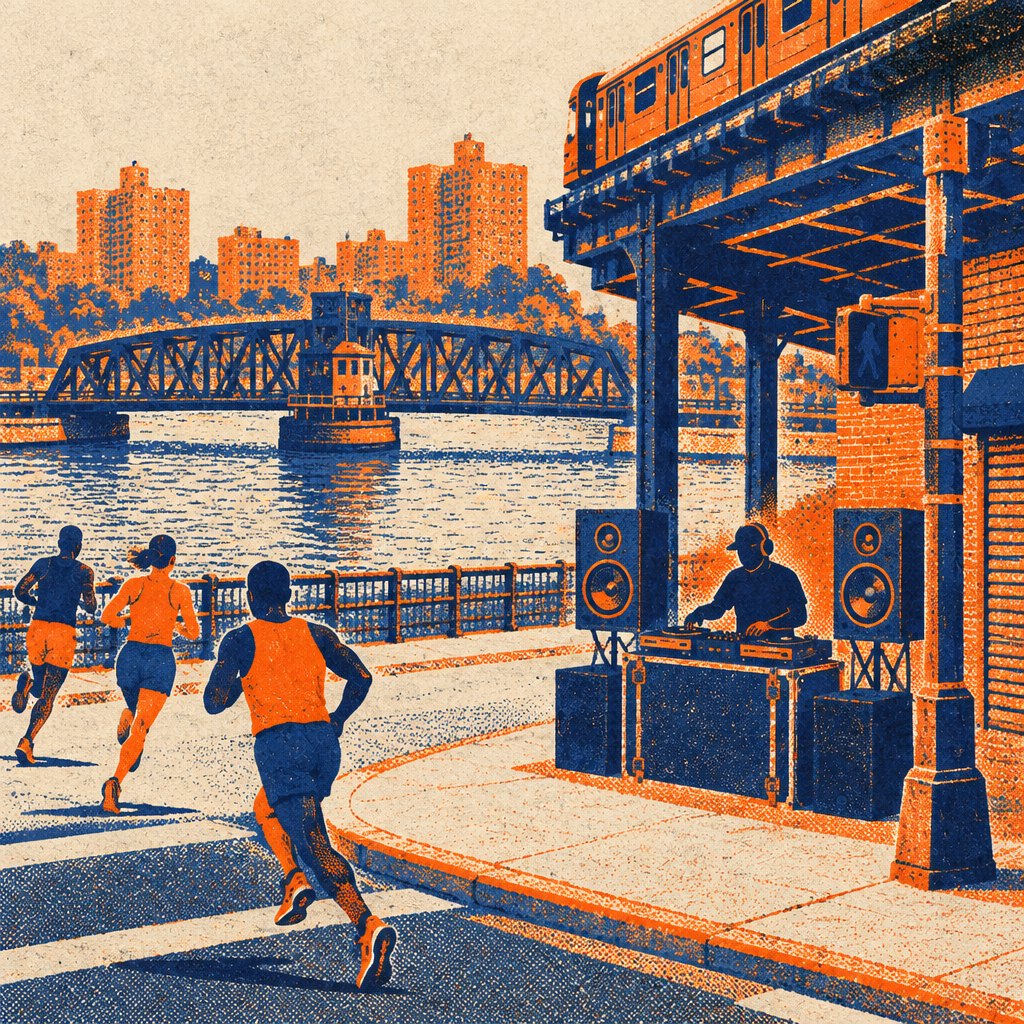
Mile 19.5 to 21, The Bronx. Over the Willis Avenue Bridge, a mile and a bit of turns, and back over the Madison Avenue Bridge. New streets this year.
November 2026 · Graval19
The Course · stage 6 of 6
Miles 21 to 26.2
The climb, the park, the circle, the line
WhereHarlem, Fifth Avenue, Central ParkCrowd●●●●●Aid22, 23, 24, 25
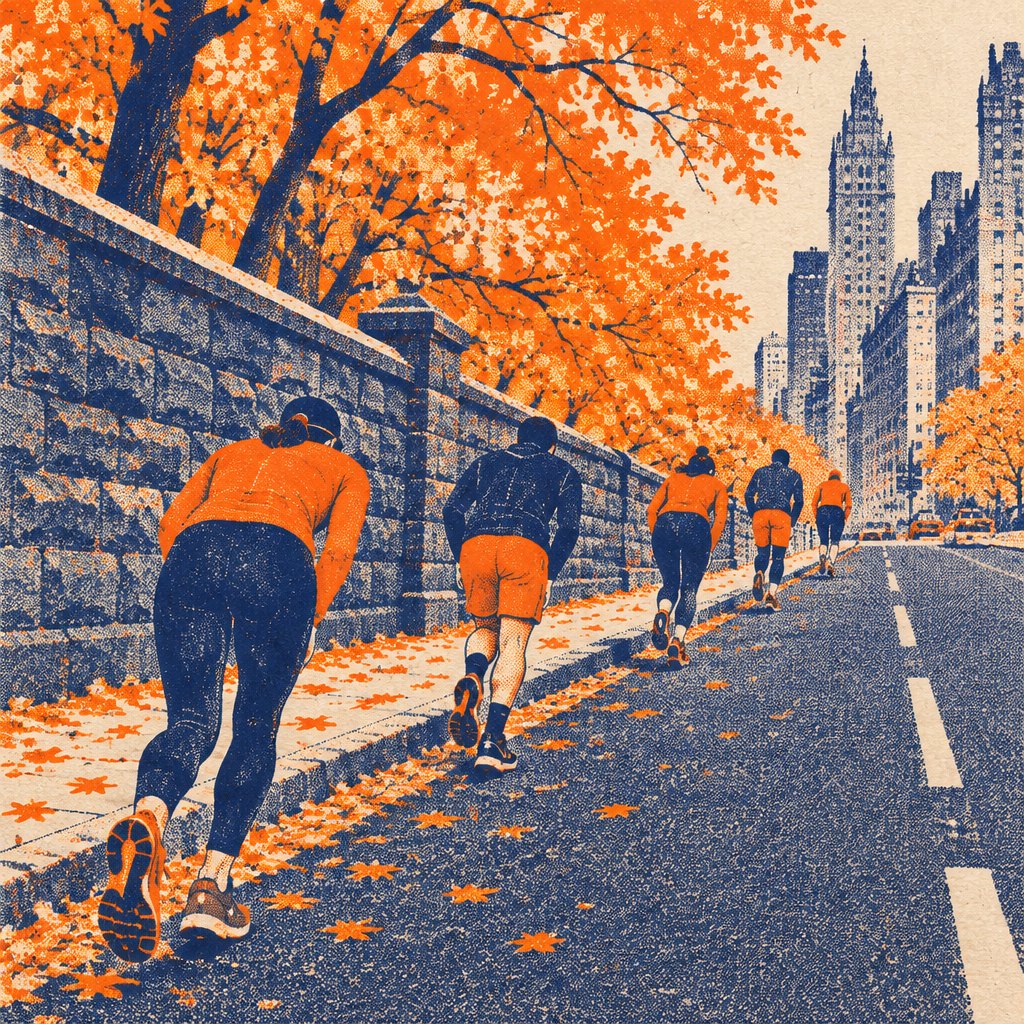
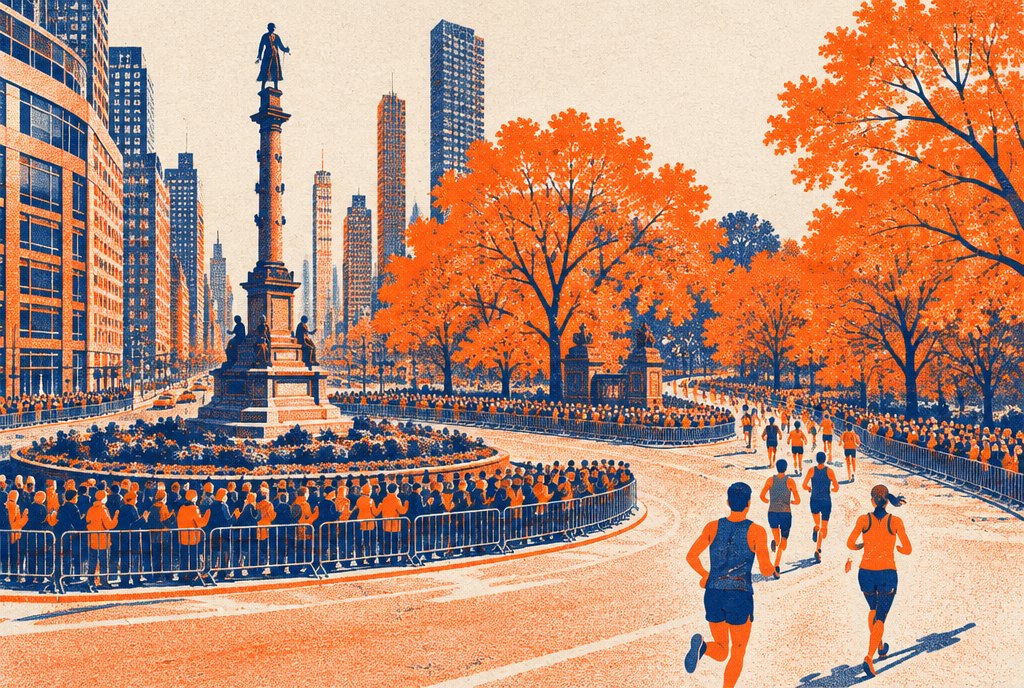
Down Fifth Avenue through Harlem and around Marcus Garvey Park, and then the hardest stretch of the course: from 110th Street to 86th, nearly a mile, Fifth Avenue climbs about 100 feet beside the park wall. It doesn't look like a hill. Break it into blocks. You enter the park at 90th Street and the road rolls, with crowds back in force. Out onto Central Park South at mile 25.5, round Columbus Circle, back into the park, one small rise, and the finish is on West Drive by 67th Street.
Mile 23 to 24, Fifth Avenue. Nearly a mile of steady climb beside the park wall, about 100 feet from 110th Street to 86th. This is where New York is decided.
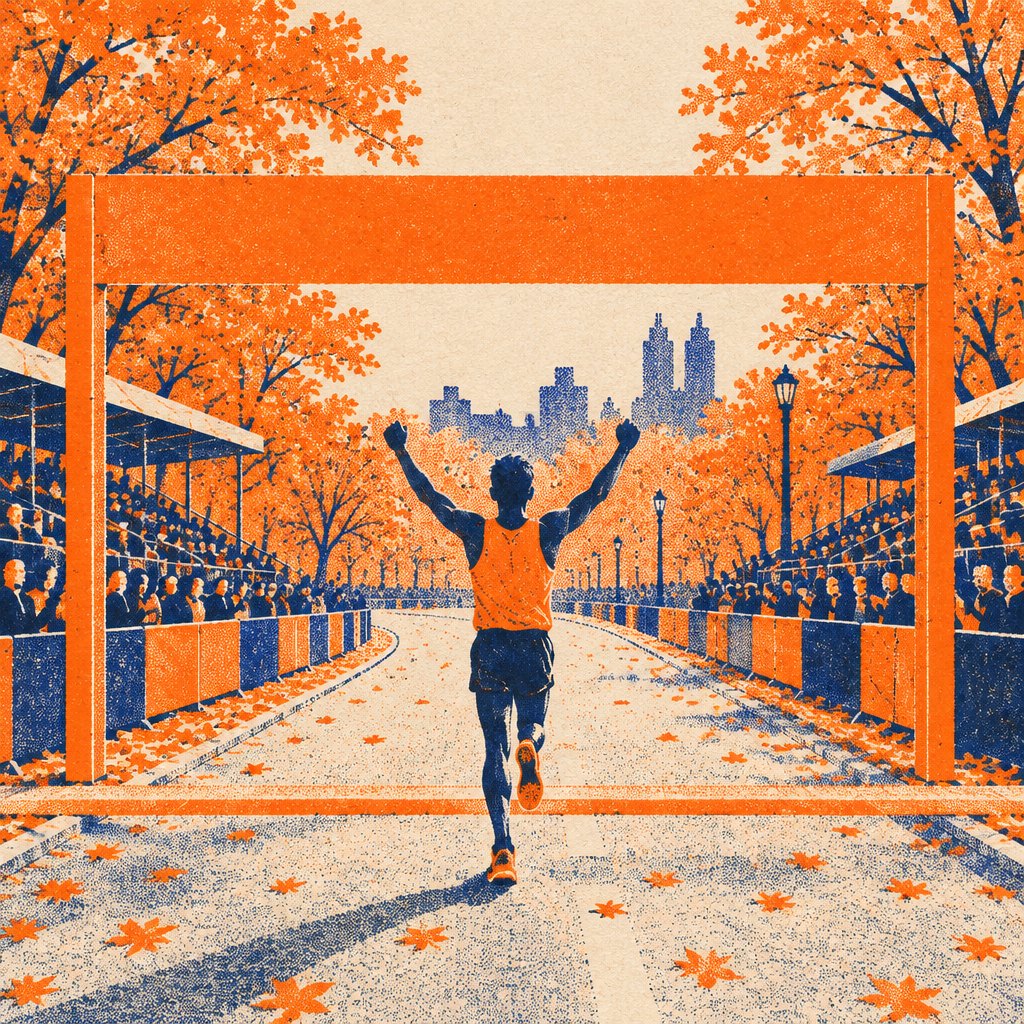
Mile 26.2, The finish. West Drive by 67th Street, with one last small rise. Then a long, slow walk out of the park.
November 2026 · Graval20
The Course · the facts
New York, on paper
Nov 1DateSunday November 1, 2026. Fifty years of the five-borough course.
9:10StartStaten Island, at the foot of the Verrazzano. Five waves, 9:10 to 11:30.
67th StFinishCentral Park, West Drive near 67th Street.
5 bridgesShapePoint to point: Staten Island, Brooklyn, Queens, Manhattan, the Bronx, Manhattan again.
800 ftElevationMore than 800 feet of climbing. The Verrazzano is about 150, the Queensboro about 100, Fifth Avenue about 100.
60,000FieldAbout 60,000 runners from more than 100 countries.
16:00Time limitSweep buses follow at 16 minutes a mile from the last wave.
Aid, mile by mile
Water and Gatorade Endurance every mile from mile 3 to mile 25, except miles 5, 7 and 9. Gels at mile 18. Nothing on the Verrazzano. Sweep buses follow the course at 16 minutes a mile from the final wave; anyone who boards one is taken to the finish area and isn't recorded as a finisher.
Sources: New York Road Runners: course, start, health and safety, and the 2026 Bronx route announcement; CBS New York and NY1 on the 2026 Bronx changes, September 2026; Marathon Handbook, NYC course breakdown; RunReady course guide (bridge and Fifth Avenue elevations); Course records: World Athletics and NYRR (Tola 2023, Obiri 2025).
November 2026 · Graval21
The Course · if you're going
Watch, stay, get there
Where to watch
4Fourth Avenue, Brooklyn. R train stops along the avenue.
11Bedford Avenue, Williamsburg. L train to Bedford Av.
17First Avenue in the 70s and 80s. Q train on Second Avenue, or the 4, 5, 6 on Lexington.
23Fifth Avenue in the 90s, on the climb, where a shout matters most.
26Columbus Circle. A, B, C, D or 1 train to 59th Street.
Five things to remember
The first mile is uphill and the second is down. Let both happen.
Brooklyn is 11 miles long. Whatever pace feels easy on Fourth Avenue, go slower.
Use the Queensboro. It's the only quiet you'll get: check everything.
First Avenue will lie to you. Hold the pace you had in Brooklyn.
The race is Fifth Avenue, 110th to 86th. Save something for it.
Getting to the start
Staten Island Ferry or the official buses, hours before your wave. Dress warm for the wait.
Where to stay
Anywhere near a subway line. The finish is at 67th Street on the west side.
The weather
Early November: usually 40s to 50s, and it's the wind on the bridges that matters.
After
A long, slow walk north out of the park before you can leave it. Plan where to meet.
November 2026 · Graval22
04
The Question
How long it takes
November 2026 · Graval23
The Question
How long does it take to get fast?
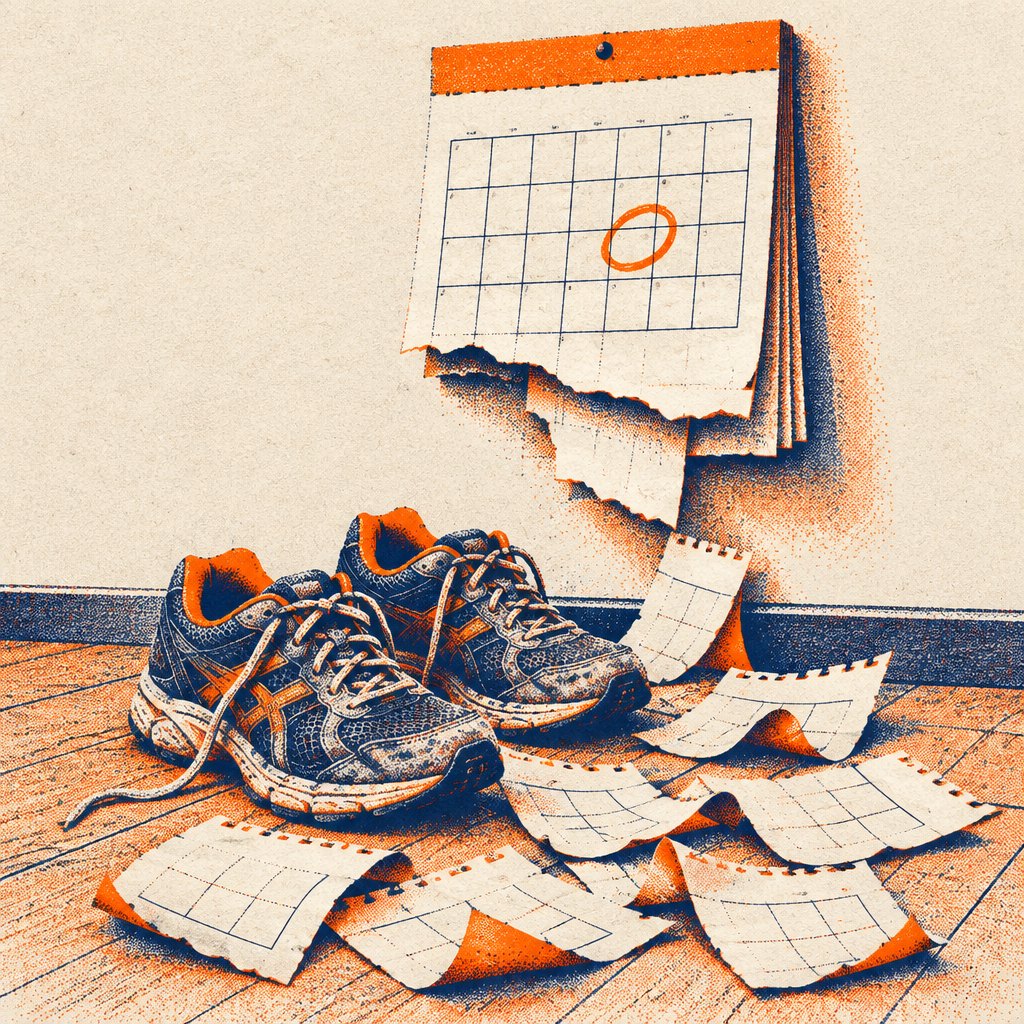
Everybody who starts running asks it by week three. The honest answer has three parts: weeks, months and years, and each one is doing something different.
The short answer
Weeks for the first changes. Months for a base. Years for your best. The first eight weeks feel like nothing is happening, and that's when the most is.
November 2026 · Graval24
The Question · How long it takes
2 weeksfor blood volume to rise. Easy runs start to feel easier before you're any fitter on paper.
20 weeksin the HERITAGE study, where untrained adults raised VO2 max by about 400 ml a minute on average. Some gained nothing; some gained over a litre.
15%how much Paula Radcliffe's running economy improved between 1992 and 2003, with her VO2 max barely changing.
7 to 10years: the coaches' rule of thumb for how long a runner keeps improving after they start training properly.
The first thing to change is the blood. Within about two weeks of regular running your plasma volume rises, your heart fills a little more with every beat, and the same easy pace costs a few fewer heartbeats. You haven't built anything yet. But it's the first proof the body is listening, and it arrives before you'd notice in a race.
The next two to five months are the engine. Capillaries grow into the muscle, mitochondria multiply, and the big number, VO2 max, climbs. In the largest study of it, the HERITAGE Family Study, sedentary adults did twenty weeks of supervised training and gained about 400 millilitres of oxygen a minute on average. The spread was enormous: some people barely moved and some gained more than a litre. Same programme. If your friend is improving twice as fast as you, that's normal, and it says nothing about where either of you ends up.
Then the easy gains stop, and this is where most people decide they've peaked. They haven't. What improves after the first year is economy: how much oxygen each stride costs. It's slower and it barely shows on a watch from month to month. Paula Radcliffe's physiologist tested her from 1992 to 2003. Her VO2 max hardly changed in eleven years. Her running economy improved by fifteen percent, and she took the marathon world record to 2:15:25.
November 2026 · Graval25
The Question · How long it takes, continued
The parts that hold you together are slowest of all. Tendons and bones remodel over months and years, far behind the heart and lungs, which is why the runner who feels fit after ten weeks and doubles the mileage is the one who gets hurt. The engine is ready before the chassis. Every sensible plan is built around that gap.
So: a few weeks to feel different, a season to get fit, a year to find out what kind of runner you are, and somewhere between seven and ten years of steady training before you stop getting better. That last number is the good news. It means the runner you'll be in five years isn't visible yet, to anyone, including you.
November 2026 · Graval26
The Question · How long it takes
What changes, and when
The same body, on six clocks. Most people quit between the second row and the third.
Weeks 1 to 2
Blood volume rises. Easy pace costs fewer heartbeats.
You feel it before you can measure it.
Weeks 3 to 8
More capillaries, more mitochondria. Legs stop being sore.
Feels like nothing. It's the foundation.
Months 3 to 6
VO2 max climbs. Times drop in chunks.
The fun part. Everyone improves here.
Year 1
The easy gains flatten. Tendons and bones are still catching up.
Where most people think they've peaked.
Years 2 to 3
Economy improves: less oxygen per stride at the same pace.
Slower, and it's where the big times come from.
Years 5 to 10
Small gains still arriving, mostly from consistency.
You haven't met this runner yet.
The answer to how long is: longer than you'd like, and for longer than you'd think. Both halves are true.
Sources: Convertino, Blood volume: its adaptation to endurance training, Medicine & Science in Sports & Exercise, 1991; Bouchard and others, Familial aggregation of VO2max response to exercise training: the HERITAGE Family Study, Journal of Applied Physiology, 1999; Jones, The physiology of the world record holder for the women's marathon, International Journal of Sports Science & Coaching, 2006; The seven-to-ten-year figure is a coaching rule of thumb, not a study.
November 2026 · Graval27
November 2026 · Graval28
05
The Workout
Push-ups and sit-ups, after every other run
November 2026 · Graval29
The Workout
Push-ups and sit-ups, after every other run
The strength work most runners will actually do is the kind that needs no gym, no kit and no extra trip. Here's what it's worth, and what it isn't.
The short answer
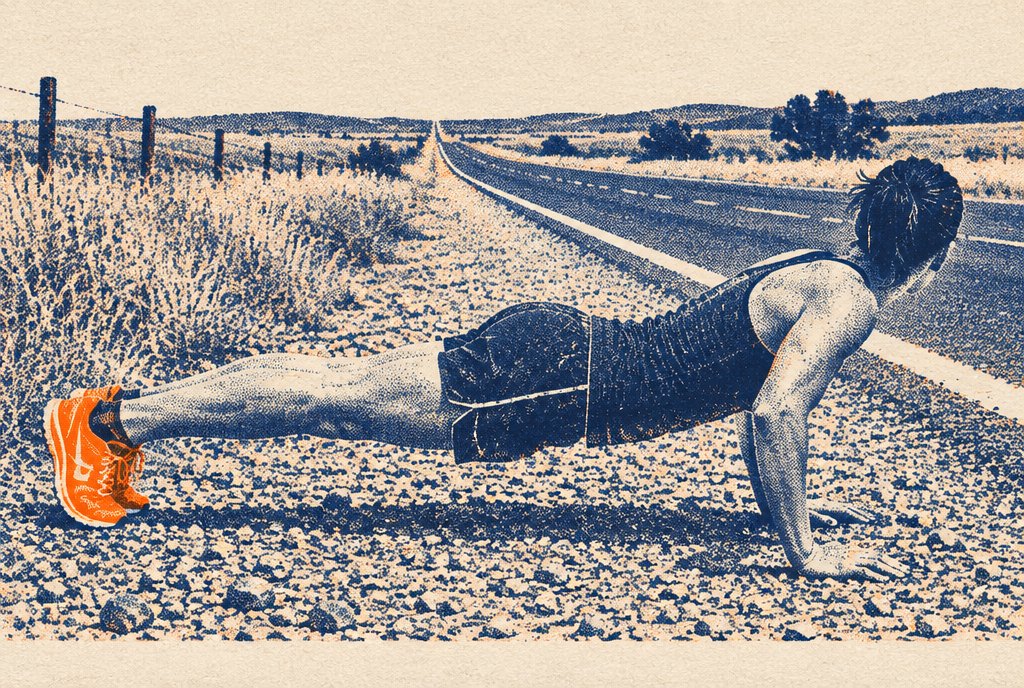
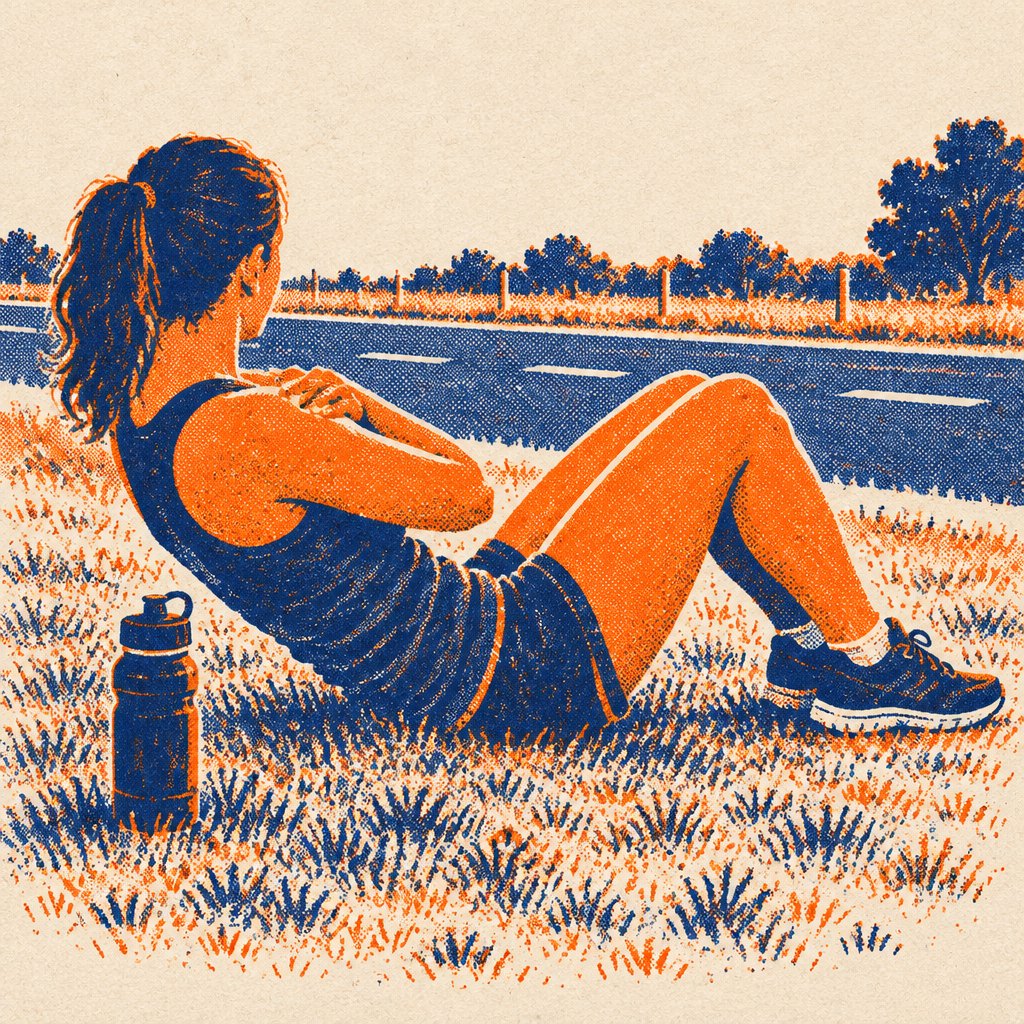
Three rounds of push-ups, sit-ups and a plank, on the ground where your run ends, every other run. Six minutes. It won't make you fast by itself. It will hold your form together at the end of a race, and you'll keep doing it.
November 2026 · Graval30
The Workout · Six minutes, no gym
Every runner knows they should do strength work, and most don't, because it means a second session, a gym, and a plan. So start with the version that removes every excuse: you've just finished a run, you're already warm, and the ground is right there.
What does the evidence say? The best-known study of core work in runners took 28 recreational runners with 5K times just under 30 minutes. Half added core training for six weeks. They improved their 5,000 metre time by 47 seconds on average; the group that only ran improved by 17. It's a small study, and it didn't find any change in how they ran, so nobody can tell you exactly why it helped. But they got faster.
Be honest about the ceiling. The big, well-proven gains from strength training, running economy improving by two to eight percent in a 2018 review of the research, come mostly from heavy lifting and jumping with the legs. Push-ups and sit-ups aren't that. What they do is train the parts that give out late: the shoulders that creep up toward your ears at mile ten, the middle that folds when you're tired.
The reason to do it after every other run, and not every run, is that it stays easy to say yes to. Three or four short sessions a week, attached to something you already do, beats one heroic gym day you skip by March.
Stop each set two reps before you'd fail. Add a rep a week. When three sets of twenty push-ups is easy, slow them down before you add more. That's the whole method.
The six minutes
Push-ups
As many as you can do well, minus two. Knees down if you need to. Chest to the ground, straight line.
Sit-ups
Fifteen to twenty-five, slow on the way down. Swap for dead bugs if your back complains.
Plank
Thirty to forty-five seconds. Squeeze everything.
Rounds
Three, with a minute between. Every other run.
Progress
One more rep, or five more seconds, each week.
Later, when you want more: split squats, calf raises and step-ups are where the proven running gains are.
Sources: Sato and Mokha, Does core strength training influence running kinetics, lower-extremity stability, and 5000-m performance in runners?, Journal of Strength and Conditioning Research, 2009; Blagrove, Howatson and Hayes, Effects of strength training on the physiological determinants of middle- and long-distance running performance: a systematic review, Sports Medicine, 2018.
November 2026 · Graval31
November 2026 · Graval32
06
Fuel
What is the bicarb craze?
November 2026 · Graval33
Fuel
What is the bicarb craze?
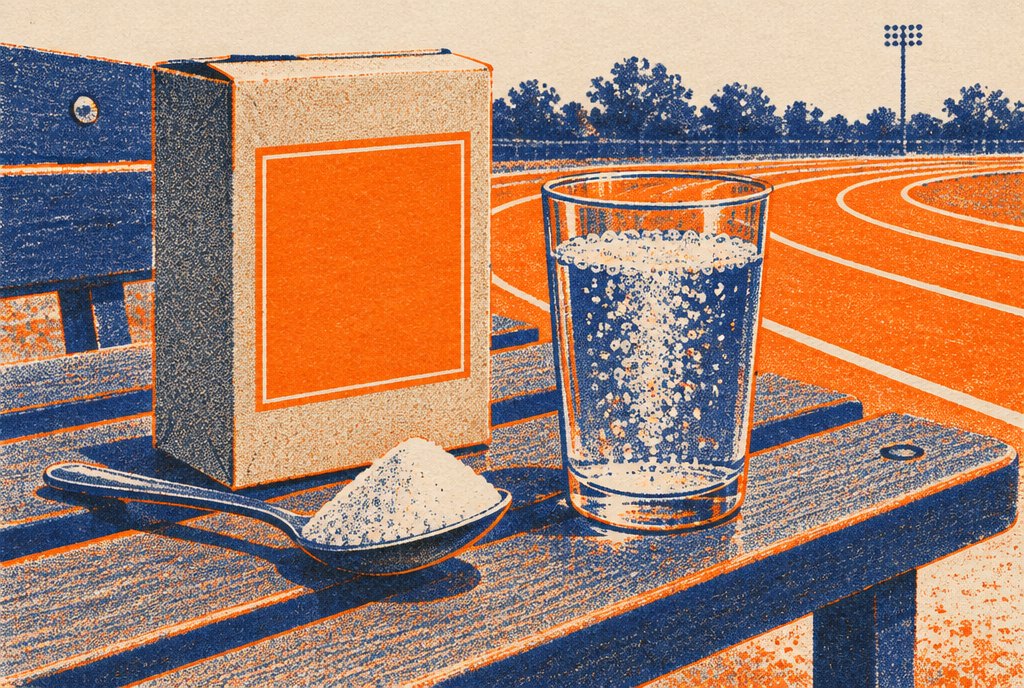
The newest thing in elite running is sodium bicarbonate, which is baking soda, which has been in sports science since the 1930s. Here's what it does, who it's for, and why it probably isn't you.
The short answer
It buffers acid, so it helps in hard efforts lasting about 30 seconds to 12 minutes: the 800, the mile, the last kick. It does little for a marathon. It works, it's legal, and for decades the catch was your stomach.
November 2026 · Graval34
Fuel · Baking soda, explained
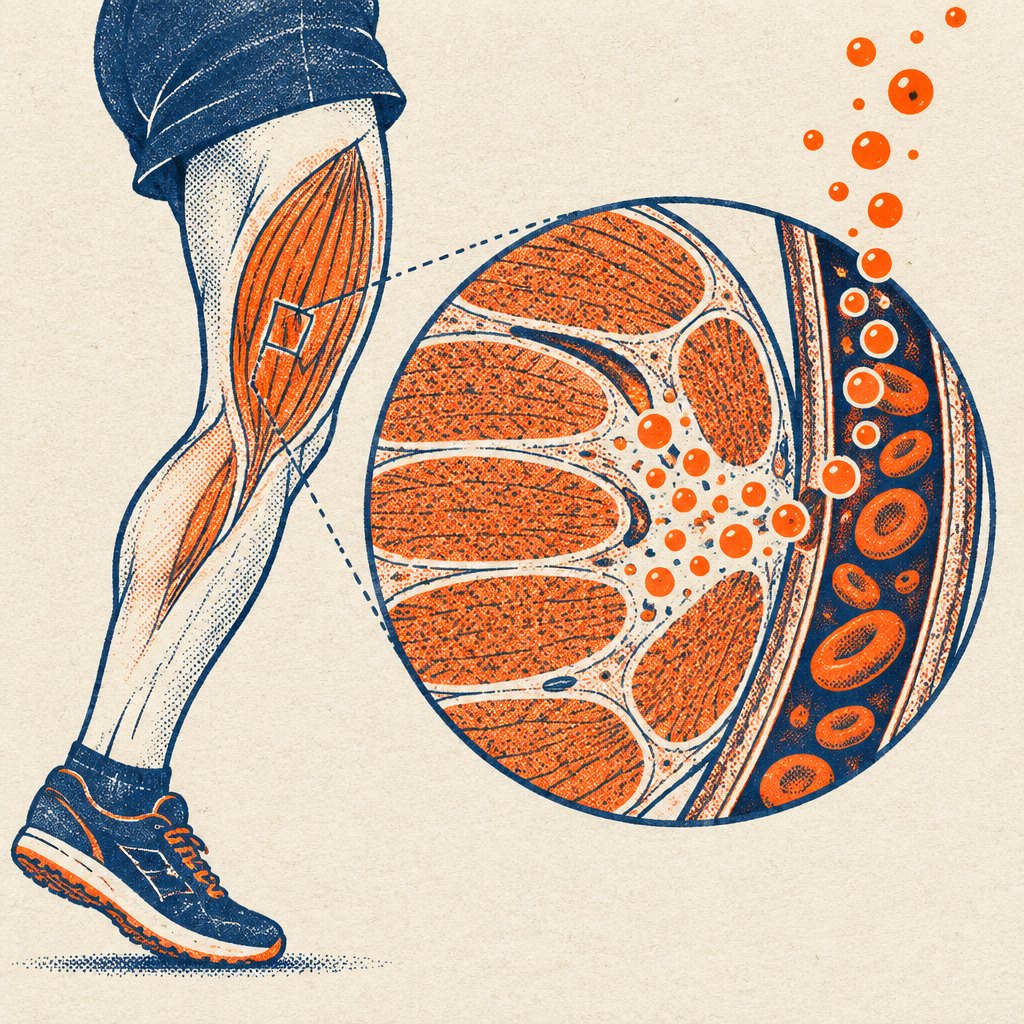
When you run hard, your muscles produce acid faster than they can clear it, and that burn is part of what makes you slow down. Sodium bicarbonate raises the blood's capacity to soak that acid up. More buffer, a little more time at full effort. That's all it is.
The science isn't new or thin. The International Society of Sports Nutrition's position paper puts the effective dose at 0.2 to 0.5 grams per kilo of bodyweight, with 0.3 the sweet spot, taken 60 to 180 minutes before the effort, with at least half a litre of water. The benefit shows up in high-intensity efforts lasting between 30 seconds and 12 minutes.
So why the craze now? Because the old way of taking it was a gamble. Swallow that much baking soda and a good share of athletes got cramps, bloating or worse, sometimes mid-race. What changed is the packaging: Maurten's Bicarb System wraps it in a gel designed to get it through the stomach before it reacts. Elite milers and 5,000 metre runners took it up, people noticed, and now it's on every start line. It costs about $70 for four servings.
Do the arithmetic before you try it. For a 70 kilo runner, 0.3 grams per kilo is 21 grams of sodium bicarbonate, which carries nearly six grams of sodium. The usual advice is to stay under 2.3 grams of sodium in a whole day. If you have high blood pressure, kidney problems, or you've been told to watch your salt, this isn't for you, and it's worth asking a doctor either way.
And be honest about the event. If your race is a marathon or a half, the limiter isn't acid, and the paper's own time window ends at twelve minutes. For most of us the gains on offer are still the boring ones: more easy miles, more sleep, and eating enough.
The facts
What it is
Sodium bicarbonate. Baking soda.
What it does
Buffers acid in the blood during very hard efforts.
Where it helps
Efforts of 30 seconds to 12 minutes: 800 m to about 3K, and finishing kicks.
Dose in the research
0.2 to 0.5 g per kg; 0.3 is typical. Taken 60 to 180 minutes before.
The catch
Stomach trouble, worse at higher doses. And a very large sodium load.
For a marathon
Little evidence it helps.
Not medical advice. If you take medication or have a heart, kidney or blood-pressure condition, ask a doctor first.
Sources: Grgic and others, International Society of Sports Nutrition position stand: sodium bicarbonate and exercise performance, Journal of the International Society of Sports Nutrition, 2021; Maurten, Bicarb System product page (price, format); Sodium content is arithmetic: sodium bicarbonate is 27 percent sodium by weight. The 2.3 g daily figure is the US Dietary Guidelines limit.
November 2026 · Graval35
November 2026 · Graval36
07
One road, dawn to dusk
The Ground
November 2026 · Graval37
One road, dawn to dusk
The Ground
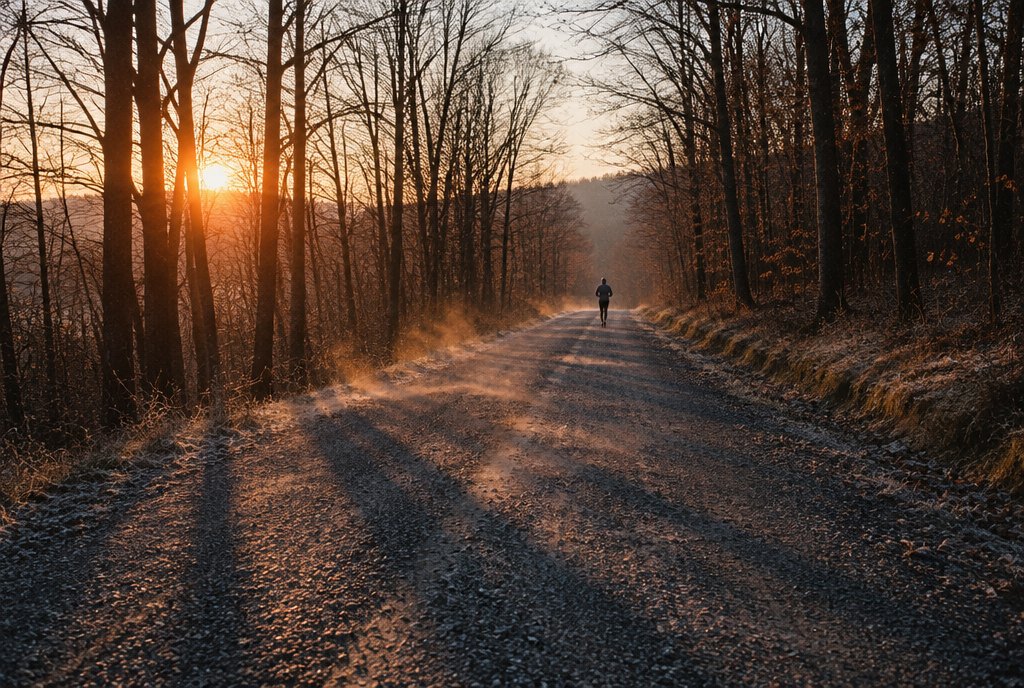
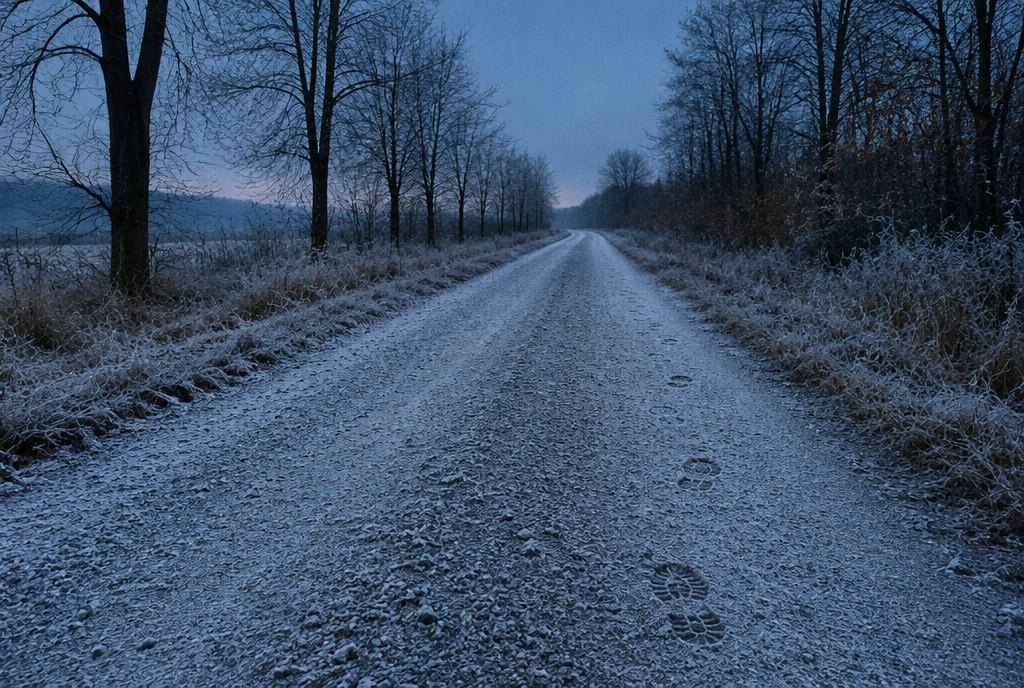
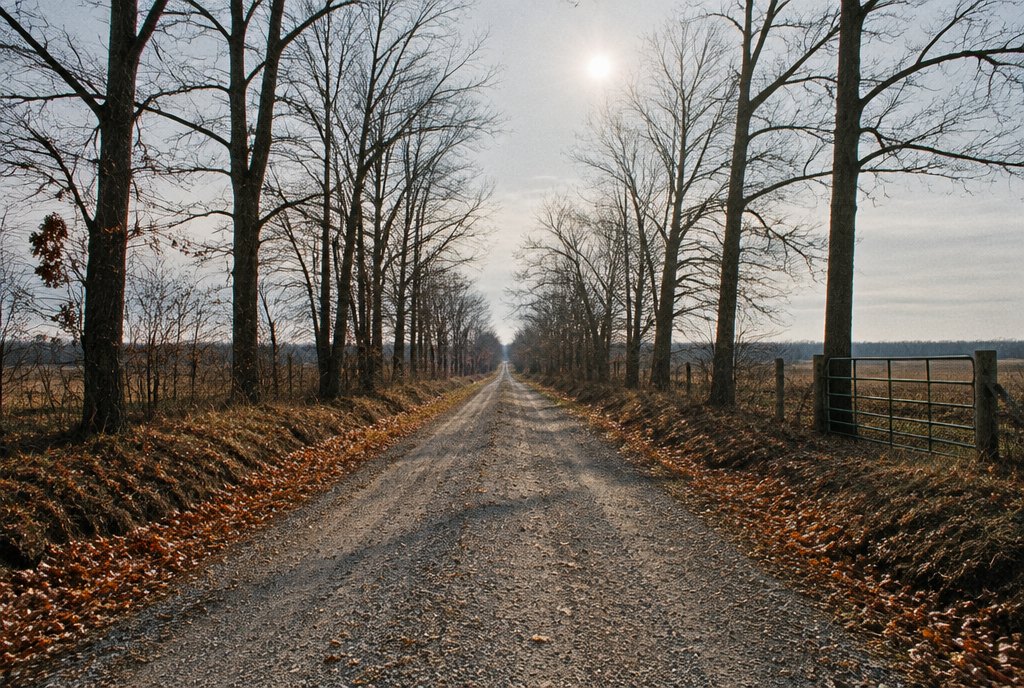
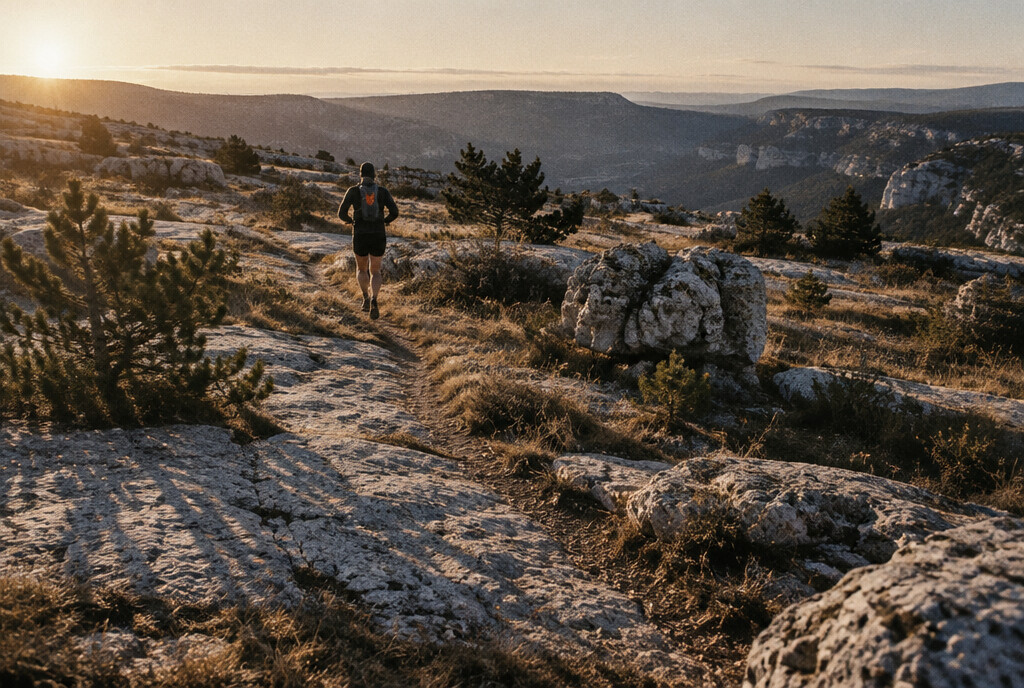
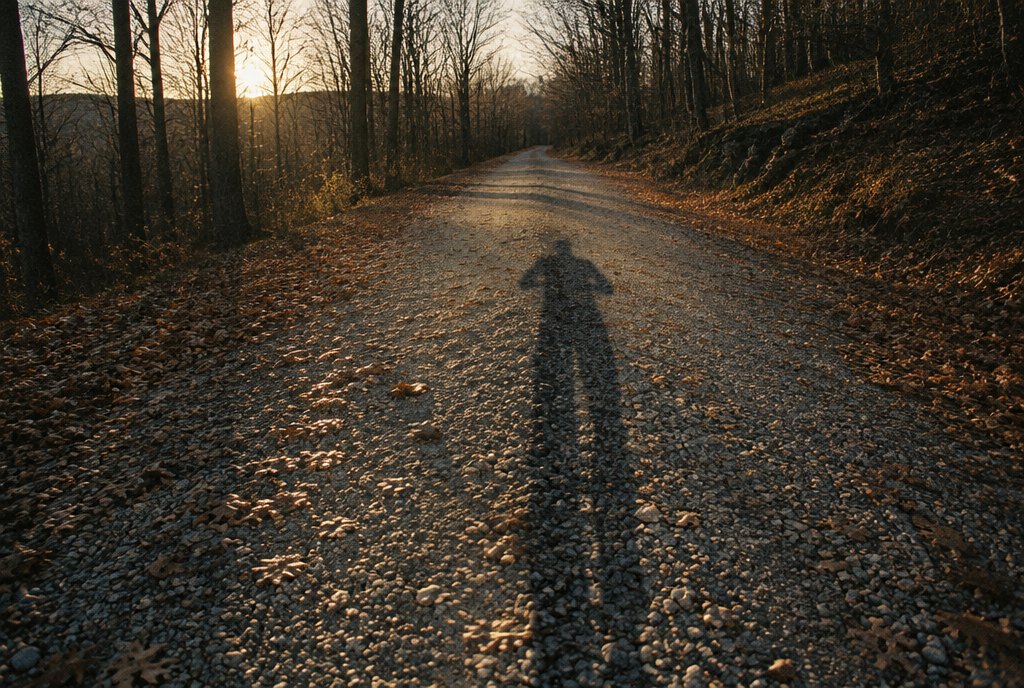
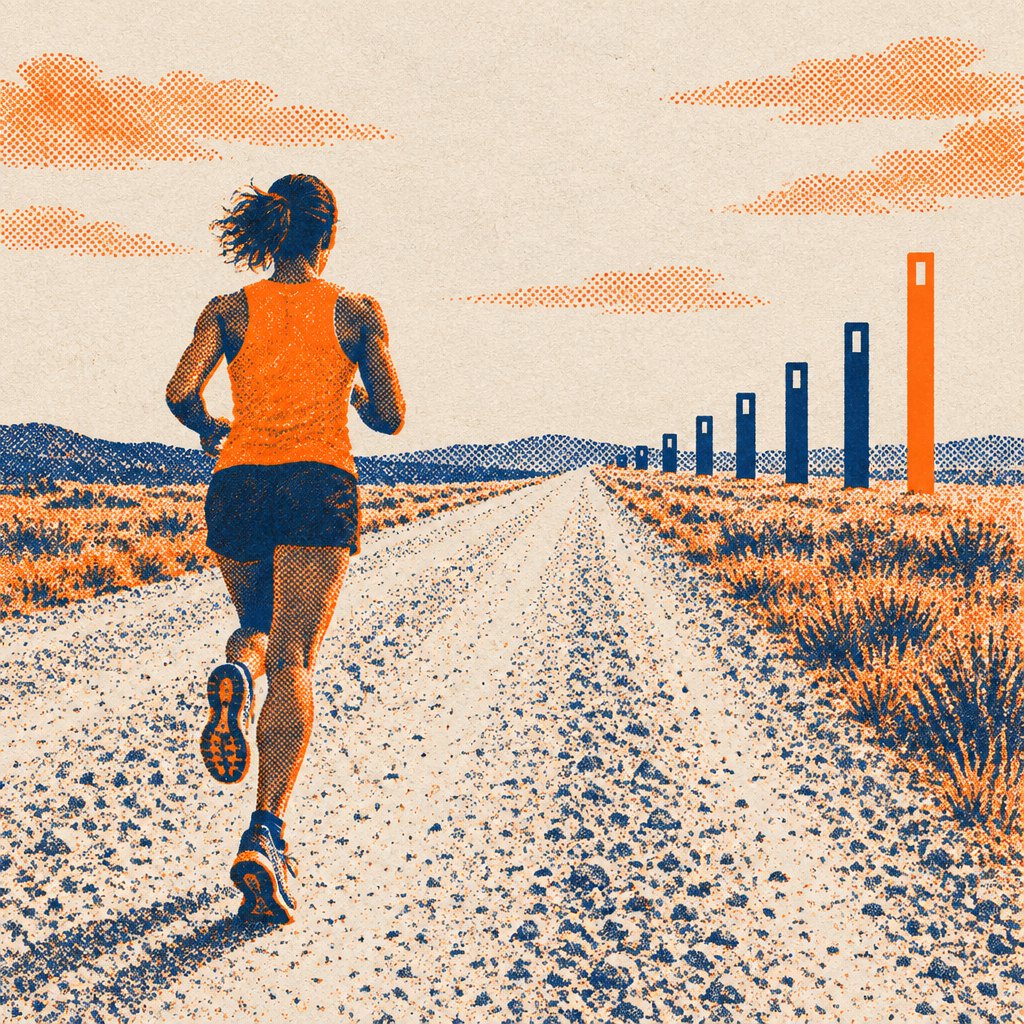
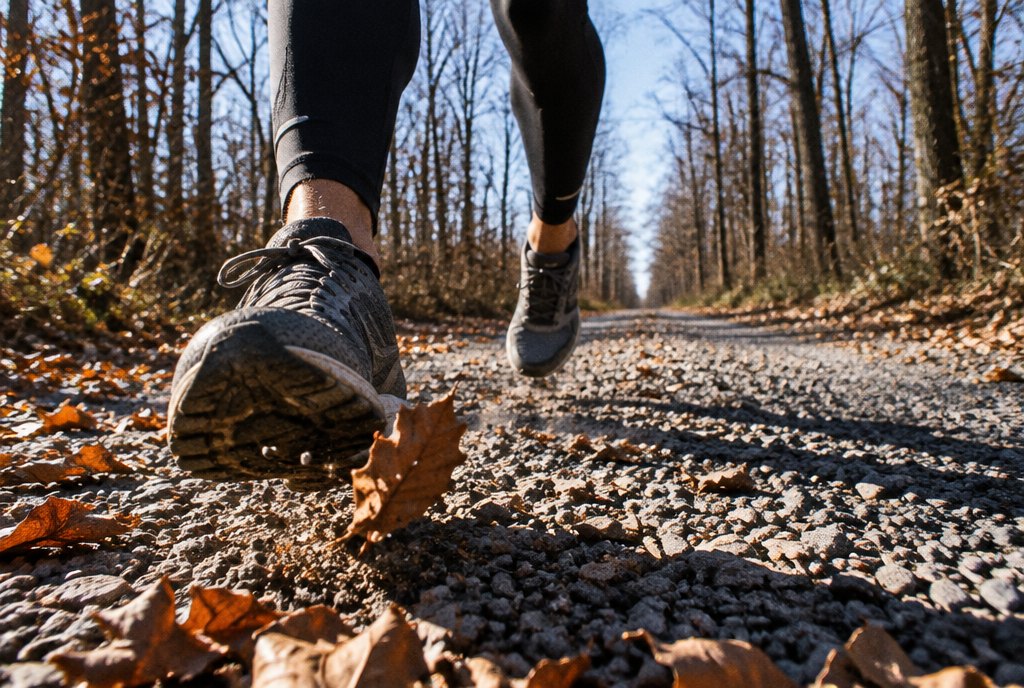
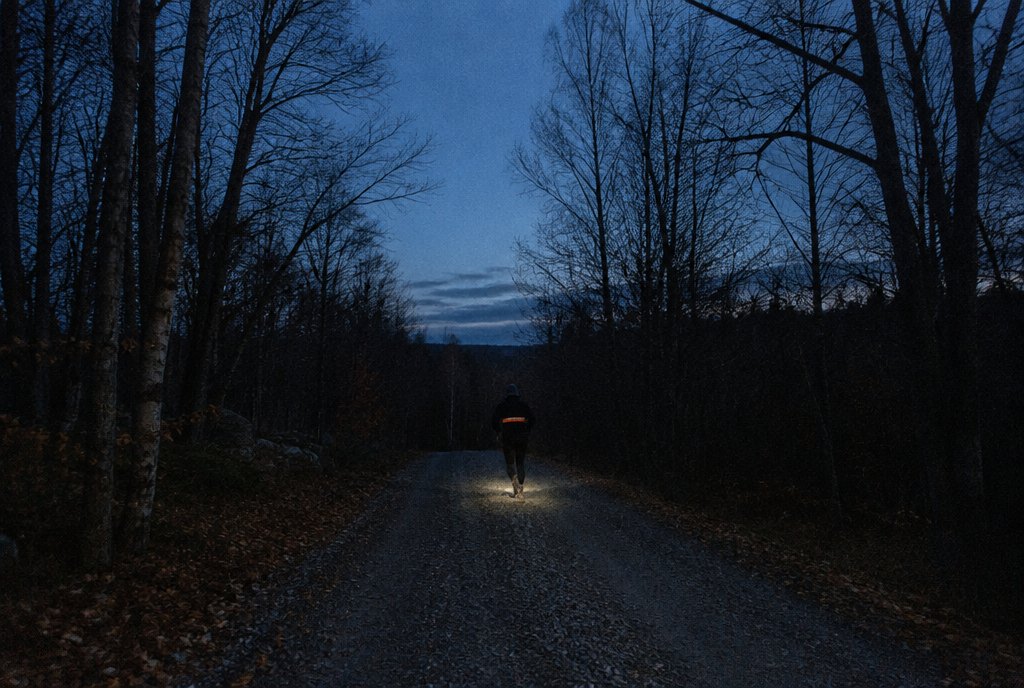
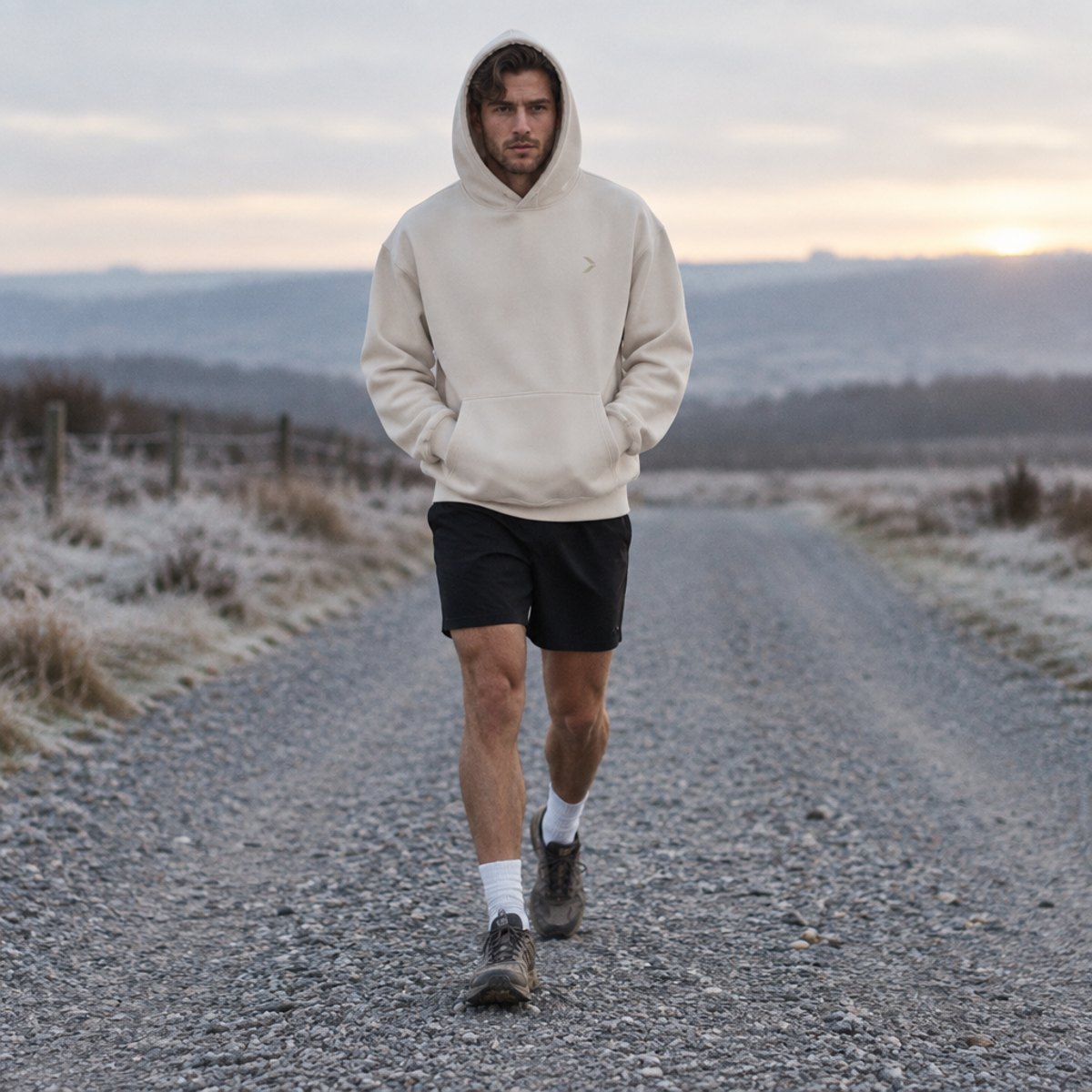
The same kind of road in November. Frost, leaves, and dark by five.
6:20. Frost on the stones. One set of prints.7:05. The sun comes through the bare trees and the road steams.
November 2026 · Graval38
10:00. Leaves over gravel. Loose on loose.12:00. The thin light of a November noon.
November 2026 · Graval39
16:00. The shadow gets there before you do.17:00. Dark. One lamp, one strip of hi-vis.
November 2026 · Graval40
08
What Holds Up
A cap after a summer
November 2026 · Graval41
What Holds Up
A cap after a summer
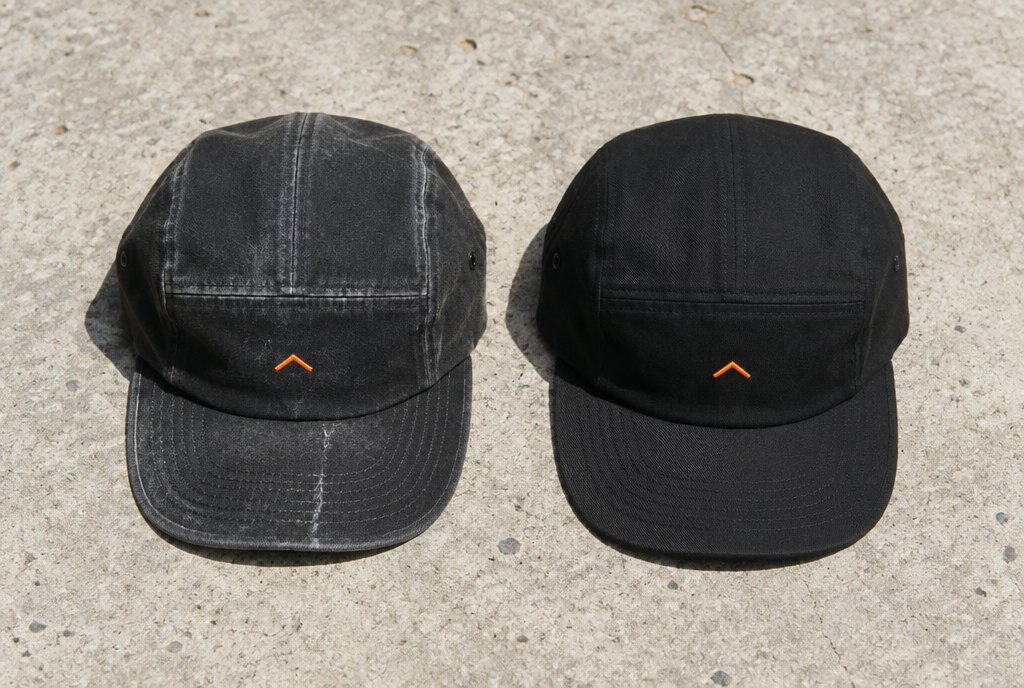
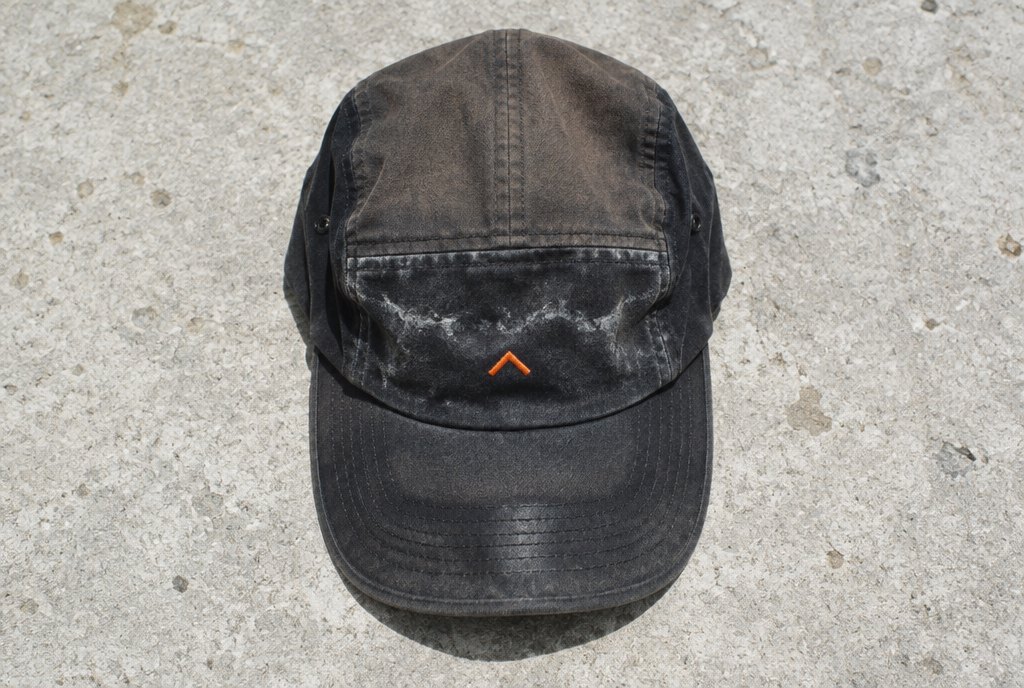
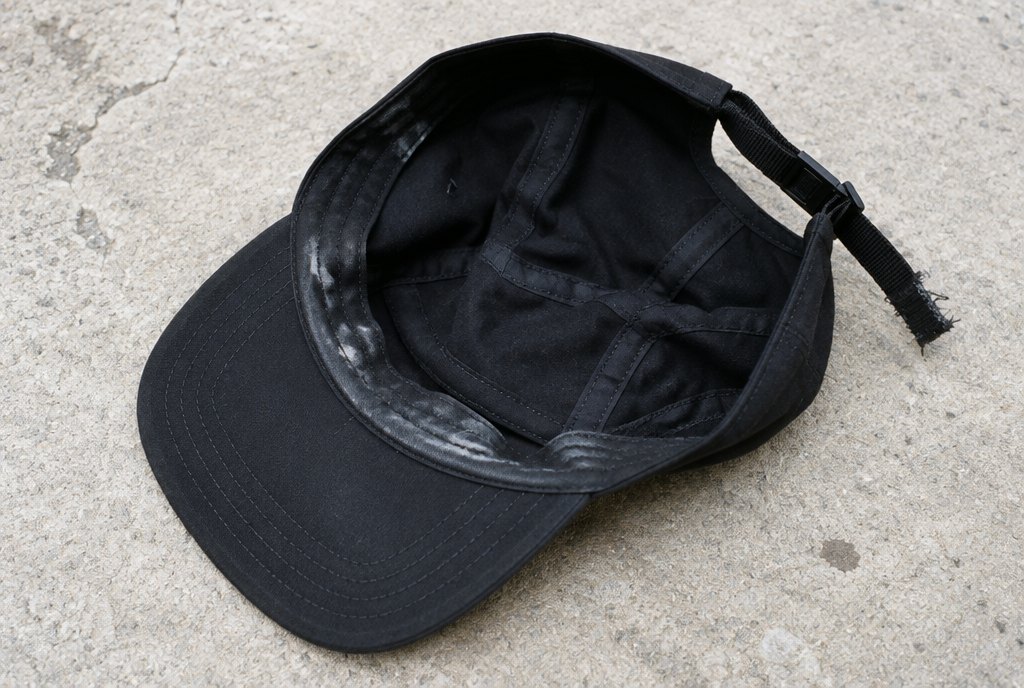
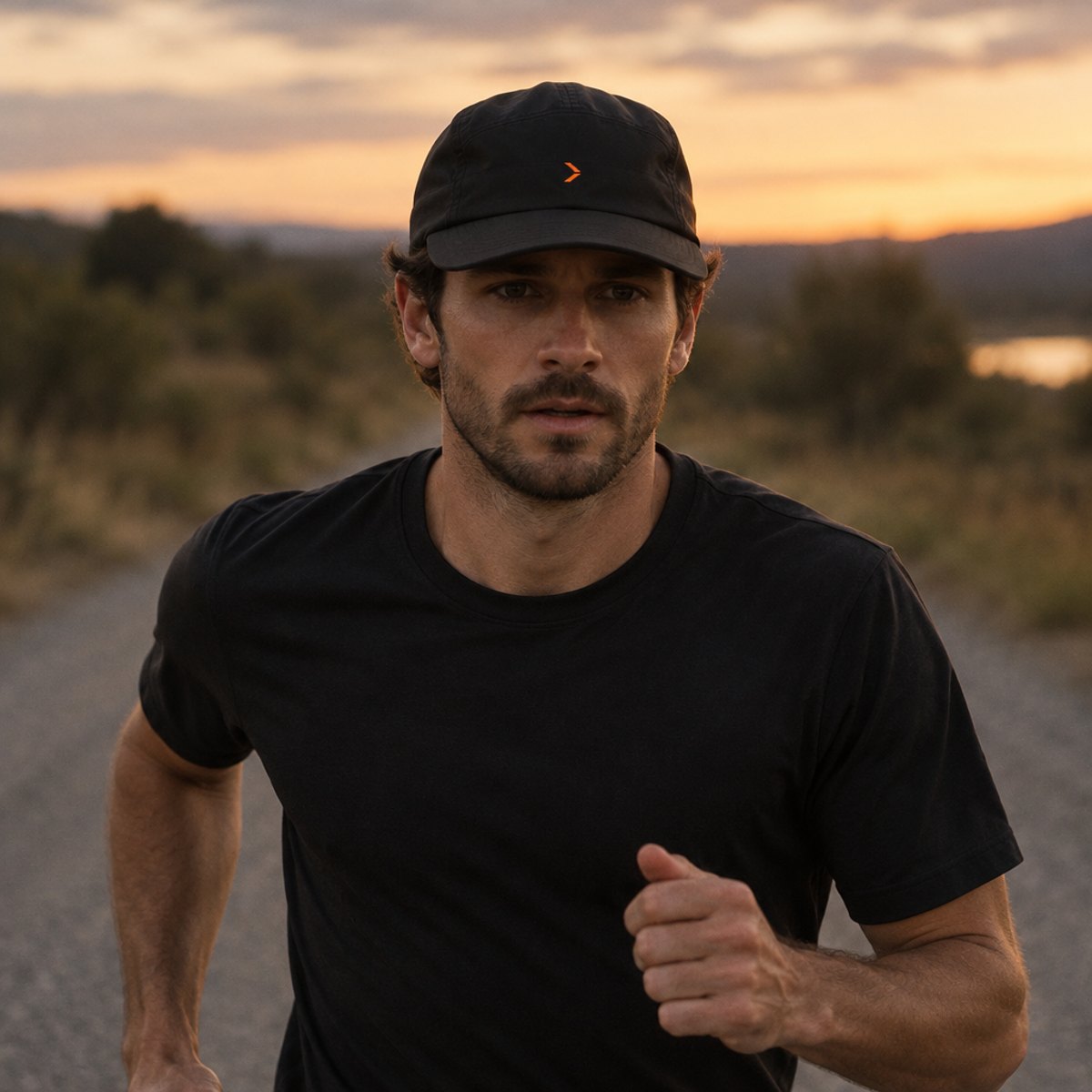
One object per issue, worn, photographed like evidence. This month: a black cap, May to September.
From above. The crown has gone from black to brown where the sun hits it.
Inside. Salt tide marks on the sweatband; every seam intact.One summer old, and new.
A black cotton cap does two things in a summer of running: it fades and it salts. The fade is the sun, and it's uneven, darkest under the brim and palest across the top of the crown. The white lines across the front panel are sweat that dried in place, run after run.
Inside is where a cap fails, if it's going to. The sweatband takes everything. On this one it's stained and stiff with salt and every stitch is where it started. The strap has frayed at the cut end and nowhere else.
Verdict: it looks five years old and it's structurally new. Rinse a cap in cold water after hot runs and the salt lines never set. Or don't, and let it look like it's been somewhere.
November 2026 · Graval42
09
Loose Ground
The quiet mile
November 2026 · Graval43
Loose Ground
The quiet mile
The best mile of the loudest marathon in the world is the one where nobody is watching.
By Matthew Goodman · Photograph: Graval
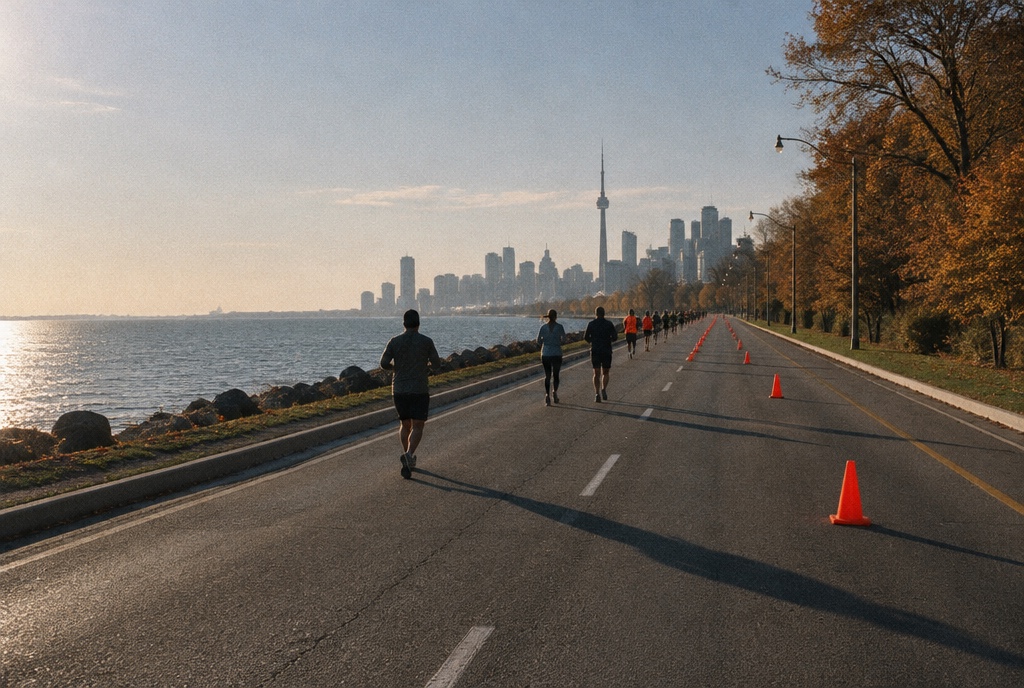
Ask anyone who has run New York what they remember and you'll hear about First Avenue: the noise, the crowds ten deep, the feeling of being carried. Ask them a second time and most of them will tell you about the bridge before it.
The Queensboro has no spectators. You go from two hours of Brooklyn shouting your name into three quarters of a mile of steel and shade where the only sound is shoes. People who have run it describe it the same way, almost word for word: you can hear everyone breathing. Nobody is performing. It's sixty thousand people being alone at the same time.
That mile is closer to what running is on every other day of the year than anything else in the race. No crowd on a Tuesday. No band at mile four of a long run in February. Just a road, your breathing, and whatever you say to yourself when it tilts uphill and no one would know if you walked.
The noise is a wonderful thing and New York has more of it than anywhere. But the quiet mile is the sport. Every gravel road is that bridge, all the way.
The quiet mile is the sport.
Reply under this page in the app. The best three run next month, credited.